The Menopause Hour - Episode -35 Hormones and Heart Health What You Should Know
Podcast

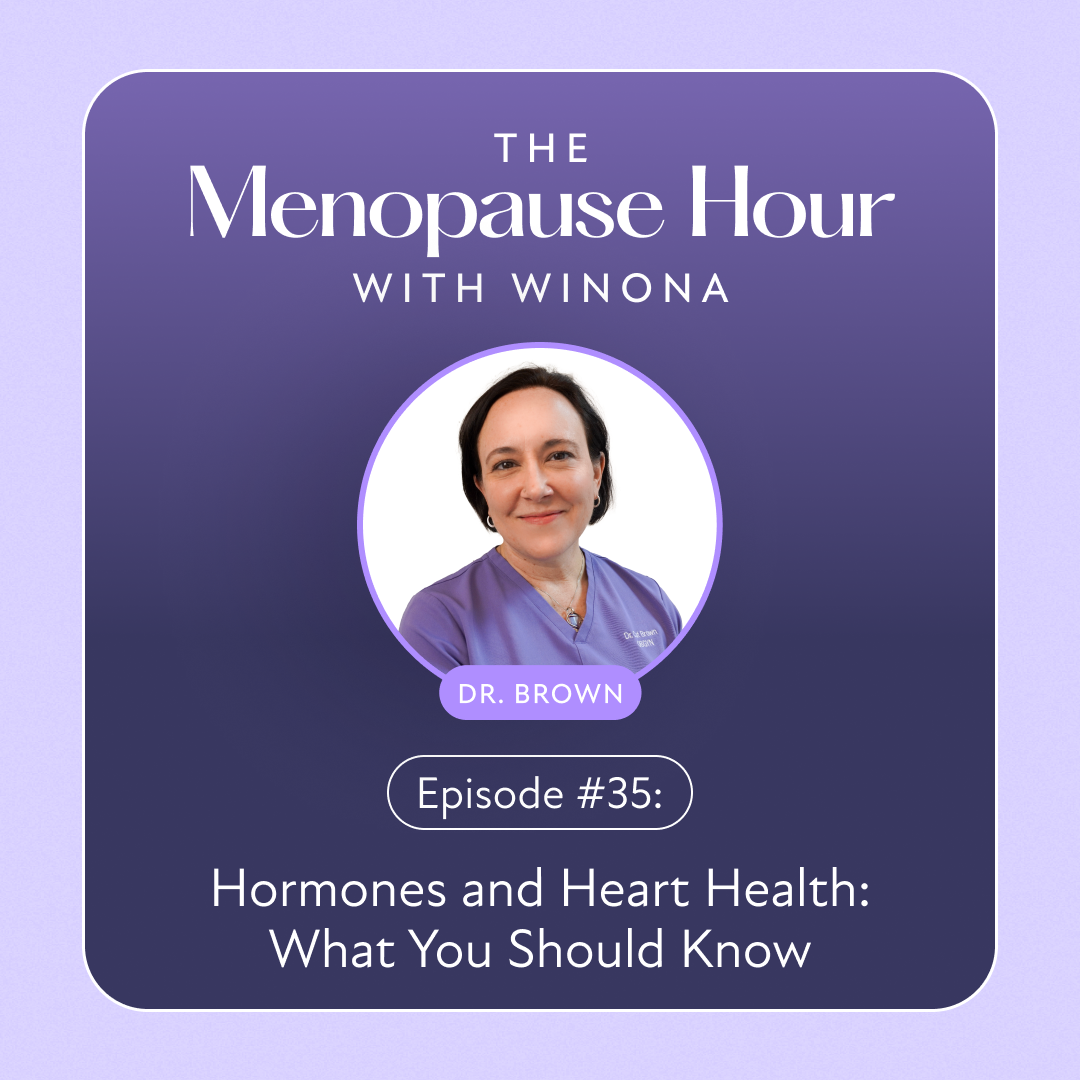
The Menopause Hour with Winona: Hormones and Heart Health: What You Should Know - Episode #35

Published: February, 2026

Dr. Cathleen Brown

Featured Physician

Cathleen M. Brown

Host

Madi Baldwin

Episode #35 of The Menopause Hour with Winona was a replay of a live Ask the Experts Q&A, hosted by Winona's Madi Baldwin and featuring Medical Director Dr. Cathleen Brown answering listener questions. In honor of American Heart Month, Dr. Brown opened the show with a discussion on heart health awareness and how some menopause symptoms can be cardiac-related.

The conversation covered topics such as DHEA and how it's used, combining GLP-1 medications with hormone therapy for weight management, and the difference between vaginal and facial estrogen products. Dr. Brown also addressed frozen shoulder, using birth control alongside HRT, and how to tell perimenopause brain fog apart from ADHD symptoms.

LISTEN TO THE EPISODE

Episode Details

  • Podcast: The Menopause Hour with Winona

  • Episode Number: 35

  • Episode Title: Episode #35: Hormones and Heart Health: What You Should Know

  • Host: Madi Baldwin

  • Featured Physician: Dr. Cathleen Brown

  • Published Date: February 18, 2026

  • Episode Duration: 46 minutes 13 seconds

  • Format: Menopause Q&A

  • Main Topics: Heart Health, Hormone Therapy, DHEA

About The Menopause Hour with Winona Podcast

The Menopause Hour with Winona is a health and wellness podcast featuring Winona Chief Medical Officer Dr. Michael Green and Medical Director Dr. Cathleen Brown. The show addresses common questions about perimenopause and menopause, combining medical expertise with straightforward discussions of symptoms, treatment options, and the science behind the menopause transition.

Episodes include live Q&A sessions, doctor-led conversations, and patient stories. In its live Q&A format, women from Winona's community submit questions directly to the hosts, creating practical discussions shaped by the concerns women commonly bring to their own doctors.

Visit The Menopause Hour on Buzzsprout.

About This Episode

Dr. Brown began this interactive Q&A by highlighting cardiovascular wellness in recognition of American Heart Month, pointing out that heart disease remains the leading cause of death for women. She emphasized that while heart palpitations are a symptom that can occur during perimenopause, any new, persistent, or worsening cardiac symptoms warrant a thorough medical evaluation to rule out underlying heart conditions.

She answered listener questions pertaining to what DHEA is and how it's dosed safely, whether GLP-1 medications and hormone therapy can be used together, and the difference between vaginal estradiol cream and facial estriol products. Dr. Brown also discussed lesser-known perimenopause symptoms, combining birth control with HRT, and how to distinguish perimenopause brain fog from ADHD.

RSVP here to join our next Menopause Q&A.

Topics Covered

  • Why cardiovascular health deserves increased attention during the menopause transition

  • Recognizing heart attack symptoms that can look different in women

  • Whether to take periodic breaks from HRT cream 

  • Using symptom tracking instead of lab tests to monitor HRT

  • What DHEA is and whether it's safe to take

  • Timing DHEA around elective surgery

  • Combining GLP-1 medications with hormone therapy for weight management

  • The difference between vaginal estradiol cream and facial estriol cream

  • Whether estrogen can help with frozen shoulder

  • Taking birth control alongside hormone therapy

  • How perimenopause HRT dosing differs from postmenopause dosing

  • Distinguishing perimenopause brain fog from ADHD symptoms

Key Takeaways

Heart palpitations are common in perimenopause, but new or severe symptoms require clinical evaluation

Dr. Brown explained that fluctuating estrogen levels can trigger palpitations and a racing heart during the menopause transition. She emphasized that heart disease is the leading cause of death for women overall, and that chest pain, shortness of breath, or exertional symptoms should always be medically evaluated rather than automatically assumed to be hormonal.

DHEA is a safe, gentle way to raise testosterone levels without prescribing testosterone directly

Dr. Brown explained that DHEA is a hormone precursor the body produces naturally that gets converted into estrogen and testosterone. She noted that while DHEA can be used on its own or alongside estrogen therapy, patients shouldn't combine it with direct testosterone since the two work on the same metabolic pathway and can increase the risk of androgen-related side effects.

GLP-1 medications and HRT can work together for menopausal weight management

Dr. Brown addressed questions regarding weight management, stating that women who combine GLP-1 medications with hormone therapy often experience more favorable results than those using GLP-1s alone. She added that preserving muscle mass through adequate protein intake and routine strength training remains an important part of maintaining a healthy weight.

Vaginal estrogen and facial estrogen creams contain different types of estrogen

Dr. Brown clarified that vaginal estrogen cream contains estradiol to target localized genitourinary tissue, while facial estrogen products use a milder estrogen called estriol intended for topical skin application. She noted that both are considered safe when used as directed, but they shouldn't be substituted for one another.

Frozen shoulder is a lesser-known symptom of the menopause transition

Dr. Brown explained that frozen shoulder is particularly common among menopausal women, sometimes appearing before other more recognizable symptoms like hot flashes. She noted that estrogen therapy may help improve symptoms of frozen shoulder in some patients.

Cathleen M. Brown

Dr. Cathleen M. Brown

Obstetrics & Gynecology

Dr. Cathleen Brown is a menopause specialist and physician with Winona. She brings a physician’s perspective to menopause, perimenopause, hormone changes, symptom care, and treatment options during midlife.

At Winona, Dr. Brown helps women better understand symptoms, health history, hormone changes, and when physician-reviewed care may be appropriate.

Meet Dr. Cathleen M. Brown

Watch or Listen to the Episode

Watch the full conversation with Dr. Cathleen M. Brown on
The Menopause Hour with Winona with Madi Baldwin.

Get Physician-Led Menopause Care

Winona helps women access menopause and perimenopause care from home. Start with a short health questionnaire, and a board-certified physician will review your symptoms, health history, and treatment options.

Start Your Visit
lead-banner-woman-holding-mug-mobile