Is debilitating shoulder pain making it impossible to function during the day or sleep soundly at night? If joint stiffness is making it hard to drive, work, or perform everyday tasks like hair washing or teeth brushing, it may be related to perimenopause or menopause — but women don’t have to live with severe pain and limited mobility.
Frozen shoulder (adhesive capsulitis) is common among people entering their 50s, particularly women. Experts aren’t entirely sure what causes the condition, but it occurs when bands of scar-like tissue develop within the joint capsule surrounding the shoulder joint (fibrosis). This causes the capsule to thicken and decrease in size, leading to shoulder pain and joint stiffness.(1)
The shoulder joint is among the body’s most mobile joints. However, some people with frozen shoulder may eventually struggle to move their arm at all. While it can take years to make a full recovery, relief is possible with a holistic treatment plan.(1)(2)This article will break down the stages of frozen shoulder and explore the connection between estrogen and joint pain. Readers will also discover effective treatment options for regaining shoulder mobility and maintaining long-term joint health.
The Link Between Estrogen and Frozen Shoulder
Research shows that frozen shoulder tends to occur most commonly during perimenopause, when estrogen levels start to shift. Estrogen plays a significant role in regulating inflammation and maintaining the health of bones, joints, and connective tissue.(3)(4)(5)Throughout different stages of menopause, levels of estrogen fluctuate and progressively decline. This loss of estrogen causes physiological changes in the body’s joint tissues, including the cartilage, ligaments, and joint capsule. These changes also impact the synovial membrane, which produces synovial fluid to keep the joint lubricated.(6)
Low estrogen levels can also promote inflammation, which is often seen in the early stage of frozen shoulder. Inflammation also increases the expression of collagenase, an enzyme that degrades collagen, which is essential to joint health. A breakdown of collagen can cause joint pain and cartilage damage.(3)(4)(5)
More research is needed to determine whether there’s a direct link between frozen shoulder and menopause. While frozen shoulder is not a symptom of menopause, the relationship between estrogen and joint health may contribute to the increased risk of frozen shoulder during these transitional years.
The Three Stages of Frozen Shoulder
Frozen shoulder does not develop overnight. According to the American Academy of Orthopaedic Surgeons (AAOS), symptoms gradually develop and resolve over the course of three distinct stages:(1)(7)
Stage 1: The “Freezing” Stage (Painful Phase)
Mild pain sets in during the freezing stage. The pain gradually worsens and often feels like a dull aching that can impact the upper arm. A person may find it harder to raise their arm or reach behind their back. Sleep disruptions are also common during this stage, which may persist for six weeks to nine months.
Stage 2: The “Frozen” Stage (Stiff Phase)
Shoulder pain usually gets better during the frozen stage. However, it’s during this stage that joint stiffness is at its peak, which can cause the muscles to weaken from inactivity. Because mobility is limited during this stage, it can significantly impact daily functioning. The frozen stage can last between four and six months.
Stage 3: The “Thawing” Stage (Recovery Phase)
The thawing stage is where the shoulder begins to function as normal. As joint stiffness decreases, range of motion, flexibility, and strength progressively increase. This stage can last anywhere from five months to two years. Frozen shoulder is not typically a recurring problem, although it’s possible for some patients to develop the condition in the opposite shoulder.

A Two-Pronged Approach to Treatment and Relief
Frozen shoulder does not always require medical treatment. Most cases naturally resolve within one to two years. However, there are treatment methods that can help with symptom management.(1)(3)(7)
A combination of treatment approaches can benefit menopausal women with frozen shoulder. A direct approach is required to address pain and mobility issues. Complementary treatments like hormone replacement therapy (HRT) can supplement low hormone levels to support joint health. With this two-pronged approach, women can find effective relief.
Direct Management for the Shoulder Joint
Physiotherapy & Stretching: Physiotherapy is one of the most important treatment methods for improving shoulder mobility. Treatments may include massage or physical therapy. Specific stretches may include the pendulum stretch, crossover arm stretch, passive shoulder external rotation, or a forward flexion stretch while lying down. The intensity of the exercises will vary depending on the severity of the case.(7)(8)
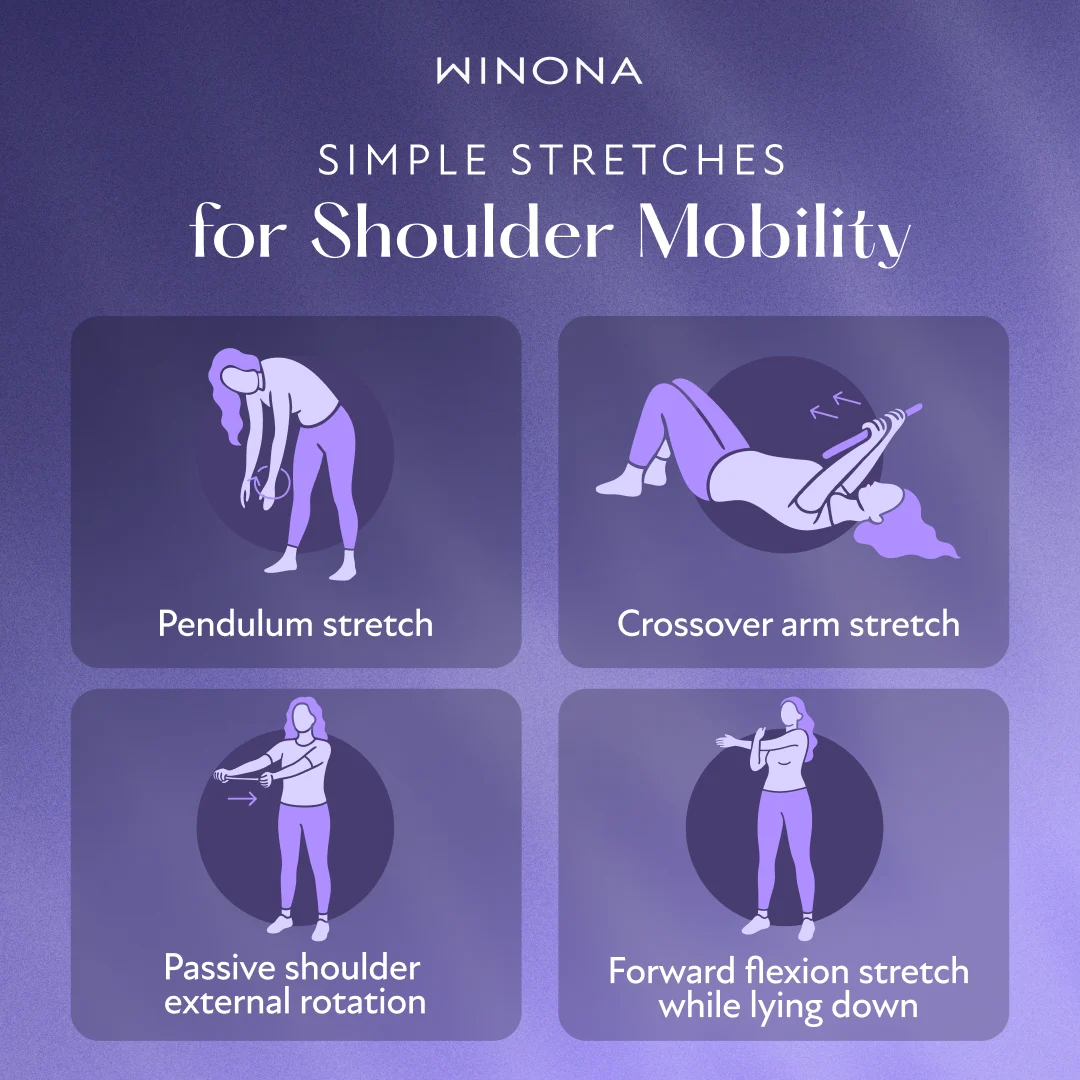
Pain & Inflammation Control: Nonsteroidal anti-inflammatory drugs (NSAIDs) and corticosteroid injections can help suppress inflammation. The injections are most effective when administered before the frozen stage. Applying a heating pad or cold compress to the shoulder may also reduce swelling and joint pain.(3)(7)
Surgical Intervention: Surgery is the least common treatment method for frozen shoulder. However, it may be recommended during the frozen stage if symptoms have not improved with alternative treatments. The procedure may involve manual movement of the shoulder while the patient is under anesthesia. Alternatively, a surgeon may perform an arthroscopy, which involves cutting through thick tissue in the joint capsule.(3)(7)
Systemic Support for Hormonal Health
Hormone Replacement Therapy (HRT): HRT is not intended to treat frozen shoulder specifically. However, increasing low hormone levels in the body may provide musculoskeletal benefits. Muscle pain and joint stiffness can occur as levels of estrogen and progesterone change during menopause. Supplementing these key hormones with HRT may help prevent joint issues.(9)
Research findings from a study published in the Orthopaedic Journal of Sports Medicine suggest that menopausal women who do not use HRT may be at greater risk for frozen shoulder than women who use HRT.(10) While these outcomes are promising, the study findings were not found to be statistically significant, and the researchers emphasized the importance of conducting larger studies.
Other Risk Factors for Frozen Shoulder
While hormonal shifts may play a role in menopausal frozen shoulder, the following have also been identified as contributing factors:(3)(7)
Chronic inflammation
Diabetes
Cardiovascular disease
Thyroid dysfunction
Parkinson’s disease
Natural aging
Although less common, some factors that may increase the risk of secondary frozen shoulder include the following:(1)
Physical Injury: Frozen shoulder may develop from physical trauma, such as a broken shoulder or rotator cuff tear.
Inactivity: A lack of movement may lead to frozen shoulder, such as during prolonged periods of surgical recovery.
Because there are a number of different risk factors associated with frozen shoulder, it’s important to see a doctor to rule out any underlying causes of persistent pain. Discomfort may be related to an injury or alternate health condition and early intervention can reduce the risk of complications from untreated shoulder pain.
Ready to find relief?
If you’ve entered the menopause transition and suspect that hormonal changes may be causing your severe shoulder pain, you may be right. Take the next step and discuss your concerns by getting started with your free visit today. A skilled clinician can assess your symptoms and determine if HRT may be a beneficial supportive treatment.