Each woman’s personal experience of the menopausal transition will vary. However, below you’ll find some of the most common signs of perimenopause, including which symptoms you might notice first.
Change #1: Your Menstrual Cycle Becomes Unpredictable
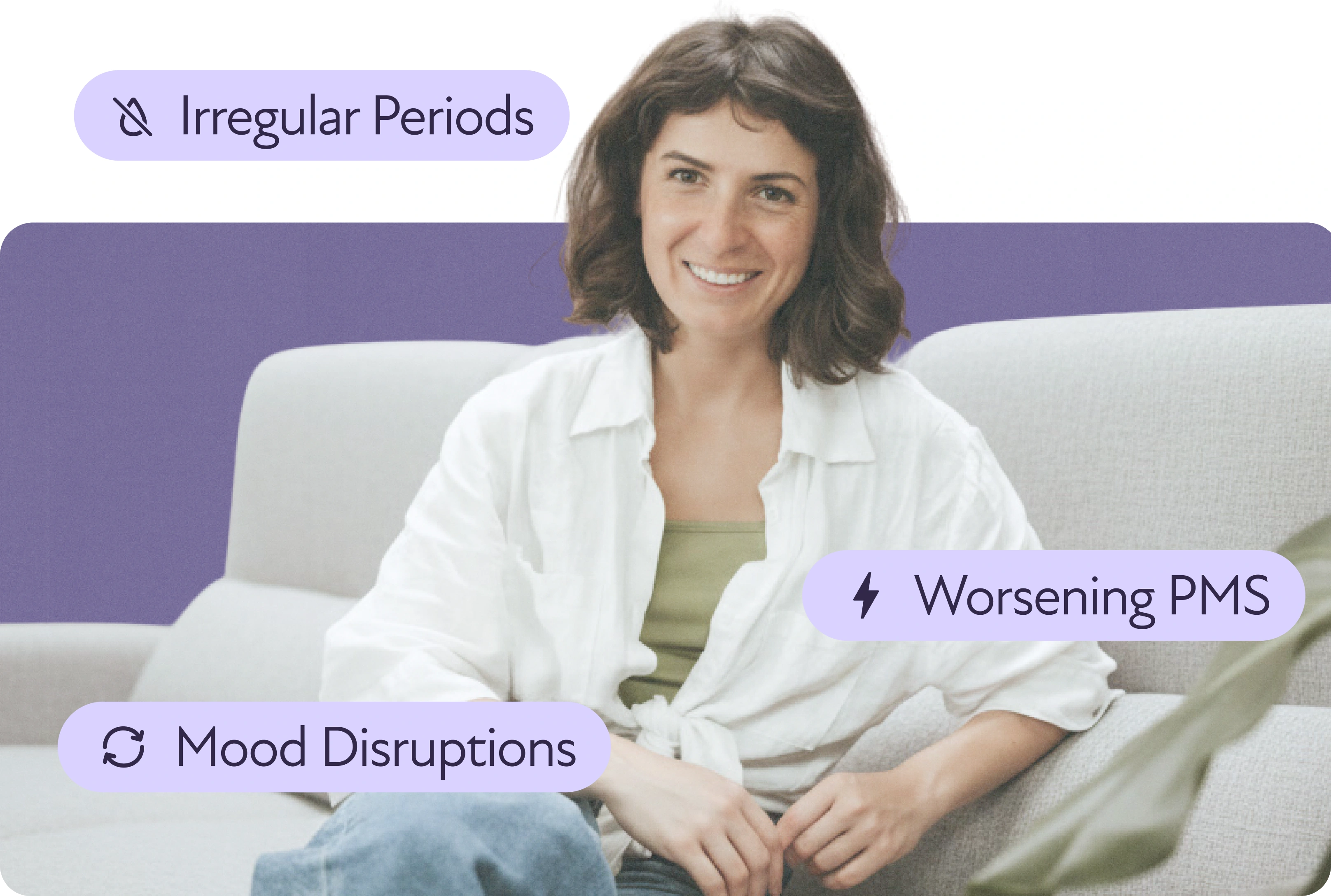
Irregular periods are usually the first sign of perimenopause. These changes may seem concerning at first, but they are a completely normal part of the transition.
Your periods may last longer or shorter than usual, and the flow may become lighter or heavier. You may also begin to miss periods, which is common during the early perimenopause stage.
As you move into the late perimenopause stage, you’ll notice your cycles becoming even more unpredictable. It’s not unusual to go anywhere from 60 days to several months between periods.(1)
Change #2: Your PMS Gets Worse
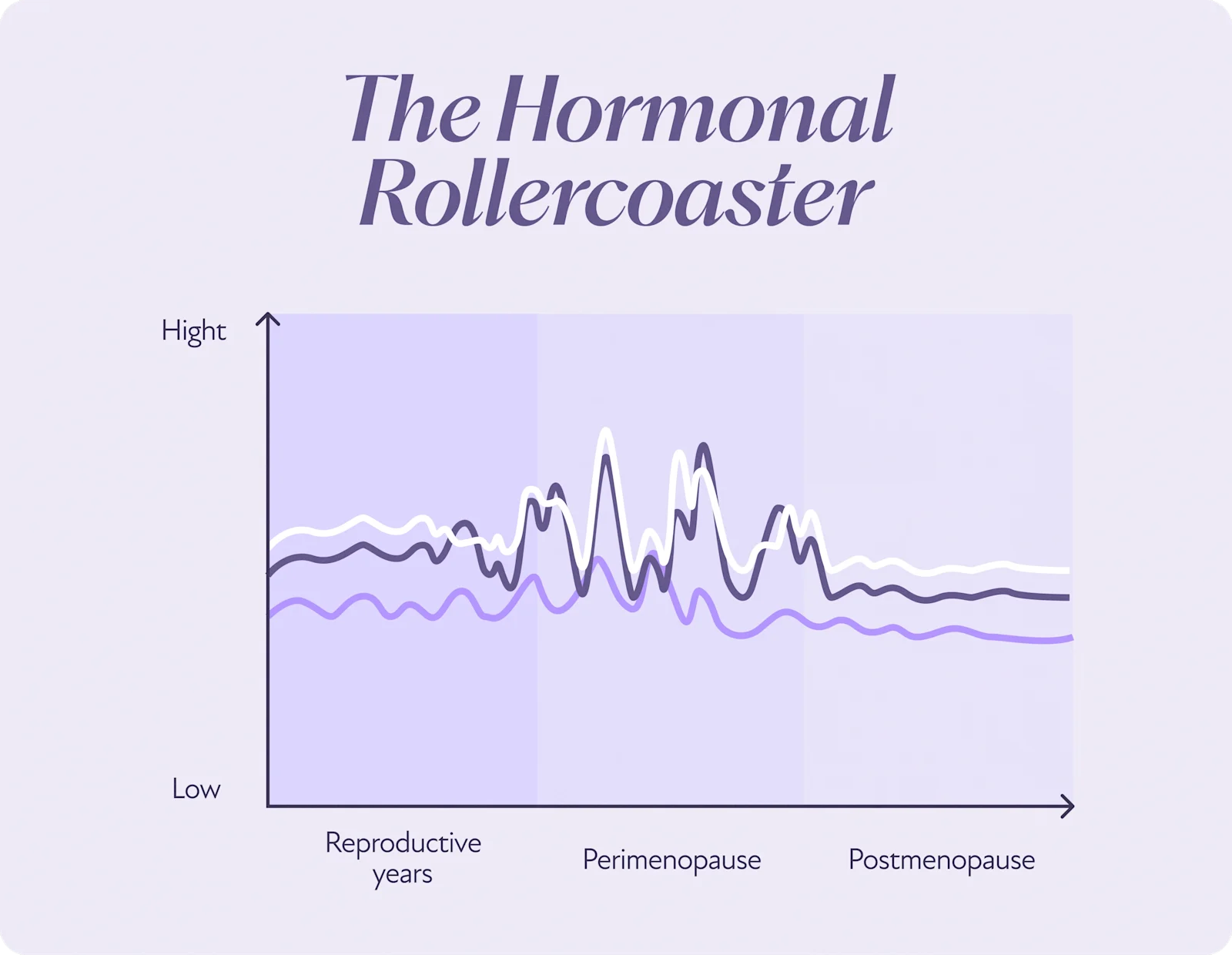
Cramping, bloating, mood changes, and other symptoms of premenstrual syndrome (PMS) may get worse during perimenopause if you’re naturally sensitive to hormonal shifts. The reason you may experience worsening PMS symptoms during this stage of life is likely due to fluctuating hormone levels that can impact many of the body’s systems.(6)
Estrogen and progesterone are believed to affect mood-regulating hormones. Changes in pain perception have also been linked with shifting levels of estrogen and progesterone, particularly during different phases of the menstrual cycle, which may have a similar effect during perimenopause.(7) These factors may contribute to heightened emotional symptoms during the menopausal transition.
Hormonal fluctuations can also change the speed at which food moves through the gut, potentially influencing worsening gastrointestinal symptoms, such as those often associated with PMS.(7)
“I used to suffer from PMS for 3 to 4 weeks out of the month and I was at my wits end. I found Winona and I’m so grateful that I did because now my PMS symptoms last 3 to 7 days out of the month and it’s not nearly as severe. Thank you Winona!” –Winona patient
Change #3: New Mood & Sleep Challenges Appear

Hormonal changes can cause significant mood disruptions during perimenopause. You may feel fine one moment, only to feel upset or irritated a little while later. It’s also common for women to experience anxiety during these transitional years. This is because estrogen influences signaling pathways of neurotransmitters like serotonin and norepinephrine, which are both involved in regulating your mood.
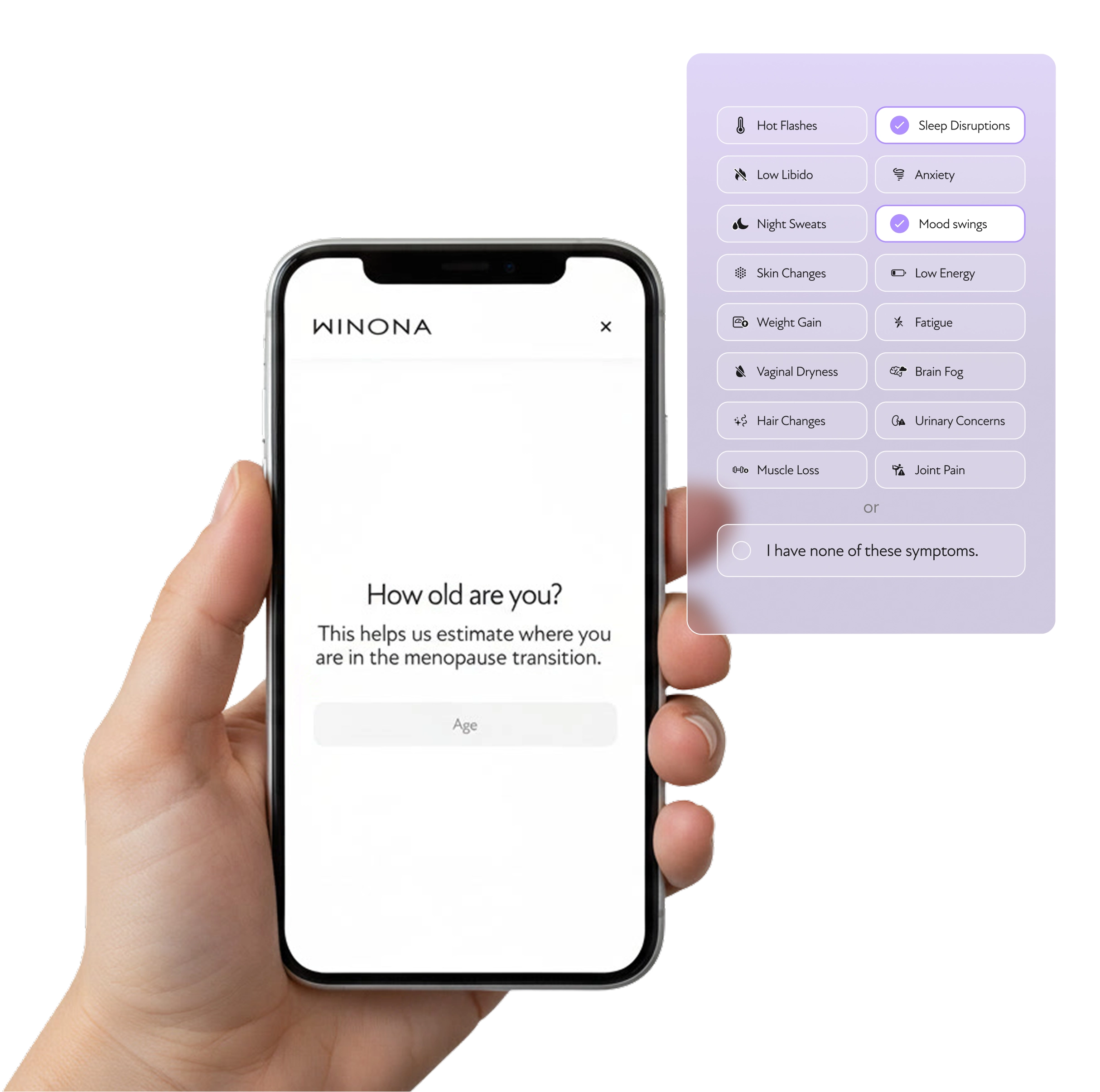
Struggling to fall asleep or waking up drenched in the middle of the night from night sweats? Hormonal changes can be the cause of sleep challenges too. Approximately 40% of women are affected by sleep problems during the menopause transition, including sleep disorders like insomnia.(8) Along with mood changes and vasomotor symptoms, drops in progesterone — a calming hormone — may also contribute to sleep disruptions during perimenopause.(9)
Change #4: Early Physical Symptoms Emerge

Some of the most common early physical symptoms of perimenopause are hot flashes, night sweats, and vaginal dryness.
Vasomotor symptoms (hot flashes, night sweats) are a result of hormonal changes that throw off your body’s internal thermostat. Hot flashes are sudden sensations of heat felt in the face and upper body. You may also sweat or your skin may flush. They typically come and go within 5 minutes. However, just because they may be short-lived, doesn’t mean they aren’t disruptive to women’s daily lives. As many as 74% of perimenopausal women experience hot flashes.(10)
Many women also grapple with night sweats as they enter the menopausal transition.
Vaginal dryness is another signature early sign of perimenopause. When estrogen levels drop, the vaginal tissues become thin and dry. This can lead to irritation, burning sensations, painful sex, or a dip in your sex drive.(1)
The Perimenopause Timeline: When does it start and how long does it last?
There is no definitive timeline for perimenopause. It lasts an average of four years, although some women may spend anywhere from five to ten years in this transitional stage.(1)(11)

The average age women enter perimenopause is 47, although it can start earlier or later.(11)(12) If you’re under 45 and have started noticing symptoms, you might be wondering, “Am I too young for this?” Not necessarily — it’s possible for perimenopausal symptoms to set in during your early 40s or even your late 30s.(1)
Researchers from a study of over 4,000 women in the United States (U.S.) found that about 21% had reached out to a doctor about perimenopausal or menopausal symptoms. Nearly one-third of these women were between the ages of 30 and 45. After consulting with a healthcare provider, over 25% of the women aged 30 to 35 were diagnosed perimenopausal, along with 40% of those aged 36 to 40.(1)
If you reach menopause before the age of 45, it’s defined as early menopause. If menopause occurs before age 40, it’s known as premature menopause. Approximately three in every 100 women will experience premature menopause. The cause isn’t always known, but genetics, health conditions, or certain surgeries can play a role.(13)(14)

It’s understandable that perimenopausal symptoms that come on at an earlier age may cause some women to worry. Consulting with a knowledgeable physician helps ensure your questions are answered and that you receive timely treatment and ongoing support for your long-term health.