Published on:August 02, 2021|Last Updated:September 01, 2026| Approx. 10 Min Read
The Bottom Line:
Hot flashes are not heart attacks or a definitive sign of underlying cardiovascular disease. However, they can be an early signal of potential cardiovascular risk factors that warrant proactive management.
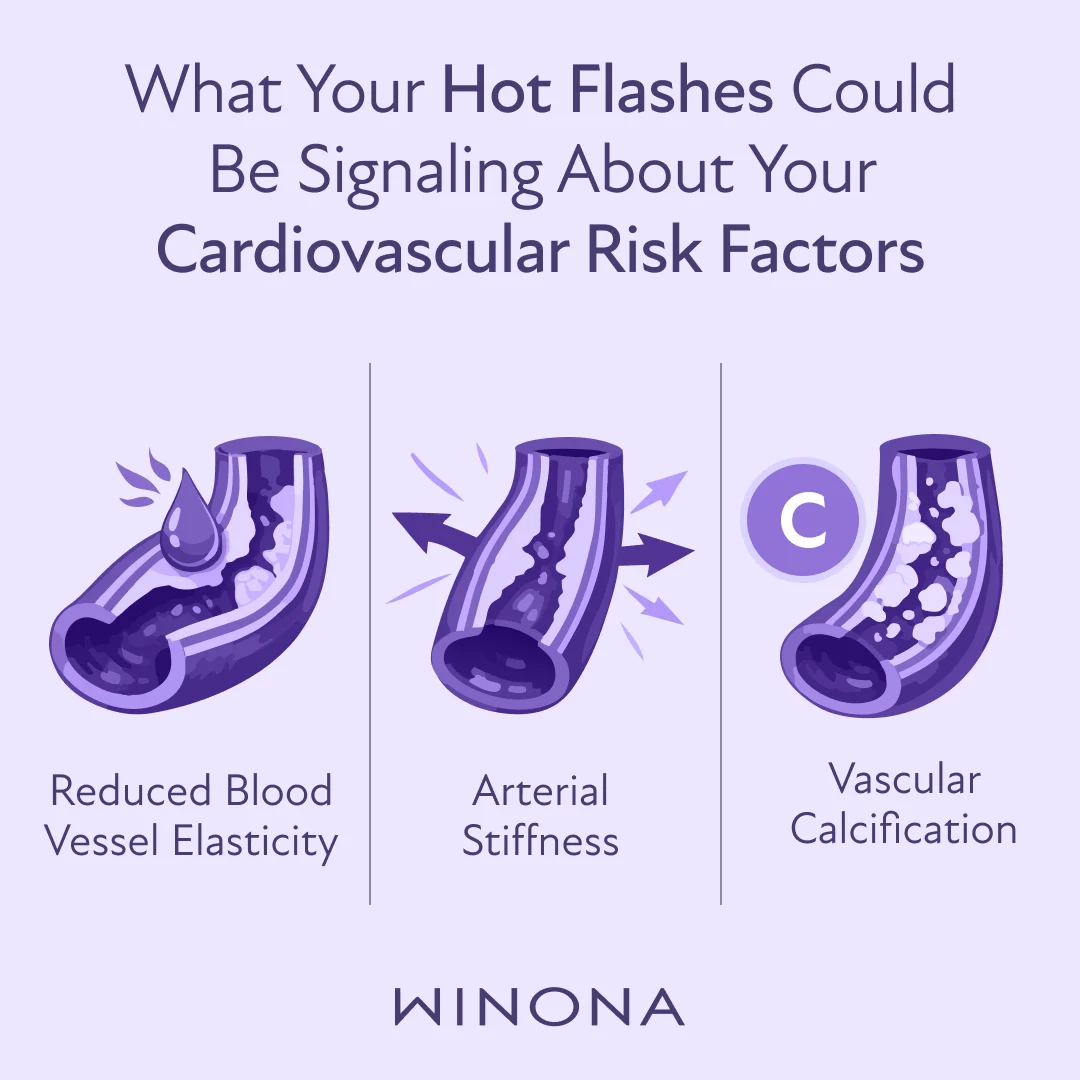
Research suggests a link between vasomotor symptoms and three physiological markers associated with cardiovascular disease risk: reduced blood vessel elasticity, endothelial dysfunction, and increased vascular calcification.
Some women may be concerned about the potential heart health risks of HRT. Although treatment is associated with a small increased risk of blood clots and stroke, transdermal delivery methods have a lower risk of cardiovascular complications compared to oral pills. This is because they are absorbed through the skin directly into the blood stream and bypass metabolization by the liver. Transdermal patches are often the clinically preferred choice for women with high cholesterol or blood pressure.
Dietary changes, regular exercise, and stress-reduction techniques are highly effective lifestyle modifications that can help prevent future cardiovascular events in menopausal women.
Looking for answers and relief?
Take Winona's quick quiz to see whether your symptoms may be related to perimenopause or menopause — then check your eligibility for Winona’s care.
Hot flashes are one of the most common signs that a woman has entered the menopause transition. However, they may signal more than just a shift into a new phase of life. For some women, hot flashes may serve as an early clue to future heart health risks, a link recognized by the American Heart Association (AHA).(1) Understanding this connection is the first step in easing anxiety around long-term cardiovascular health.
The Menopause Society notes that up to 80% of women experience hot flashes, which can persist for a decade or longer.(2) For women experiencing hot flashes for the first time, the sensation of intense heat that rushes into the upper body may trigger feelings of panic or fear of a heart attack. While menopausal hot flashes themselves are not a heart attack, they may indicate vascular changes associated with cardiovascular conditions, such as coronary heart disease or stroke.(1) However, vasomotor symptoms do not mean that future heart problems are inevitable, as there are many factors within women’s control that can help lower their risk of heart disease later in life.
This article explains how hot flashes are tied to adverse vascular changes and reviews the U.S. Food and Drug Administration’s (FDA) stance on the heart health benefits and risks of hormone replacement therapy (HRT). It will also outline an evidence-based, holistic prevention plan to help women feel confident in managing their cardiovascular health during the menopause transition.
The Science: How are hot flashes linked to heart risk?
Hot flashes are associated with changes in blood vessels, which facilitate the transport of blood throughout the body. Vasomotor symptoms, including night sweats, are the result of fluctuating and declining estrogen levels.
Research findings from the landmark Study of Women’s Health Across the Nation (SWAN) Heart Study showed a link between menopausal hot flashes and three predictive markers associated with cardiovascular disease: reduced flow-mediated dilation (a measure of blood vessel elasticity), endothelial dysfunction, and increased vascular calcification.(1) It’s important to understand how these factors are interconnected.
Reduced Flow-Mediated Dilation
Flow-mediated dilation is a clinical measure used to assess the health and elasticity of blood vessels. When blood flow increases, such as when a doctor uses a blood pressure cuff to squeeze the arm, the blood vessels normally dilate, or widen, to accommodate this change in blood flow, signaling healthy blood vessel function.(3)
In the SWAN study, women who reported experiencing hot flashes over the course of two weeks showed reduced flow-mediated dilation compared with women who experienced no vasomotor symptoms. This reduction in flow-mediated dilation is a key marker of what’s known as endothelial dysfunction.(1)
Endothelial Dysfunction
Blood vessel walls consist of several layers. The deepest layer is made up of endothelial cells, which prompt the widening and narrowing of blood vessels in order to regulate blood pressure and keep the blood moving smoothly. These cells are important because they help maintain a strong vascular lining.(4)
The SWAN study showed a connection between hot flashes and endothelial dysfunction.(1) When endothelial cells don’t function as they should, the arteries can become stiff, making it easier for plaque to build up, a condition known as atherosclerosis. These adverse vascular changes are why endothelial dysfunction is known as an early risk factor for cardiovascular disease.(4)
Vascular Calcification
Vascular calcification refers to the formation of mineral deposits within the blood vessel walls. These deposits are made up of calcium phosphate and have a rigid, bone-like structure, making the blood vessels less flexible.(5)
The SWAN study researchers found that women with hot flashes had higher levels of coronary artery calcification and aortic calcification compared with women without vasomotor symptoms. The strongest relationship was seen with aortic calcification.(1)
Aortic calcification occurs when mineral deposits build up in the aorta, the body’s largest artery, which carries blood from the heart to the rest of the body. Because calcification promotes arterial stiffness, the heart has to increase the pressure required to move blood to the organs. Both aortic calcification and coronary artery calcification indicate that the arteries have structurally changed in a way that can increase the risk of cardiovascular events.(6)
Experiencing hot flashes doesn’t automatically mean your heart health is in danger. I tell my patients to view these symptoms as helpful information to better determine their individual risk level and be proactive with early intervention strategies and treatment.
HRT, more accurately called menopause hormone therapy (MHT), is a primary treatment for hot flashes that works by increasing low levels of sex hormones in the body. Media coverage of older studies has left some women concerned about the heart risks associated with HRT. However, modern research and updated guidelines from the U.S. Food and Drug Administration (FDA) offers a more nuanced perspective on the safety and benefits of this treatment.
Like any medication, HRT does carry potential health risks. Combined treatment with estrogen and a progestogen is associated with a small increased risk of cardiovascular problems, such as stroke or venous thromboembolism (VTE), particularly in people with pre-existing risk factors.(7)
However, the Menopause Society notes that these risks are largely observed in women over the age of 60 or in those who start treatment more than 10 years after menopause. When started earlier, research has shown that HRT may have cardioprotective effects, making the timing of treatment an important factor in managing long-term heart health.(7)
The FDA supports this scientific consensus. In a 2025 news release, the agency announced that it would remove the black box warning label from systemic estrogen therapy products. The agency cited research published in the Journal of the American Medical Association (JAMA)showing that estrogen therapy may reduce postmenopausal women’s risk of a coronary event by as much as 50% when treatment is initiated at the appropriate time.(8)(9)
The Critical Difference: Oral vs. Transdermal HRT and Heart Risks
Risk Profile of Oral HRT
Risk Profile of Transdermal HRT
Small increased risk of blood clots and stroke due to first-pass metabolism by the liver
Lower risk of blood clots and stroke because the medication is absorbed through the skin and directly into the bloodstream without being processed by the liver
Scientific evidence highlights differences in the cardiovascular risk profiles of oral and transdermal HRT. Research has found that complications are more closely linked to oral treatment.(10) This is because medications taken by mouth are processed by the liver through what’s called first-pass metabolism. During this process, the liver may release substances that can increase certain heart health risks, particularly blood clots.
Transdermal patches, gels, and creams skip this step, as the medication is absorbed directly into the bloodstream through the skin. By bypassing the liver, research suggests that transdermal HRT may carry fewer cardiovascular risks than oral treatments like tablets or capsules.(10)
In a 2024 scientific review published in the AHA’s journal Circulation, researchers cited studies showing lower rates of blood clots among transdermal HRT users compared with women using oral methods.(10) Another 2017 study published in Stroke found no increased risk of stroke associated with transdermal HRT, in contrast to the increased risk observed with oral treatment.(11)
While all forms of HRT are generally considered safe and effective for most healthy women, transdermal methods may be more medically appropriate for women with certain cardiovascular risk factors, as long as they have no strict contraindications.
A Proactive Plan for Protecting Your Heart
According to 2026 data from the AHA, over 44% of women aged 20 and older in the United States had some form of cardiovascular disease between 2021 and 2023. The highest prevalence rates were seen in non-Hispanic Black women.(12)
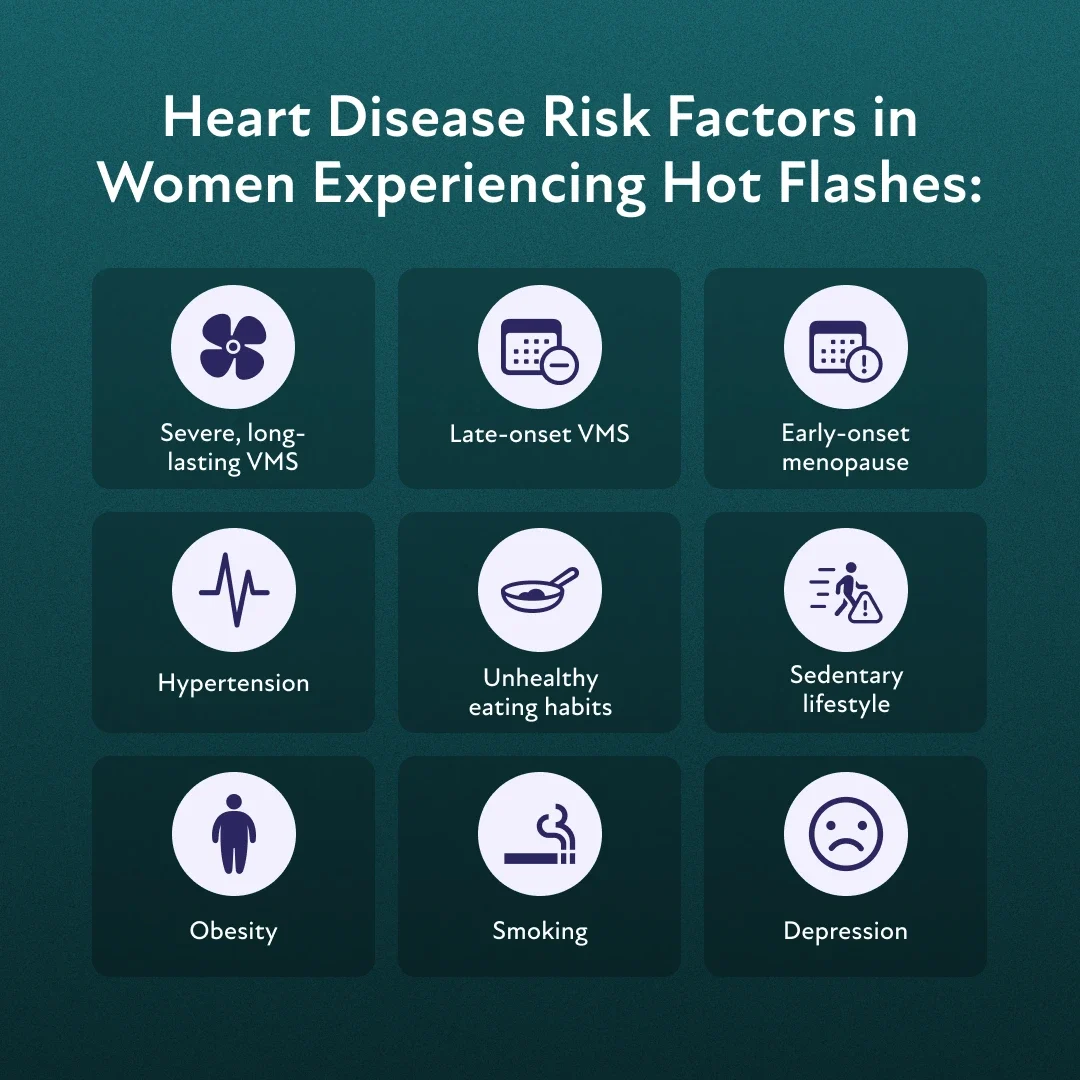
Along with menopausal hormone fluctuations, factors such as genetics, aging, and certain health conditions also play a role in vascular changes. While physiological risk factors can’t always be controlled, lifestyle factors — like smoking, diet, lack of physical activity, and poor sleep — can be managed.
Researchers believe that more than 80% of heart disease cases can be prevented. The following holistic, research-backed action plan outlines healthy habits that can make a significant difference in protecting women’s long-term heart health.(13)
Adopting a Heart-Healthy Diet
Making informed food choices can go a long way in lowering one’s risk of cardiovascular disease. The following foods are associated with a reduced risk of coronary heart disease, stroke, and heart failure, making them the gold standard for protecting heart health:(14)
Whole grains
Fruits
Vegetables
Nuts
Fish
Although research findings on dairy products are mixed, some studies have found heart-health benefits associated with milk consumption. A meta-analysis cited by the AHA linked drinking approximately 1 cup of milk daily with a reduced risk of cardiovascular disease, stroke, and hypertension. Another study cited showed that fermented dairy products, particularly cheese and yogurt, were associated with a lower risk of cardiovascular disease.(14)
Limiting certain foods is just as important as increasing the intake of heart-healthy options. By reducing the consumption of foods that negatively affect heart health, women can actively lower their cardiovascular risk factors. For example, decreasing sodium intake is proven to lower blood pressure, while minimizing added sugar supports healthy blood pressure and cholesterol levels, both of which are key indicators of heart health.(14)(15)
It may seem logical to assume that limiting food intake overall would promote heart health by supporting weight management during menopause. However, eating regular meals throughout the day has been shown to reduce cardiovascular risk factors, while skipping meals may have detrimental effects.
The AHA cites evidence that skipping breakfast tends to increase levels of low-density lipoprotein (LDL) cholesterol, or “bad” cholesterol. Another study found that forgoing breakfast was linked with an increased risk of death from cardiovascular disease. Skipping all three meals in a day was found to increase the risk of all-cause mortality.(14) These findings reinforce that a heart-healthy diet isn’t about food restriction — it’s about making intentional food choices.
Incorporating Regular Exercise
Prioritizing physical activity throughout the week can have a significant positive impact on heart health, potentially even more so for women than for men.
Research findings from a 2024 study published in the Journal of the American College of Cardiology (JACC), which involved over 400,000 U.S. adults, showed that women who exercised regularly had a 36% lower risk of death from cardiovascular disease compared with those who were inactive. These benefits were more significant in women than in physically active men, whose risk of cardiovascular mortality fell by only 14% compared with inactive men.(16)
Experts recommend getting a minimum of 30 minutes of moderate-intensity aerobic physical activity at least five days a week, in addition to two days of muscle-strengthening exercises.(17) Heart-healthy aerobic activities include brisk walking, swimming, or cycling, while mini-squats offer a beginner-friendly introduction to resistance training.
For women who want to try more vigorous exercise, running, jumping rope, high-intensity interval training (HIIT), or spin classes are effective options. To increase the intensity of resistance training, consider full squats, planks, or weightlifting to maximize cardiovascular benefits.
Managing Stress Levels
Research has linked stress with the development of atherosclerosis as well as endothelial dysfunction.(18) Having systems in place to manage stress when it arises is an important step towards protecting future heart health.
Stress-reduction techniques affect everyone differently, so it may take some time to find what works best. Yoga, meditation, deep breathing exercises, journaling, or listening to music are everyday strategies that can help maintain healthy stress levels. Having a go-to activity that keeps the mind engaged can be particularly beneficial in moments of heightened stress, such as sewing, cooking, or coloring.
In addition tobuildingcoping skills, it’s important to implement healthy habits that reduce stress, such as getting plenty of sleep. Regular sleep has been shown to lower the risk of cardiovascular disease.(14) Maintaining a consistent bedtime, keeping the temperature in the bedroom cool, and limiting screen time in the evenings are all strategies that can promote a good night’s sleep.
Smoking, including vaping, is sometimes used to manage stress. However, it drastically raises the risk of cardiovascular disease, stroke, and death. Even minimal exposure to cigarette smoke, including secondhand smoke, can significantly increase a person’s risk of cardiovascular disease.(14) Avoiding smoking and secondhand smoke is one of the most critical lifestyle changes women can make to protect their heart health.
Knowing the Numbers (Blood Pressure & Cholesterol)
High cholesterol (hyperlipidemia) and high blood pressure (hypertension) are two primary risk factors for cardiovascular disease, with hypertension considered the most significant contributor.(19)
Estrogen helps blood vessels maintain their flexibility, but as estrogen levels fluctuate and decline during menopause, blood pressure often rises. When blood pressure stays high, the prolonged force on the artery walls can cause small tears in the blood vessels. The body repairs these tears with special cells, but plaque-forming substances can also progressively accumulate at these damaged sites, increasing the risk of cardiovascular events.(20)
Maintaining regular check-ups with a doctor is the best way for women to keep track of their blood pressure and cholesterol levels. This allows any concerning changes to be addressed early through lifestyle modifications or medication, if necessary.
What is considered a healthy measurement can vary based on an individual’s health status and medication use. Generally, the following blood pressure and cholesterol measurements are broadly considered optimal standards for women:(21)(22)
Blood Pressure: Below 120/80 mm Hg
Total Cholesterol: Below 200 mg/dL
LDL Cholesterol: Below 100 mg/dL
HDL Cholesterol: 60 mg/dL or higher
Get expert guidance in creating your personalized heart health plan.
Understanding the connection between menopausal vasomotor symptoms and cardiovascular changes can help women feel less concerned when they first experience a hot flash. Hot flashes aren’t a direct cause of future heart problems but rather a signal to take steps to manage cardiovascular risk factors early.
With a proactive plan that includes lifestyle changes and appropriate medical treatment, women can confidently manage their heart health during the menopause transition and beyond. For many, HRT can play a supportive role in a long-term heart-health plan. Complete a brief intake to connect with a Winona physician who can offer expert guidance and create a personalized treatment plan that includes the safest and most effective HRT delivery methods best suited to your needs.
Frequently Asked Questions (FAQs) About Hot Flashes and Heart Health
While hot flashes and heart attacks can both cause increased sweating, heart palpitations, dizziness, or fatigue, physical pain symptoms are more commonly associated with heart attacks in women. These may include pain or aching in the back, neck, or jaw, as well as pain or pressure in the lower chest or upper abdominal area.
Hot flashes, in contrast, are not typically associated with physical pain and are mainly characterized by heat sensations and skin flushing. Because symptoms can overlap, it’s important to seek emergency medical attention if you experience any new or worsening pain or pressure.
Hot flashes can increase the body’s heart rate, which means some women may experience temporary sensations of a racing heart, referred to as heart palpitations. However, hot flashes are not typically a cause of chest pain. Some women may experience anxiety or muscle aches during menopause, which can cause discomfort in the chest area. However, chest pain, pressure, squeezing, or tightness are serious cardiovascular symptoms that warrant urgent medical help.
No, hot flashes are not generally an indication of underlying heart disease. Rather, they are considered a risk factor for potential future cardiovascular issues. However, it’s important to remember that not all women who experience hot flashes will develop heart disease.
Not typically. There isn’t strong enough evidence to suggest that an existing heart condition can trigger hot flashes. The two have different root causes. Vasomotor symptoms are driven by hormonal fluctuations during menopause that affect how the body regulates temperature. Heart conditions are a reflection of structural or functional damage influenced by a variety of factors, such as genetics, diet, exercise, and cholesterol and blood pressure levels.
This article is for informational purposes only and does not constitute medical advice. The information contained herein is not a substitute for professional medical advice. Always talk to your doctor about the risks and benefits of any treatment.