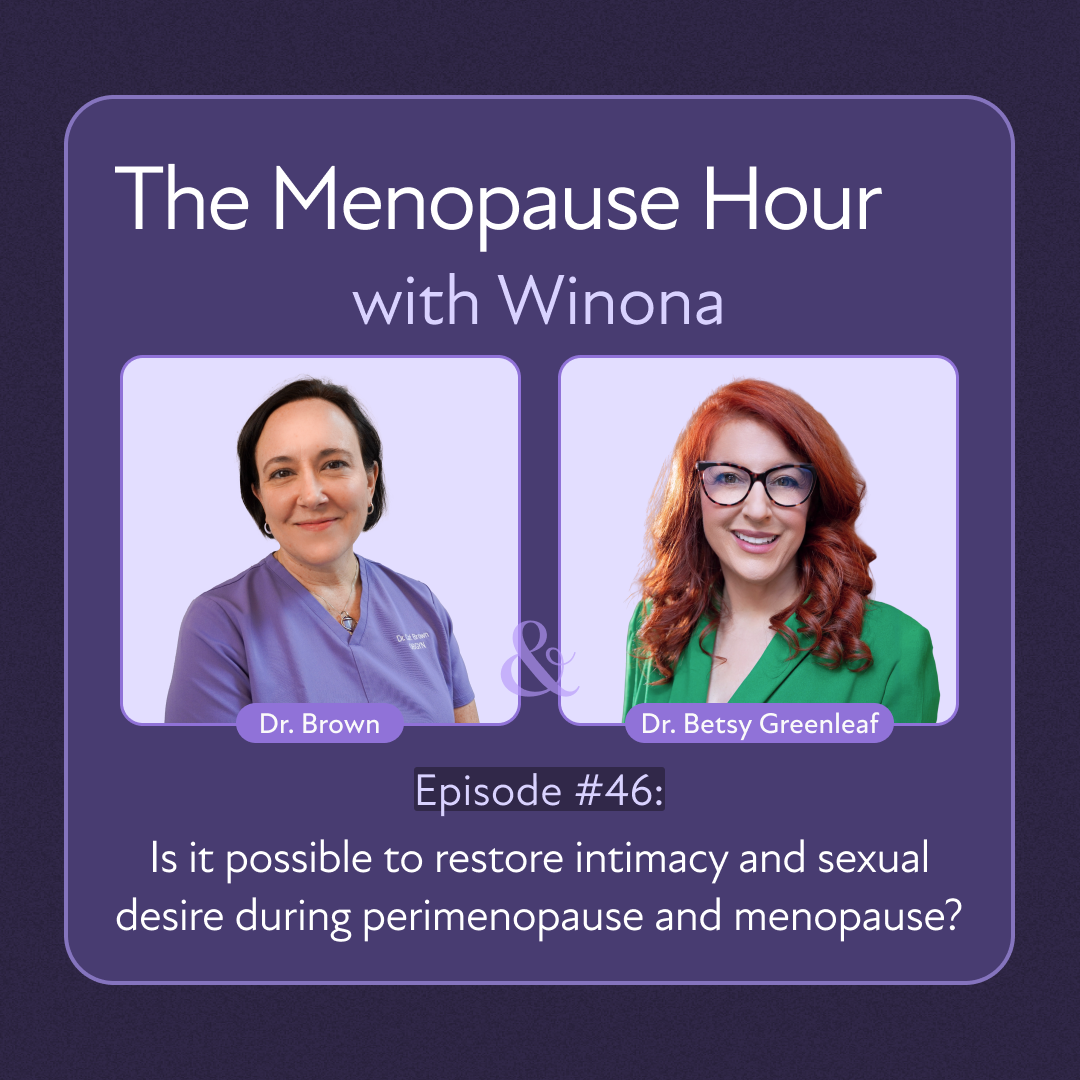
Key Takeaways
Stress and desire can't coexist on a chemical level
Dr. Greenleaf explained that sex hormones are produced from cholesterol primarily when the body is in a relaxed, parasympathetic state. Under stress, the body prioritizes survival over reproduction, shifting from hormone production to cortisol production. Managing stress levels is a direct way to support sexual desire.
Testosterone decline starts years before perimenopause
Dr. Brown noted that testosterone levels begin dropping in a woman's 30s, well before perimenopause symptoms typically appear, and continue declining alongside estrogen levels. Both hormones affect how genital tissue responds to sexual stimuli. Restoring estrogen levels through hormone replacement therapy (HRT) can enhance tissue function, while supplementing with DHEA can help raise women’s natural testosterone levels, which may improve libido.
Gut and vaginal microbiome health are linked to libido
Dr. Greenleaf explained that gut bacteria produce most of the body's serotonin, and a healthy gut is associated with a stronger sex drive in both men and women. She described how declining estrogen levels cause the vaginal tissues to thin during menopause. This reduces glycogen (the form of glucose the body stores for energy), which is the primary food source for healthy vaginal bacteria. As the microbial environment shifts, libido may be negatively affected.
Vaginal estrogen can help even if a woman is not experiencing dryness or pain during sex
Dr. Brown explained that reduced pleasure during sex can occur even when dryness or pain isn't present. Declining estrogen levels affect how nerve endings in the vulva and vagina respond to touch. She noted that localized vaginal estrogen supports blood flow and tissue responsiveness, with improvements typically building gradually over about a month of consistent use.
Responsive desire can be built through willingness to explore rather than waiting for the mood to strike
Dr. Greenleaf introduced the Rosemary Basson model of sexual response, explaining that desire doesn't need to be spontaneous to be real. She recommended setting aside dedicated time, either alone or with a partner, without the expectation that sexual activity must lead to intercourse. She emphasized how a willingness to explore can stimulate desire, rather than waiting to feel "in the mood."