It’s not unusual for women to feel as though their digestive health has taken a turn for the worse during the menopause transition. Many women in their mid-40s report feeling gassy and uncomfortable, unable to eat the foods they used to, and as though their digestion has become an overall mess. These symptoms aren’t random. In fact, there’s a physiological reason behind them: Hormonal fluctuations during perimenopause, particularly estrogen, can disrupt the gut microbiome — the ecosystem of microorganisms in the intestines.
The connection between the gut microbiome and the body’s hormones operates like a two-way street. During the menopause transition, changes in the levels of sex steroid hormones can disrupt the balance of “good” and “bad” microbes in the gastrointestinal tract, a state referred to as dysbiosis. Menopausal hormone shifts can also reduce the diversity of microbes, which is a key component of gut health.(1)On the other hand, changes in the gut microbiome can also affect hormone regulation. Together, these disruptions can lead to frustrating digestive symptoms that interfere with daily life.
By having a deep, scientific understanding of how hormonal fluctuations during the menopause transition impact the gut microbiome, women can take practical steps to restore their gut health and ease digestive discomfort.
The Estrobolome: The Missing Link Between Your Gut and Your Hormones
Research on how the menopause transition affects the gut microbiome is still emerging. However, scientists believe a specific group of bacterial genes called the estrobolome may play a role.
What is the estrobolome?
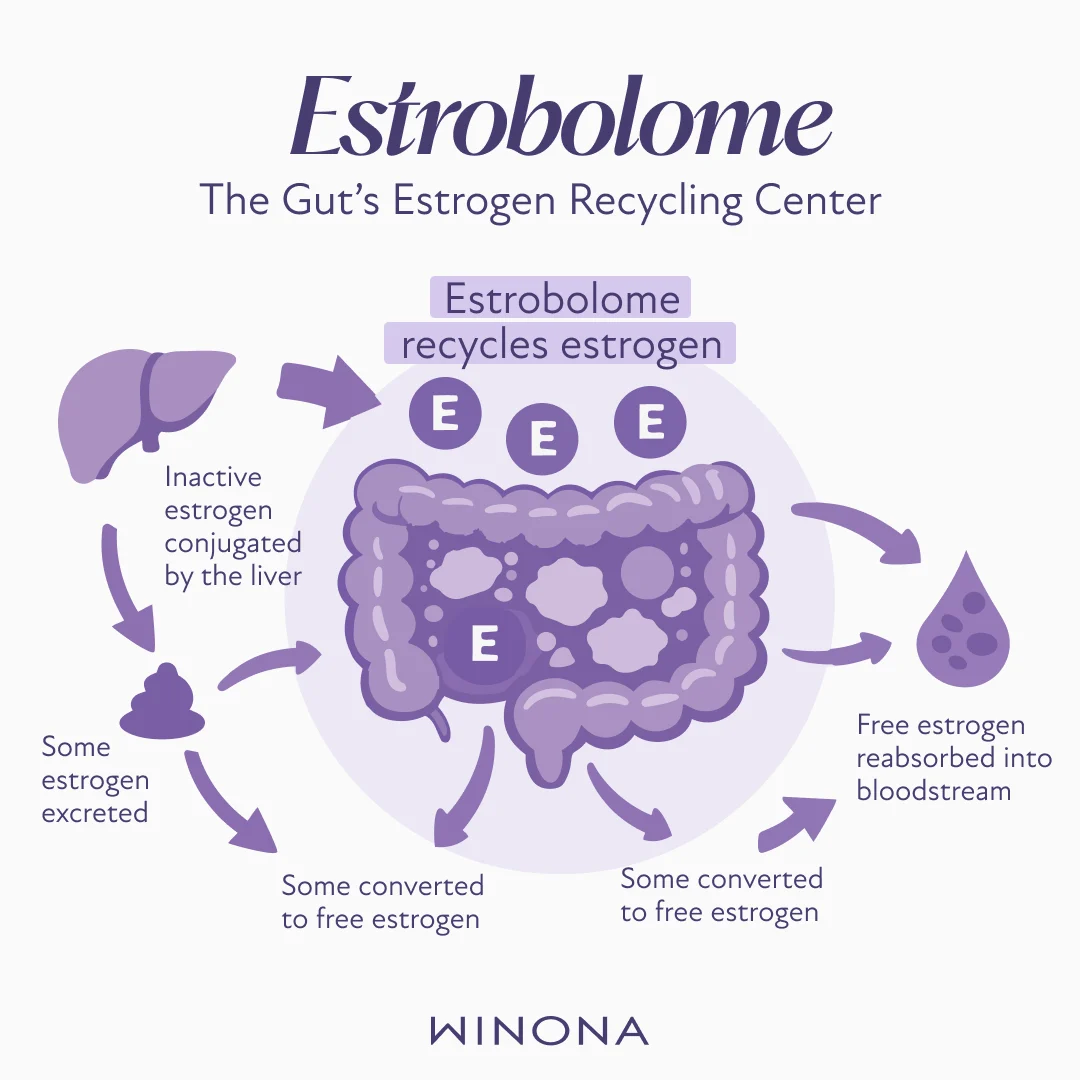
The estrobolome can be thought of as the gut’s estrogen recycling center. It refers to a group of bacterial genes that convert inactive conjugated estrogen — estrogen that has been chemically altered by the liver in preparation for its excretion as waste — back into an active form that can be reabsorbed into the bloodstream. By influencing how the body reuses estrogen, the estrobolome is thought to play a supportive role in women’s gut health.(1)
How Menopause Disrupts the Estrobolome
Hormonal shifts during the menopause transition have been linked to various changes in the gut microbiome, including its function, composition, and microbial abundance. However, emerging research suggests that menopause may have specific effects on the estrobolome.
There are two main bacterial enzymes involved in the estrobolome’s processing of estrogen: β-glucuronidase and aryl-sulfatase. A 2022 study authored by the American Society for Microbiology found that β-glucuronidase was significantly less abundant in postmenopausal women compared to premenopausal women.(2)Postmenopausal women were also found to have lesser amounts of Akkermansia muciniphila, a bacterial species that produces both β-glucuronidase and aryl-sulfatase. Overall, the research suggests that hormonal changes during the menopause transition may influence the abundance of certain bacteria in the estrobolome that help recycle estrogen in the body.(2)
Constantly dealing with an upset stomach can feel lonely or even embarrassing, but the reality is that most women experience gastrointestinal issues during the menopause transition.
Study findings presented at the 2025 Annual Meeting of The Menopause Society showed that, out of 600 perimenopausal and menopausal women, 94% experienced digestive symptoms. Additionally, 82% of these women said that symptoms either started or worsened around the time of the menopause transition.(3)Bloating, constipation, and abdominal pain were among the most common symptoms reported. Here’s how menopausal hormone changes are believed to be connected to these common GI symptoms.
Many women are familiar with bloating, the uncomfortable feeling of fullness, pressure, or gas buildup in the abdomen. Hormonal changes during the menopause transition are thought to influence several factors that may contribute to bloating. This includes changes in the gut microbiota, increased sensitivity to digestive discomfort, and a slowdown in how quickly the stomach moves food into the small intestine, a process called gastric emptying.(4)
Hormonal changes may also reduce overall gut motility, or how fast the body moves food and waste through the entire gastrointestinal tract. All of these effects may contribute to bloating and gas during the menopause transition.
Constipation becomes more common with age. In a study involving 100 postmenopausal women, 37% were found to be affected by constipation. Most women reported straining during bowel movements, along with other common symptoms such as hard or lumpy stools, feelings of incomplete bowel movements, and fewer than three bowel movements per week.(5)
Research exploring the relationship between menopause and constipation is limited. However, new or worsening constipation during these transitional years may be influenced by the same mechanisms believed to play a part in menopausal gas and bloating: changes in gastric emptying, gut motility, and gut microbiota.
Strategies to Support a Healthy Menopause Gut
While gut changes are common during the menopause transition, that doesn’t mean women’s quality of life should suffer. There are several steps women can take to support gut health later in life, including fueling the microbiome with “good” bacteria, making strategic food choices, managing sleep and stress levels, and exploring supportive hormonal treatment options.
Feeding Your Microbiome: Probiotics & Prebiotics
One way to support a healthy menopause gut is to feed it the types of microorganisms it needs to function at its best. This starts with prioritizing foods that contain probiotics and prebiotics.
Probiotics are specific live microorganisms that, when ingested in effective amounts individualized to each person, can support gut health. Prebiotics are ingredients that are either not digestible or only partially digestible by the body that act as food for beneficial bacteria.(6)(7)
Both probiotics and prebiotics have been shown to support menopausal women’s gut health by enhancing microbial diversity. Research also demonstrates that prebiotic-rich foods may improve the integrity of the intestinal barrier in perimenopausal and menopausal women.(1)
The role of the gut barrier is to limit the movement of potentially harmful microbes and other substances across the intestinal lining into the bloodstream. Consuming prebiotics may help support the integrity of the gut barrier and overall intestinal health.(1)(8)
The best food source of probiotics is yogurt. This is because it contains the specific, beneficial probiotic bacterial strains Lactobacillus bulgaricus and Streptococcus thermophilus.(9)
While there are other fermented foods that also contain beneficial, live cultures of bacteria, they aren’t always probiotic-specific strains. Although this is an important distinction, the following foods often get grouped into the category of probiotics because they contain what is broadly considered “good” microbes:(9)
Certain unfermented foods will sometimes contain added probiotics, such as:
Cereals
Milks
Juices
Smoothies
Nutrition bars
The following are rich food sources of prebiotics to help feed the beneficial bacteria:(10)
Yogurt
Flaxseeds
Soybeans
Onions
Garlic
Asparagus
Artichoke
Bananas
Wheat
Honey
More research is needed on the potential benefits and risks of probiotics and prebiotics. They may not be recommended for people with certain health conditions or those taking certain medications. It’s important that women consult with their doctor before taking any new medications or supplements.
Focusing on Fiber and Nutrients
Fiber is essential for women’s health overall, but it becomes all the more important during the menopause transition, particularly when it comes to gut health. Fiber helps feed beneficial gut bacteria. Because menopause has been linked with a decrease in microbial diversity, eating more fiber may help promote a healthy balance of gut bacteria during this phase of life.(11)
Women are recommended to get approximately 25 grams (g) of fiber daily.(12) The nutrient can be found in nearly every healthy food group, including the following:(13)
Grains (whole wheat cereal, quinoa, brown rice, popcorn)
Seeds (almonds, chestnuts, chia seeds, pumpkin seeds)
Vegetables (artichoke, lentils, green beans, broccoli)
Fruits (raspberries, oranges, pears, bananas)
Along with fiber, it’s important to consume other key nutrients that may further support gut health during the menopause transition, such as the following:
Menopausal women often require higher amounts of magnesium. This is because the decline of estrogen can make it harder for the body to absorb and retain it. Some research suggests a link between magnesium intake and changes in the gut microbiota.(14) Maintaining the recommended daily intake of magnesium can help ensure the body is getting enough magnesium, which may subsequently support healthy levels of gut microbes. Women over the age of 50 are recommended to get 320 milligrams (mg) of magnesium every day.(15)
Although research findings are mixed, some studies show that dietary vitamin D intake may be associated with compositional changes in the gut microbiome and species richness, two factors that may influence gut health.(16) Women between the ages of 51 and 70 are recommended to get a minimum of 15 micrograms (mcg) of vitamin D daily, but should not consume more than 100 mcg.(15)Zinc is another gut-friendly nutrient that has been shown to help preserve the integrity of the gut barrier.(17) Consuming the recommended intake of 8 mg daily may help women maintain the strength and proper function of this barrier.(18)
Foods that are less nutrient-dense and high in processed sugar, sodium, and trans fats can hinder the growth of healthy microorganisms in the gastrointestinal tract. Minimizing intake of these foods can help promote a healthy gut microbiome later in life.(19)
Managing Stress and Sleep
It’s understandable to think that the best strategies for improving gut health would all be dietary. However, maintaining one’s mental health and sleep hygiene is just as important.
Stress Management Strategies
Stress has been associated with increased inflammation, gut permeability, and imbalances in gut bacteria.(20) Keeping stress levels low through the following self-care practices may help strengthen gastrointestinal health:(21)
Many of these strategies center on physical activity, which has a well-established role in supporting gut health. Low- or moderate-intensity exercise, such as walking, swimming, or cycling, can help support intestinal integrity and enhance gut motility. This reduces the amount of time pathogens are in contact with the intestinal lining by moving waste faster and more efficiently through the gut.(22)
Other stress-reduction strategies include the following:(21)
Delegating overwhelming tasks to a friend, family member, or partner
Calling a loved one for emotional support
Scheduling time for relaxation
Seeking mental health support with cognitive behavioral therapy (CBT)
Strategies for Improving Sleep
The transition between light and dark isn’t the only factor that regulates the body’s 24-hour sleep-wake cycle. It’s also influenced by the gut microbiome.
Gut microbes produce certain sleep-regulating compounds, such as gamma-aminobutyric acid (GABA). They also support the body’s production of serotonin and melatonin. In fact, about 95% of serotonin is produced in the gut.(23)Communication between the gut and the brain flows in both directions through a neural network called the gut-brain axis. This means that imbalances in the gut microbiome may contribute to sleep disturbances, while a lack of sleep can in turn disrupt the gut microbiome.(24)
The following strategies can help women get a better night’s sleep:
Maintaining a regular bedtime schedule
Creating a soothing bedroom environment
Refraining from eating late at night
Limiting alcohol and caffeine intake
Avoiding vigorous workouts right before bed
Reducing artificial light exposure
Taking a break from social media in the evenings
Engaging in calming activities like reading, journaling, or listening to music before bed
Considering the Hormonal Factor
Lifestyle changes can go a long way in improving gut health over time. However, these changes can’t address the loss of estrogen contributing to gut disruptions during this phase of life. Hormone replacement therapy (HRT), more accurately referred to as menopause hormone therapy (MHT), addresses the hormonal factor by supplementing low hormone levels.
A study published in the scientific journal Menopause found that the gut microbiota of postmenopausal women receiving MHT more closely resembled that of premenopausal women compared to postmenopausal women who were not receiving treatment. These findings suggest that MHT may support gut health by increasing low levels of hormones that influence the gut microbiome.(25)
Taking a Holistic Approach to Menopause Gut Health
If you’re struggling with digestive symptoms during the menopause transition and dietary changes, exercise, and stress management are only getting you so far, consider taking Winona’s free health quiz to see what kind of personalized treatment plan may help you find relief. By combining healthy habits with appropriate medical treatment, women can look forward to enjoying their favorite foods again.