Hormonal changes during the menopause transition can increase women’s risk of vertigo, a sensation where a person feels like the environment around them is moving.
Vertigo is not the same as dizziness. Vertigo involves a false sense of motion, while dizziness is characterized by feelings of lightheadedness or unsteadiness.
Estrogen receptors are located in the inner ear, which helps the body maintain physical balance. Studies suggest that low estrogen levels may impact receptor function, potentially increasing the risk of vertigo.
Estrogen and progesterone help maintain healthy blood circulation. Hormonal shifts may alter blood flow to the inner ear, which may be another contributing factor to the increased risk of vertigo associated with menopause.
A doctor will assess a patient for any underlying health conditions that may be causing vertigo. They will also determine whether its symptoms are acute or chronic. Once a physician determines the type of vertigo a patient is experiencing, they can recommend targeted treatment options, which may include medication, balance retraining, or complementary treatments like hormone replacement therapy (HRT).
Understanding Menopause and Vertigo: Causes, Symptoms, & Treatments
 Erin Marie McCluskey
 Dr. Saranne Perman, MD
Article Content
The Bottom Line:
Vertigo is one of the common — yet lesser-discussed — symptoms of menopause. Hormonal fluctuations, age-related changes, and other conditions occurring during menopause can collectively contribute to an increased prevalence of vertigo during the menopausal transition.(1)
Sudden or severe episodes of vertigo may affect the quality of life and the ability to perform day-to-day activities. Women facing these challenges should consult a physician who can recommend treatment approaches like medication or hormone replacement therapy (HRT) based on symptom severity and the underlying cause.
What is vertigo?
Vertigo is a false sense of motion, where an individual feels as if they or their surroundings are moving. There are two types of vertigo: central and peripheral.(2)
Central vertigo is caused by conditions affecting the brain, such as migraines or a brain tumor. Conversely, peripheral vertigo results from issues in the part of the inner ear responsible for maintaining balance. Any condition affecting the vestibular nerve — the nerve that communicates signals between the inner ear and the brain — can also cause peripheral vertigo.(2)
How can menopause increase the risk of vertigo?
Studies have shown that certain changes during menopause may increase susceptibility to vertigo in some women, including the following:
Hormonal Fluctuations
A 2023 review highlights estrogen’s role in maintaining brain chemistry and nerve health. Fluctuating estrogen levels during the menopausal transition can disrupt these functions, increasing the prevalence of vertigo.(3)
Estrogen and progesterone also support blood circulation. A drop in these hormones may affect the blood supply to the inner ear, which can cause vertigo episodes during the menopausal transition.
Altered Sensitivity of Estrogen Receptors in the Inner Ear
The inner ear contains estrogen receptors that are sensitive to hormonal fluctuations. Studies have shown that low estrogen levels can alter the function of these receptors, potentially contributing to vertigo during menopause.(1)
Anxiety
Many women experience heightened anxiety during menopause. This emotional stress may trigger or aggravate vertigo during the menopausal transition.(1)
Increased Incidence of Benign Paroxysmal Positional Vertigo (BPPV)
BPPV is an inner ear disorder. The semicircular canals in the inner ear contain fluid that detects changes in the body position and communicates this information to the brain. In BPPV, calcium crystals (otoconia) are present in the semicircular canals, causing the brain to receive confusing signals about the body’s position. As a result, head movements can trigger a vertigo episode.(4)
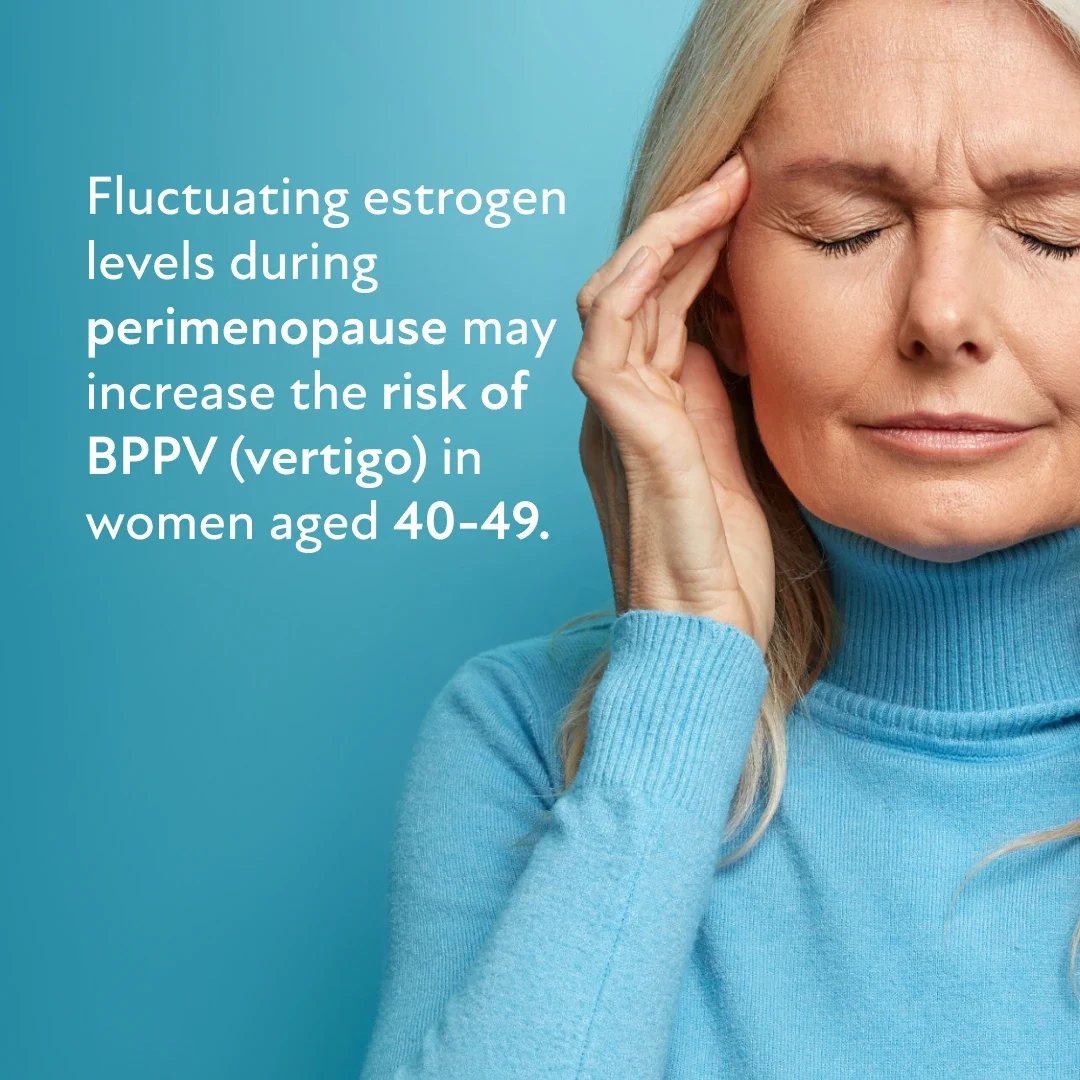
Estrogen is believed to influence the metabolism of otoconia. Declining estrogen levels during menopause may delay the breakdown of otoconia, leading to the formation of larger crystals.(4)
Studies also suggest that hormonal fluctuations may alter the composition of the inner ear fluid (endolymph), promoting the formation of these calcium crystals. Low estrogen levels may also facilitate the movement of otoconia from other parts of the ear toward the semicircular canals. Moreover, osteoporosis, which is a common occurrence in menopause, is considered to be a contributing factor for BPPV.(4)
All these changes increase the risk of BPPV during menopause, which is one of the most common causes of vertigo.(4)
Other Potential Causes of Vertigo
Menopause may also increase the risk of certain conditions that can cause vertigo, such as the following:
Ménière's Disease
Ménière's disease (MD) is another common cause of vertigo during menopause. One change in MD that contributes to vertigo is the increased level of endolymph in the inner ear structures. Other associated symptoms of MD are hearing loss, a feeling of fullness in the ears, and tinnitus.
Studies show that low estrogen levels may decrease circulation to the inner ear and alter the signals about body position sent from the inner ear to the brain. Estrogen also plays a role in sodium-water retention, which can increase endolymph levels. All these factors can contribute to MD during menopause.(5)
Vestibular Migraine
Vestibular migraine involves recurrent vertigo episodes in individuals with a history of migraine.
Ovarian hormones, estrogen and progesterone, have receptors in the brain that respond to their fluctuating levels. Research has shown that an imbalance between these hormones may alter pain perception and trigger migraines in susceptible individuals. This imbalance during menopause can aggravate or unmask vestibular migraine in some women.(1)
Labyrinthitis and Vestibular Neuritis
Labyrinthitis is an inflammatory condition of the labyrinth, which is a part of the inner ear. Vestibular neuritis is an inflammatory disease affecting the vestibular nerve. Both conditions can cause vertigo and balance disorders.
Various studies have shown that estrogen has anti-inflammatory properties. As estrogen levels drop during menopause, susceptibility to inflammatory conditions, including labyrinthitis and vestibular neuritis, may increase.
Cardiovascular Issues
Changes during the menopausal transition, such as high cholesterol levels, increased inflammation, and decreased metabolism, may increase the risk of heart disorders. Findings from studies indicate that vertigo is a common symptom of various cardiovascular diseases like hypertension.(6,7)
Medication Side Effects
Medicines commonly used during menopause, such as antihypertensives and antidepressants, can cause vertigo as a side effect.(8)
Managing Vertigo During Menopause
The key to managing vertigo during menopause is addressing the underlying cause. These are some effective treatment approaches that can help relieve vertigo:
Medications
Antihistamines: While this group of medicines is generally used to treat allergies, it may also help relieve vertigo and motion sickness.(9)
Benzodiazepines: Studies have confirmed the efficacy of this medication in treating vertigo as it promotes a sense of calmness and sedation. However, prolonged use of these medicines may lead to tolerance, so it’s best to consult a physician before taking them.(9)
Antiemetics: This medication can help reduce nausea associated with vertigo.(2)
Vestibular Rehabilitation
Vestibular rehabilitation therapy (VRT) is an exercise-based treatment approach that can help reduce vertigo episodes. Effective VRT exercises include balance retraining, eye movement control, and stretching. A physician can determine the most appropriate exercises for an individual based on symptom severity and the underlying cause of vertigo.(10)
Managing Specific Conditions
Additional treatment strategies can help manage vertigo caused by specific conditions. For example, corticosteroids can be effective in managing vestibular neuritis. Dietary modifications, such as reducing salt, alcohol, and caffeine intake, may help prevent vertigo episodes associated with Ménière's disease.(2)
Surgical Options
Vertigo during menopause often responds well to medical management. However, in some cases, surgery may be necessary to preserve or even improve hearing. Surgery can also be an effective option for persistent vertigo that doesn’t respond to medication or significantly impacts quality of life.(11)
Additional Tips for Managing Vertigo
The following are some other strategies that may help manage vertigo during menopause include:(2)
Avoiding sudden head movements
Lying down in a quiet, dark room
Trying natural remedies like ginger for nausea
Considering the Epley maneuver for BPPV, which involves a series of head and body movements to move calcium crystals from the semicircular canals back to their original location
How can hormone replacement therapy (HRT) help decrease vertigo during menopause?
HRT is a viable treatment option for menopause-related symptoms, including vertigo. It works by replacing diminishing hormones in the body. Research indicates that HRT may reduce the risk of postural instability and vertigo during menopause. It was also reported that women on HRT had better hearing compared to those who had never used HRT.(1,4,12)
Experiencing menopausal vertigo? Discover if HRT is right for you.
If you’ve entered the menopause transition and are struggling with vertigo, you don’t have to suffer in silence. Take our brief menopause quiz to see if you’re an eligible candidate for HRT. Get started with Winona to take the first step toward feeling better.
Vertigo and Menopause: Frequently Asked Questions (FAQs)
Hormonal changes and other factors during menopause may cause or aggravate certain inner ear problems in susceptible women, such as vertigo or gradual hearing loss.
Studies have identified a link between vitamin D deficiency and BPPV. Since vitamin D is crucial for metabolizing calcium, its deficiency may increase the risk of calcium crystal development in the inner ear, which is a contributing factor for BPPV.
Seasonal changes can trigger or increase the severity of certain types of vertigo, such as vestibular migraine. Research suggests that vertigo may be more frequent in late winter and spring, with the highest prevalence during summer.
The following signs may indicate a worsening of the problem or an emergency. In the presence of these symptoms, individuals should consult a physician immediately:
Sudden hearing loss
Changes in vision
Severe headache
Difficulty swallowing or speaking
Weakness or numbness in the face or limbs
This article is for informational purposes only and does not constitute medical advice. The information contained herein is not a substitute for professional medical advice. Always talk to your doctor about the risks and benefits of any treatment.
References
Balance in Transition: Unraveling the Link Between Menopause and Vertigo
Vestibular Disorders and Hormonal Dysregulations: State of the Art and Clinical Perspectives
Benign Paroxysmal Positional Vertigo Risk Factors Unique to Perimenopausal Women
Menopause and Women’s Cardiovascular Health: Is It Really an Obvious Relationship?
How Often is Dizziness from Primary Cardiovascular Disease True Vertigo? A Systematic Review
Efficacy of Benzodiazepines or Antihistamines for Patients With Acute Vertigo
Vestibular Rehabilitation Therapy: Review of Indications, Mechanisms, and Key Exercises