Episode #23 of The Menopause Hour with Winona: "Ingredients 101: What to Look for (and What to Skip)" was the third installment of a four-part Lunchtime Skincare series hosted by Madi Baldwin and featuring Jo Cullen, Winona's dermatology nurse practitioner. Jo broke down how common skincare ingredients actually work, from hydrators like hyaluronic acid to powerhouse actives like retinoids and vitamin C, plus a few ingredients to watch out for on product labels.
Podcast
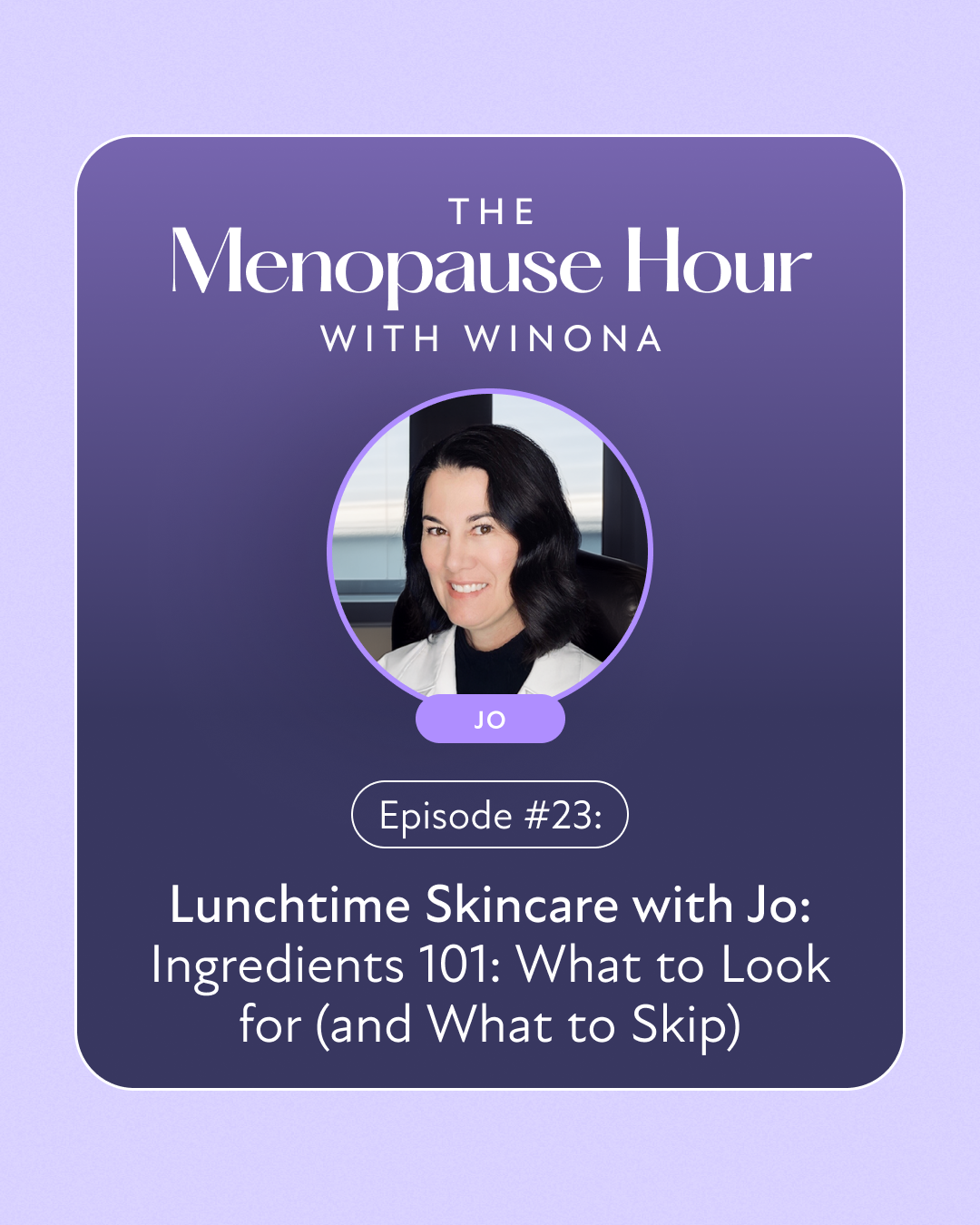
The Menopause Hour with Winona: Lunchtime Skincare with Jo: Ingredients 101: What to Look for (and What to Skip) - Episode #23
Published: September, 2025
Published: September, 2025
Host
Episode Details
Podcast: The Menopause Hour with Winona
Episode Number: 23
Episode Title: Episode #23: Lunchtime Skincare with Jo: Ingredients 101: What to Look for (and What to Skip)
Host: Madi Baldwin
Presenter: Jo Cullen (Winona Dermatology Nurse Practitioner)
Published Date: September 18, 2025
Episode Duration: 47 min 57 sec
Format: Jo's Skincare
Main Topics: Reading ingredient labels, Hydrating vs. active ingredients, Ingredients to avoid
About The Menopause Hour with Winona Podcast
The Menopause Hour with Winona is a health and wellness podcast featuring Winona Chief Medical Officer Dr. Michael Green and Medical Director Dr. Cathleen Brown, sometimes joined by other Winona practitioners. Each episode brings listeners candid, expert-led conversations about perimenopause and menopause.
The show blends live Q&A sessions, doctor dialogues, skincare discussions, and patient stories to cover the full range of the menopause transition. By having honest conversations about symptoms, treatment options, and the underlying science, the podcast aims to help women feel informed and confident rather than confused or dismissed during this stage of life.
About This Episode
Jo used this episode to demystify skincare labels, starting with a simple rule: ingredients are listed by concentration, so the first few tell you what a product is largely made up of. From there, she walked listeners through the most common active ingredients, including hyaluronic acid for hydration, peptides and ceramides for barrier repair, niacinamide for tone and texture, and vitamin C for both protection and hyperpigmentation.
Jo spent dedicated time discussing retinoids, clarifying that they're inherently irritating and often misunderstood. She explained why some redness and flaking is expected, and why easing retinoids slowly into a routine can help reduce irritation. She closed by highlighting certain ingredients women with sensitive or menopausal skin may want to avoid, such as parabens and fragrance, while offering practical tips for matching ingredients to specific skin concerns.
Topics Covered
Reading product ingredient labels: what's most concentrated is listed first
Hyaluronic acid and how it draws water into the skin
Peptides and their role in building collagen and elastin
Ceramides and their role in the skin's barrier
Niacinamide and its wide range of dermatological benefits
Vitamin C's dual role in skin protection and addressing hyperpigmentation
Retinoids: why they're irritating and why that's expected
Bakuchiol as a gentler, plant-based retinol alternative
Alpha and beta hydroxy acids as chemical exfoliants
Ingredients to watch for: parabens, sulfates, phthalates, and fragrance
Matching ingredients to specific skincare needs: barrier repair, hydration, fine lines, discoloration
Why changing one product at a time makes it easier to figure out what's working
Key Takeaways
The order of ingredients on a label reveals the product’s true concentration
Jo explained that ingredients are listed by concentration, so whatever's first is what you're getting the most of. It's a quick way to reliably gauge how potent a product is.
Hyaluronic acid needs damp skin and a moisturizer to work well
Jo shared how hyaluronic acid draws water to wherever it's applied, so using it on slightly damp skin and sealing it with a moisturizer gets better results. Skip the moisturizer, and it can actually leave skin drier, especially in dry climates.
Retinoid irritation is a sign it's working, not a sign to stop
Jo noted that mild redness, dryness, and flaking are expected with retinoids, since they're built to speed up skin cell turnover. She recommended working a retinoid product into a skincare routine gradually to help the skin barrier adapt and minimize irritation.
Using the same active ingredient in every step backfires
Jo advised against repeatedly using one active ingredient across every step of a routine, such as combining a salicylic acid cleanser, toner, and serum. She explained that while it often works at first, it causes irritation that ultimately undoes the progress.
Ingredients to watch: parabens, sulfates, phthalates, and fragrance
Jo identified several ingredients that women with sensitive or menopausal skin may want to steer clear of, including parabens, sulfates, and phthalates. She emphasized the importance of reading product labels thoroughly or asking brands directly if fragrance sensitivity is a concern.
Watch or Listen to the Episode
Watch the full conversation on
The Menopause Hour with Winona with Jo Cullen & Madi Baldwin.



Get Physician-Led Menopause Care
Winona helps women access menopause and perimenopause care from home. Start with a short health questionnaire, and a board-certified physician will review your symptoms, health history, and treatment options.