Skin changes with age for everyone; it’s a natural part of the aging process. Fine lines, shifts in tone, and dryness are not flaws but signs of the journey. However, many women in their 40s and 50s notice that these changes seem to accelerate during perimenopause and menopause. This isn’t just perception. The sharp drop in hormones affects the skin’s hydration, elasticity, and thickness in ways that go beyond genetics or lifestyle alone.
Recognizing these shifts allows women to approach skincare with understanding — supporting health, knowledge, and choice rather than the pressure to look a certain way.
This article explores the 10 key signs of hormonal skin changes in menopause, their underlying causes, and strategies to prevent and manage them.
How Menopause Accelerates Skin Aging: The Estrogen Connection
Skin aging is usually described by dermatologists in two ways: extrinsic (driven by environmental factors) and intrinsic (driven by genetics and time). For women, there’s a third driver: hormonal aging caused by menopause.
Although skin issues and aging may seem like just an aesthetic concern, the skin is actually the largest organ of the human body and supports several key health functions:(1)(2)
Protection: The skin serves as the first barrier against toxins, dehydration, ultraviolet (UV) light, and physical damage.
Sensation: It holds nerves that detect pain, temperature, touch, and pressure.
Immunity: It helps defend the body against pathogens.
Secretion: It releases sweat, oils (sebum), and pheromones and removes excess substances like water, urea, and ammonia.
Temperature Regulation: Healthy skin helps regulate body heat, conserving or releasing warmth to maintain balance, which is particularly important during menopause.
Vitamin D Production: The skin helps start the process of vitamin D synthesis, which is essential for calcium absorption and bone health.
Extrinsic (External) Aging
Extrinsic aging is driven by external environmental factors that contribute to skin damage over time. These can include the following:(2)(3)(4)(5)
Sun Exposure: UV exposure is the number one cause of skin aging. It damages the skin, collagen, and elastin, leading to wrinkles, spots, and rough texture.
Diet: High-sugar diets can accelerate skin aging by contributing to inflammation and weakening the skin structure.
Stress: Elevated cortisol levels inhibit collagen production, making the skin more prone to wrinkles.
Smoking: Smoking deprives the skin of oxygen, accelerates wrinkles, and reduces its ability to heal.
Pollution: Environmental toxins can cause oxidative stress, damaging skin cells.
Intrinsic (Internal) Aging
Intrinsic aging is influenced by genetics and the natural passage of time. Hormonal changes during menopause — particularly the decline of estrogen and progesterone — can speed up certain skin changes, including dryness, thinning, and loss of elasticity. Other factors also play a role.(3)(4)
Skin Type: Naturally dry or less oily skin is more likely to develop wrinkles earlier, while thicker skin often shows resilience but can develop larger pores.
Pigmentation: Skin with less melanin (pigment) is more vulnerable to UV damage, which can lead to premature wrinkles and uneven tone.
Estrogen Decline: Estrogen is essential for producing collagen, elastin, and hyaluronic acid (HA) — the key components that keep skin plump, firm, and hydrated. When estrogen levels drop significantly during menopause, visible signs of aging progress more rapidly.
Estrogen’s Role in Skin vs. What Happens When It Declines
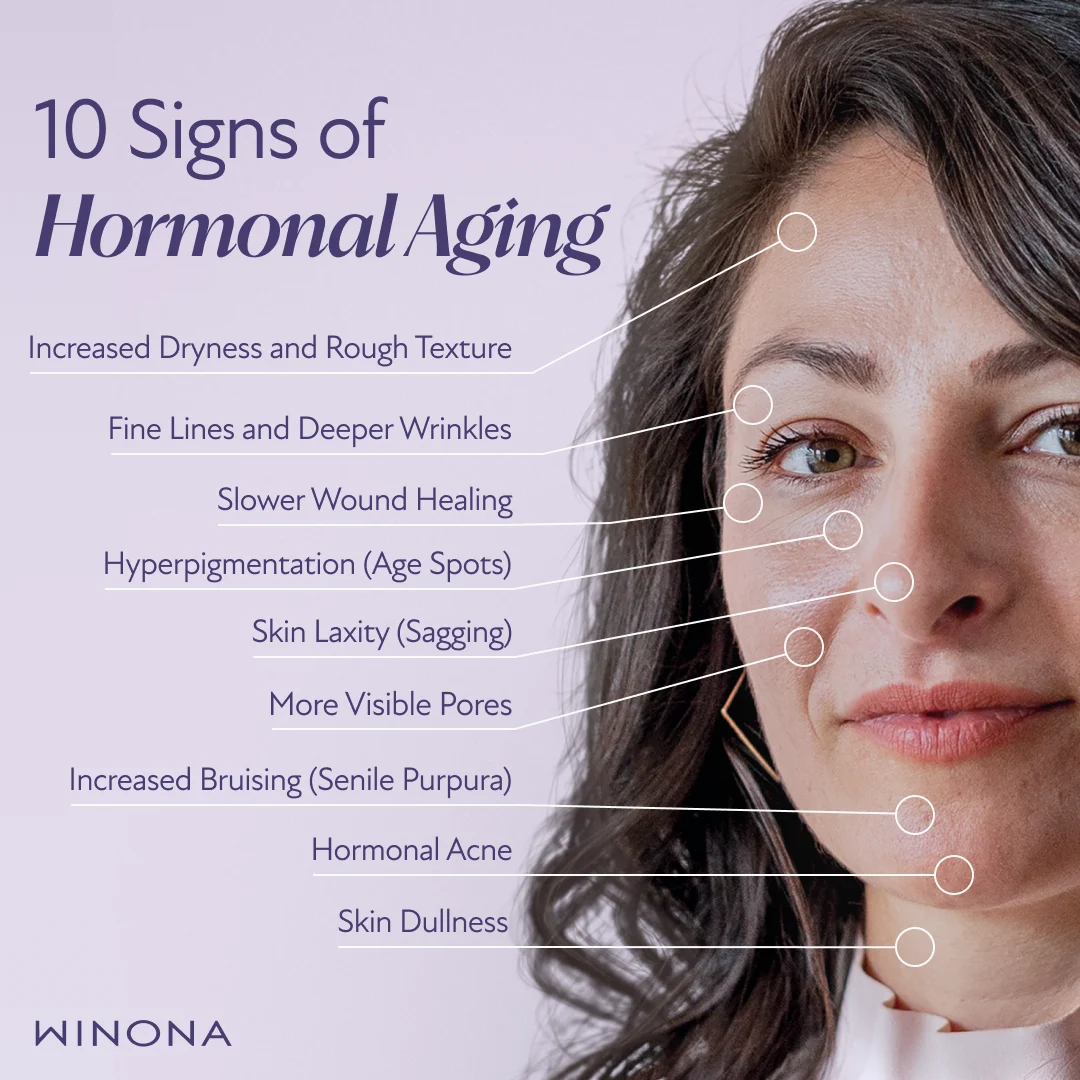
The 10 Most Common Signs of Aging Skin in Menopause
Hormonal aging signs often overlap and reinforce each other. Most stem from the loss of collagen and hydration, combined with slower skin cell regeneration.
1. Fine Lines and Deeper Wrinkles
The loss of collagen and elastin means the skin no longer “snaps back.” Wrinkles first appear around the eyes, forehead, and mouth. Over time, fine lines may deepen into permanent folds.(8)
2. Increased Dryness and Rough Texture
Estrogen stimulates the sebaceous (oil) glands. When estrogen levels drop, the skin produces less oil and loses its ability to hold water. The result is tightness, flaking, and roughness.(1)(6)
3. Skin Dullness
Slower cell turnover during menopause leads to the accumulation of dead cells on the surface. This buildup scatters light instead of reflecting it, making the skin look flat and tired.(6)
4. Hyperpigmentation (Age Spots)
Estrogen normally regulates melanin. With its decline, UV exposure becomes more likely to trigger dark spots or uneven pigmentation. These typically show up on the face, chest, and hands.(8)(9)
5. Skin Laxity (Sagging)
Collagen and elastin loss reduce firmness. Gravity then pulls down the skin, creating sagging along the jawline, cheeks, and neck.(9)
6. Thinning, More Fragile Skin
Menopause thins both the epidermis and dermis, making the skin more transparent and prone to cuts or tears. Veins may also become more visible.(9)
7. More Visible Pores
As skin loses elasticity, pores no longer stay tight and appear larger, especially in oily or sun-damaged areas.(9)
8. Increased Bruising (Senile Purpura)
The National Institute on Aging says that fragile blood vessels in the dermis rupture more easily with age. Minor bumps can leave noticeable bruises that linger longer than before.(2)
9. Slower Wound Healing
Estrogen helps regulate inflammation and cell renewal. When levels drop, scratches, blemishes, and acne marks heal more slowly.(6)(9)
10. Hormonal Acne
As estrogen falls, testosterone becomes more dominant. This can overstimulate sebaceous glands, causing breakouts — often along the jawline and chin.(6)
How to Proactively Manage and Treat Hormonal Skin Aging
While skin aging cannot be stopped, there’s good news: Many strategies can help slow its pace and improve appearance. Prevention is the foundation. Proactive strategies can delay, soften, and manage signs of hormonal skin changes.
The Foundation — Sun Protection
UV exposure is the leading cause of premature skin aging and causes up to 90% of photoaging skin damage. The following are tips to prevent damage and protect the skin:(2)(3)(5)
A daily broad-spectrum sunscreen (SPF 30 or higher) is non-negotiable.
Choose mineral sunscreens with zinc oxide or titanium dioxide.
Reapply sunscreen every 2 hours outdoors.
Use protective clothing, hats, and sunglasses (with UV protection).
Avoid direct sun from 10 a.m. to 4 p.m.
Diet and Lifestyle
Eating an anti-inflammatory diet and adopting skin-friendly habits can help protect and rejuvenate the skin during menopause. Certain nutrients and daily practices work together to reduce inflammation, boost hydration, and maintain a healthy glow.(3)(4)(6)(7)(10)
Antioxidant-Rich Foods: Fruits and vegetables high in beta-carotene, vitamin C, and lycopene help combat free radicals that damage skin cells.
Healthy Fats: Omega-3 fatty acids, found in salmon, walnuts, and flaxseeds, support supple, hydrated skin.
Hydration: Drinking enough water keeps the skin plump and smooth. Herbal teas and water-rich foods like cucumbers can also contribute.
Stress Management: Activities like meditation, yoga, and daily walks help regulate cortisol, the stress hormone that can negatively impact skin health.
Direct Approach — Hormone Therapy
Since the root cause of menopause aging is hormonal changes, replacing estrogen is one of the most effective ways to restore skin health.(3)(8)(11)
There are two options to address this:
Systemic HT: Systemic hormone therapy (HT) — including patches, oral capsules, and some transdermal formulation — delivers estrogen into the bloodstream, allowing it to act throughout the body. This can improve collagen production, hydration, and elasticity.
Local Estrogen Therapy: Localized (low-dose) estrogen therapies — such as certain creams or gels — act primarily in the tissues where they are applied, helping improve dryness and skin quality in targeted areas with minimal systemic absorption.
According to clinical studies, estrogen therapy can:
Increase skin collagen content by almost 50%
Improve hormone-related skin conditions
Improve hydration and thickness
Reduce wrinkle depth significantly
Hormone therapy isn’t intended as an anti-aging treatment, but by restoring estrogen levels, it supports skin, hair, and overall vitality in ways many women notice. While its main goal is to relieve menopause symptoms, these added effects reflect the benefits of balanced hormones.
Dr. Saranne Perman
MD, undefined
Clinically-Proven Treatments for Aging Skin
While topical treatments can’t replenish hormones, some can provide strong benefits, complementing HT and providing added sun protection.
It's important to emphasize that these are elective treatments or procedures. Personal feelings about appearance can vary, and many people feel content with their looks without additional interventions. However, if there’s interest in or experience with cosmetic enhancements, it's helpful to have information.
Cosmetic procedures designed to rejuvenate appearance fall into the following categories:
Non-Invasive (or Minimally Invasive): These procedures do not involve scalpels or stitches, but they can still carry risks such as pain, swelling, and infection. They’re ideally performed in a clinical setting and generally require minimal to no recovery time. Botox, fillers, and chemical peels are among the most popular options, with approximately 25 million procedures performed annually.(8)(12)
Invasive: Invasive procedures involve surgery, which can introduce risks such as infection, bleeding, blood clots, and scarring, along with a lengthy recovery period. Facelifts are a common example. About 1.6 million invasive cosmetic surgeries are performed annually in the U.S.(12)
The following are a variety of non-invasive and minimally invasive treatments available to help improve the appearance of aging skin.
1. Quality (Not Expensive) Moisturizer
What It Does: Formulas with hyaluronic acid, ceramides, squalane, and peptides hydrate and strengthen the skin’s natural barrier.(4)(18)
Matching Texture to Skin Type:
Oily or acne-prone skin → lightweight gel or lotion
Dry skin → richer cream or balm
Sensitive skin → fragrance-free and alcohol-free formulas
2. Retinoids and Retinol
Understanding the Difference:
Prescription retinoids → more potent, faster results, higher risk of irritation
Over-the-counter retinols → gentler, better for beginners, gradual results
What They Do: Both forms support cell turnover, fade dark spots, smooth fine lines, and improve overall skin texture and radiance.
3. Antioxidants (Vitamin C and E)
Antioxidants protect skin cells from damage caused by UV exposure and pollution, which can accelerate aging.(3)(7)(9)
What They Do:
Vitamin C → brightens skin, fades dark spots, supports collagen
Vitamin E → soothes, nourishes, and enhances Vitamin C’s effects
4. Fillers
What They Do: Fillers restore lost volume and smooth deeper wrinkles with injectable hyaluronic acid gels.(13)
Results: Immediate; last several months to a few years, depending on filler type and metabolism
5. Neuromodulators (Botox, Dysport)
These treatments use botulinum toxin, a neurotoxic protein clinically derived from the bacteria that cause botulism, which works by safely blocking nerve signals to targeted muscles. Originally developed for treating chronic pain and muscle disorders, neuromodulators received FDA approval in the 1980s.(12)(13)
What They Do: Neuromodulators temporarily relax wrinkle-causing muscles by blocking nerve signals.
Results: Visible in a few days; last about 3–4 months
6. Dermabrasion and Microdermabrasion
Dermabrasion involves removing the outermost layer of skin using a rotating tool, encouraging the growth of new, smoother skin. Microdermabrasion is a less invasive option that uses tiny crystals to treat the skin.(8)
What They Do: These procedures exfoliate the skin to reduce wrinkles, sun damage, and age spots.
7. Microneedling
What It Does: Microneedling uses tiny needles to create micro-injuries in the skin, boosting collagen and elastin production.(14)
Results: Improves skin texture, fine lines, and acne scars
8. Chemical Peels
What They Do: Chemical peels use acid solutions to remove outer skin layers, revealing smoother skin beneath.(8)
Results: Reduce fine lines, uneven tone, and dark spots
9. Fractional Laser Skin Resurfacing
What It Does: This procedure targets the deeper skin layers with laser energy to stimulate collagen production.(15)(16)(17)
Results: Improves skin texture, wrinkles, scars, and sun damage
10. Non-Ablative Skin Rejuvenation
What It Does: It uses ultrasound or deep-layer laser to stimulate collagen without harming skin layers.(15)(16)(17)
Results: Gradual tightening, lift, and improved tone with minimal downtime
While these procedures can help improve skin's appearance, people should exercise caution. Everyone has a different threshold for risk, so it’s crucial to weigh the potential complications and benefits. Consulting with a certified medical professional before proceeding is highly recommended.
Treatment Comparison Chart
Celebrating the Strength That Aging Skin Represents
Skin aging is a natural process to be embraced and celebrated. By understanding its causes and taking proactive steps to care for the skin, it’s possible to age gracefully and maintain a healthy, radiant appearance.
Shifts in hormones can influence skin's health and appearance, but these changes can be managed. From everyday habits like sun protection to more advanced treatments like HT, there are effective ways to support the skin at every stage of life.
Aging skin is a badge of honor that some aren’t fortunate enough to earn. Embracing the lines, spots, and changes means celebrating the privilege of growing older and the strength it represents.
Experiencing Changes in Skin During Menopause? Discover if HT Could Help.
Take the Winona Quiz to learn whether personalized HT may be right for you.