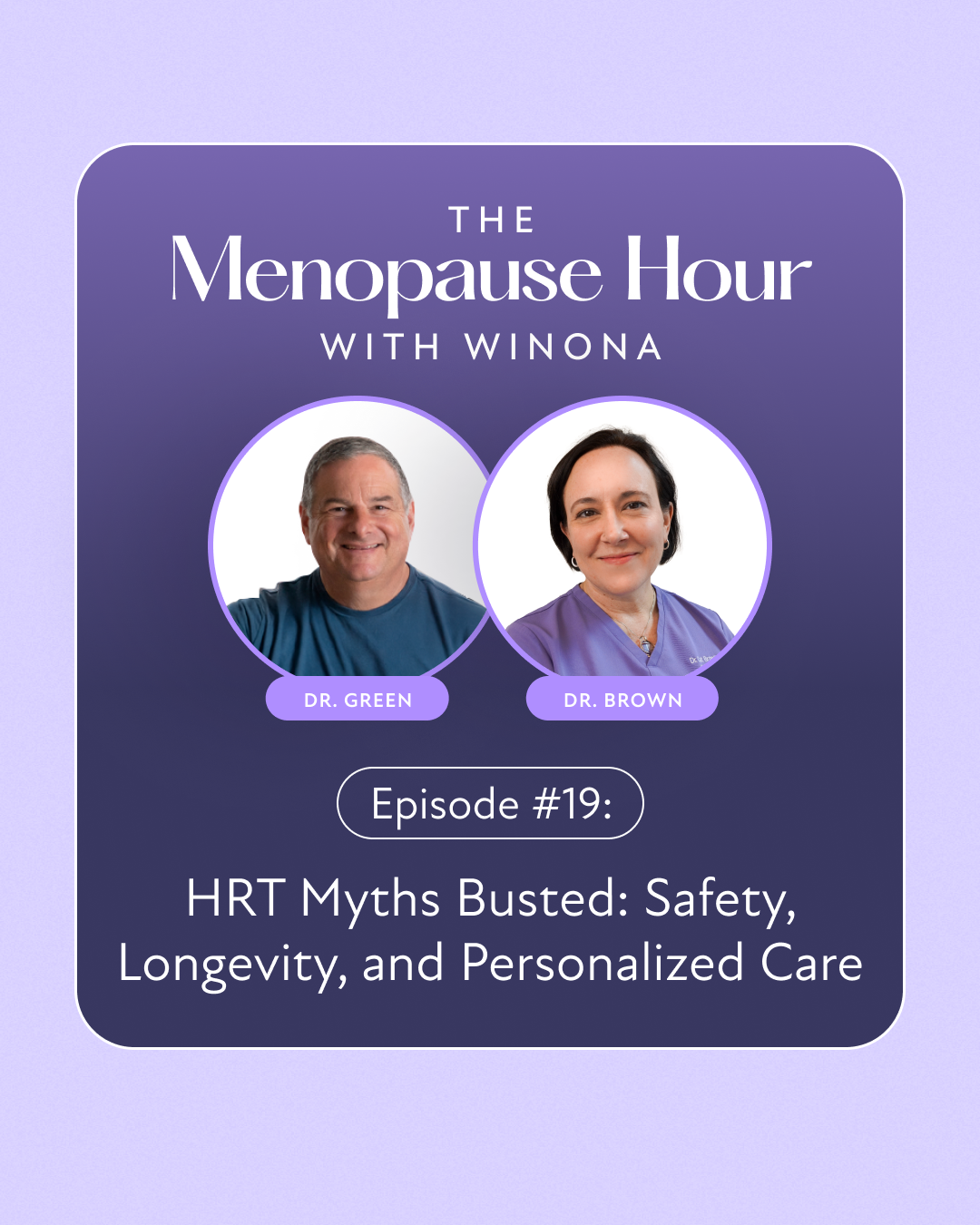
Key Takeaways
HRT breast cancer risk must be weighed within the full clinical context
Many women fear that HRT will inevitably cause breast cancer. Dr. Brown clarified that while combined estrogen-progesterone HRT carries a small increase in risk, estrogen-only regimens do not. The doctors explained that HRT breast cancer risk is also influenced by factors such as personal and family medical history.
The doctors explained that it’s essential to consider a patient’s individualized benefit-risk ratio when making HRT treatment decisions. Such benefits include osteoporosis prevention and reduced cardiovascular risk when HRT is started early in the menopause transition.
Abnormal bleeding usually isn't caused by HRT itself
Dr. Green explained that spotting or irregular bleeding can occur within the first few months of starting or adjusting treatment as the body gets used to changes in hormone levels. However, bleeding that occurs outside this window is more likely to signal something else in need of clinical evaluation, like a polyp, fibroid, or infection.
Treatment consistency is essential for optimal symptom relief
Dr. Green and Dr. Brown noted that repeatedly starting and stopping HRT makes it harder for the body to adjust, since hormone levels need three to four weeks to reach a steady state in the blood. Patients who stick with a consistent routine tend to see more reliable, long-term treatment benefits.
Bioidentical hormones fit the body's receptors more precisely than synthetic versions
Dr. Green explained that bioidentical hormones are structurally identical to the hormones the body produces. This allows them to bond more precisely to hormone receptors than synthetic versions, which have a slightly different molecular structure from the body’s own hormones.
Menopause symptom severity and health care access vary by race
Dr. Brown cited research showing that women of color frequently experience more severe or persistent menopause symptoms. She highlighted how historical inequities in health care access must be addressed through continued research as HRT becomes more widely available to ensure equitable menopause care for all women.