The Menopause Hour - Episode -26
Podcast

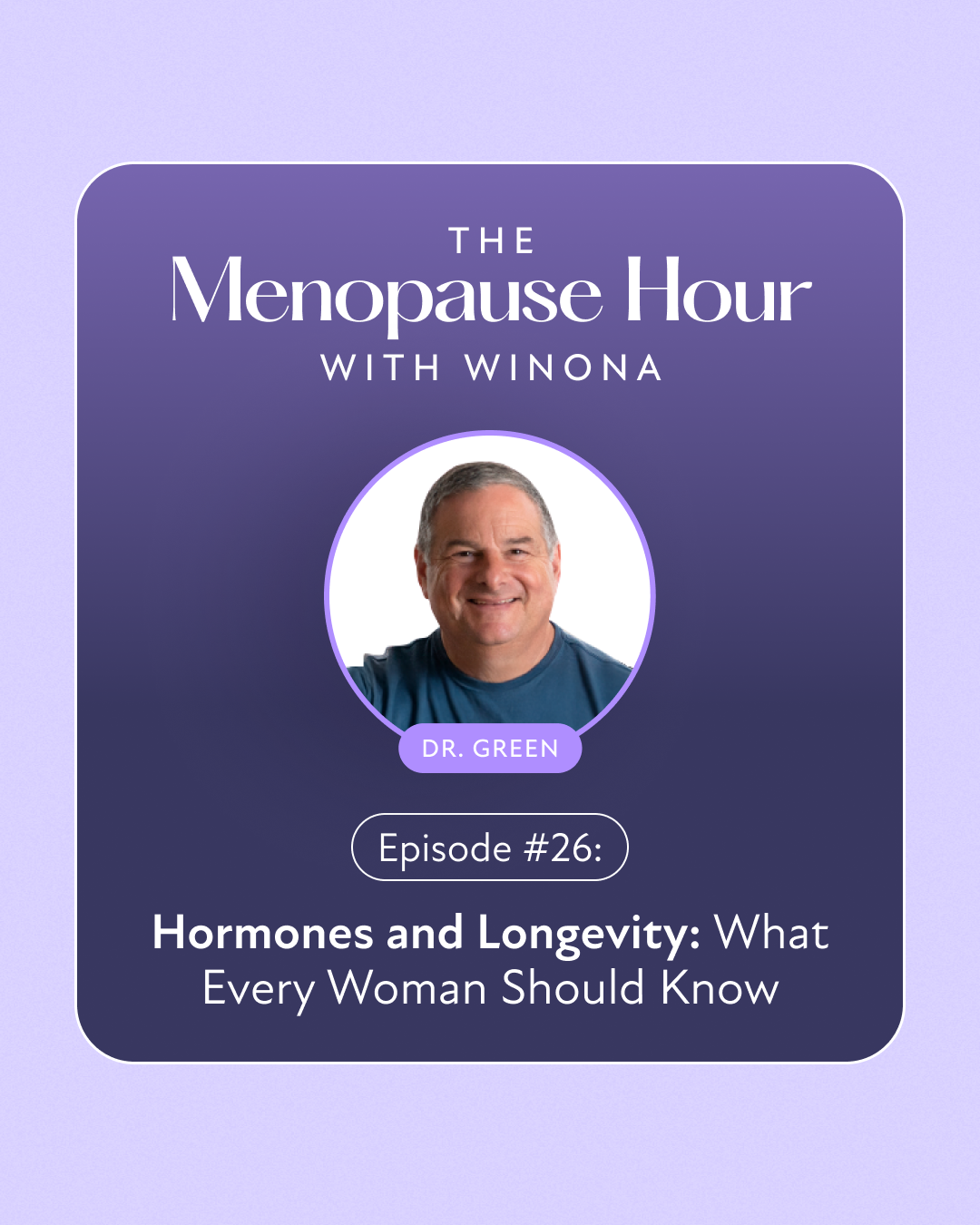
The Menopause Hour with Winona: Hormones and Longevity: What Every Woman Should Know - Episode #26

Published: October, 2025

Dr. Michael Green

Featured Physician

Michael Green

Host

Madi Baldwin

Episode #26 of The Menopause Hour with Winona: "Hormones and Longevity: What Every Woman Should Know" was a live Q&A hosted by Madi Baldwin and featuring Winona Chief Medical Officer Dr. Michael Green.

Dr. Green answered listener questions about how long HRT can safely be used, how estrogen and progesterone affect the body, and how to manage common side effects. He also addressed breast cancer history, PCOS, and hair changes after starting treatment.


LISTEN TO THE EPISODE

Episode Details

  • Podcast: The Menopause Hour with Winona

  • Episode Number: 26

  • Episode Title: Episode #26: Hormones and Longevity: What Every Woman Should Know

  • Host: Madi Baldwin

  • Featured Physician: Dr. Michael Green

  • Published Date: October 10, 2025

  • Episode Duration: 1 hr 4 min

  • Format: Menopause Q&A

  • Main Topics: HRT & longevity, Dosing & side effects, Estrogen vs. progesterone risk

About The Menopause Hour with Winona Podcast

The Menopause Hour with Winona is a health and wellness podcast featuring Winona Chief Medical Officer Dr. Michael Green and Medical Director Dr. Cathleen Brown. The show addresses common questions about perimenopause and menopause, combining medical expertise with straightforward discussions of symptoms, treatment options, and the science behind the menopause transition.

Episodes include live Q&A sessions, doctor-led conversations, and patient stories. In its live Q&A format, women from Winona's community submit questions directly to the hosts, creating practical discussions shaped by the concerns women commonly bring to their own doctors.

Visit The Menopause Hour on Buzzsprout.

About This Episode

Dr. Green opened the Q&A by explaining why lab testing isn’t used to guide or adjust Winona HRT regimens. He clarified that hormone levels shift significantly throughout the day, giving doctors an incomplete picture of a patient’s overall health. He noted that patient age, symptoms, and health history serve as a more reliable treatment blueprint than a single blood draw.

From there, he answered listener questions about how long HRT can be safely continued, and why estrogen provides most of the treatment benefits while progesterone specifically protects the uterine lining. He also explained why it's actually progesterone, not estrogen, that is associated with a small increase in breast cancer risk.

In addition to exploring the underlying science, Dr. Green addressed practical patient concerns, including abnormal bleeding, hair shedding after starting treatment, and whether a family history of breast cancer rules out HRT telehealth care.

RSVP here to join our next Menopause Q&A.

Topics Covered

  • Why lab testing doesn't guide HRT initiation or treatment adjustments

  • How Winona's onboarding and dosing algorithm works

  • How long HRT can safely be used, and why guidance has evolved over time

  • Choosing between creams, patches, and pills based on medical history and personal preference

  • Abnormal or prolonged bleeding while on HRT

  • Considerations for managing HRT alongside bipolar disorder

  • Facial hair, PCOS, and how HRT affects androgen-related symptoms

  • Vaginal estrogen cream for localized dryness and temporary itching

  • Hair shedding (telogen effluvium) after starting HRT

  • Combining DHEA with other supplements like NAD

  • Telehealth HRT eligibility for women with a family history of breast cancer and BRCA mutations

  • Why progesterone, not estrogen, carries the small increase in breast cancer risk

Key Takeaways

Long-term HRT use is increasingly recognized as safe and beneficial

Dr. Green explained that official HRT guidance has evolved from older clinical recommendations to use the lowest dose for the shortest amount of time. Modern research points to benefits beyond symptom relief, including a lower risk of heart disease and osteoporosis when started early in the transition. Many women safely continue to use HRT long-term provided that it continues to help and the patient doesn’t develop any treatment contraindications. 

Estrogen and progesterone play different roles in the body

Dr. Green explained that estrogen drives most of HRT's benefits, supporting heart, bone, skin, and vaginal health. Progesterone's main job is protecting the uterine lining from estrogen's stimulating effects. Women who have had a hysterectomy generally only need estrogen.

It's progesterone, not estrogen, linked to the small increase in breast cancer risk

Dr. Green cited research showing that progesterone, not estrogen, is associated with a small increase in breast cancer risk when the two treatments are combined. He noted how this clinical finding runs counter to what people might assume about HRT and cancer.

A family history of breast cancer doesn't rule out HRT on its own

Dr. Green explained that a family history of breast cancer alone does not make a person ineligible for HRT. High-risk scenarios, such as a known genetic marker like BRCA, change the benefit-risk ratio and usually means that care is better handled in person rather than through telehealth.

Initial side effects are common and usually temporary

Dr. Green noted that hormone levels take about three weeks to reach a steady state in the blood after starting or adjusting HRT. Hot flashes, bloating, and hair shedding are side effects that can appear early but typically resolve as the body adjusts. The benefits may take a few months to show up, but they last.

Michael Green

Dr. Michael Green

Obstetrics & Gynecology

Dr. Michael Green is a menopause specialist and Chief Medical Officer at Winona. He brings more than 25 years of clinical experience as a full-scope OB/GYN. From having delivered over 5,000 babies and now specializes in menopause, perimenopause, hormone changes, symptom care, and treatment options during midlife.

At Winona, Dr. Green helps women better understand symptoms, health history, hormone changes, and when physician-reviewed care may be appropriate.

Meet Dr. Michael Green

Watch or Listen to the Episode

Watch the full conversation with Dr. Michael Green on
The Menopause Hour with Winona with Madi Baldwin.

Get Physician-Led Menopause Care

Winona helps women access menopause and perimenopause care from home. Start with a short health questionnaire, and a board-certified physician will review your symptoms, health history, and treatment options.

Start Your Visit
lead-banner-woman-holding-mug-mobile