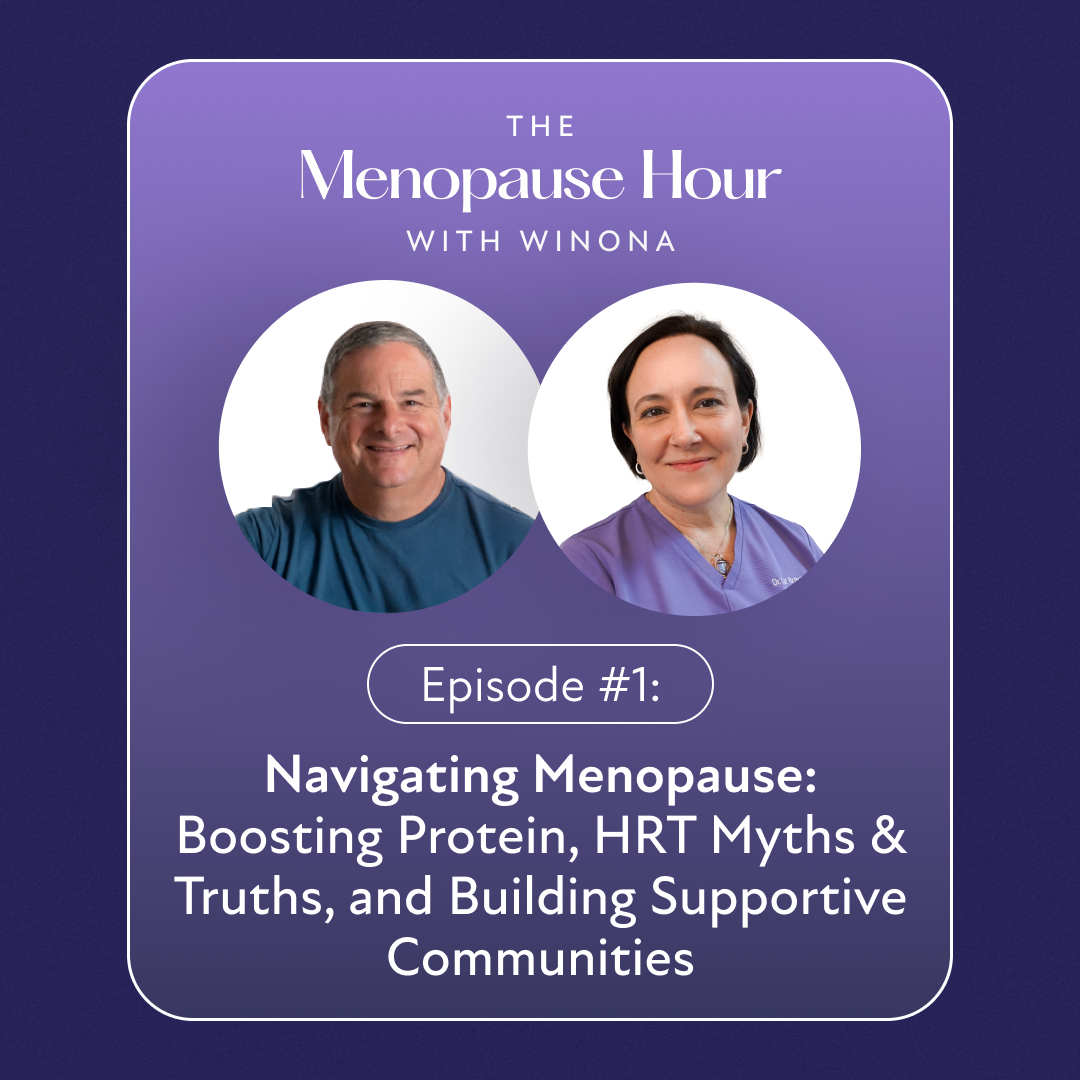
Key Takeaways
Protein intake is often underestimated during menopause
Dr. Cat explained that many women don't realize how much protein they actually need to maintain muscle mass. Insufficient protein intake can reduce the body’s resting metabolic rate (RMR), which can cause the body to hold onto fat if caloric intake exceeds energy output. She recommended a simple nutrition audit to check daily intake against individual needs.
There's no fixed age to stop HRT
The doctors explained that older guidance to use "the lowest dose for the shortest duration" has shifted as more research has emerged about the benefits of HRT. Rather than stopping automatically at a specific age, Dr. Green and Dr. Cat explained that for most women, treatment may continue for as long as it's helping and the patient doesn’t develop any medical contraindications.
Breast cancer risk with combined HRT is small and specific to progesterone
Dr. Green noted that estrogen-only HRT has not been shown to raise breast cancer risk, while combined estrogen and progesterone treatment is associated with a small increase. He emphasized that fear of breast cancer shouldn't be assumed to mean it will happen to any individual patient. Risk depends on the specific treatment regimen and personal health history.
Cardiovascular health and HRT breast cancer risk require distinct but equally important clinical evaluations
Dr. Green pointed out that cardiovascular disease is a major cause of death for women overall, regardless of whether they use HRT or not. He explained that research shows initiating HRT around the time of menopause has been associated with reduced cardiovascular risk in appropriately screened patients. This makes cardiovascular health a distinct, but equally as important clinical consideration as HRT breast cancer risk when evaluating a patient’s overall benefit-risk profile.
"Bioidentical" means structurally identical to the body's own hormones
Dr. Green clarified that bioidentical hormones are derived from plants and structurally the same as those the body produces naturally, unlike synthetic hormones or older treatments derived from other sources, such as conjugated equine estrogen, which have a different chemical structure.