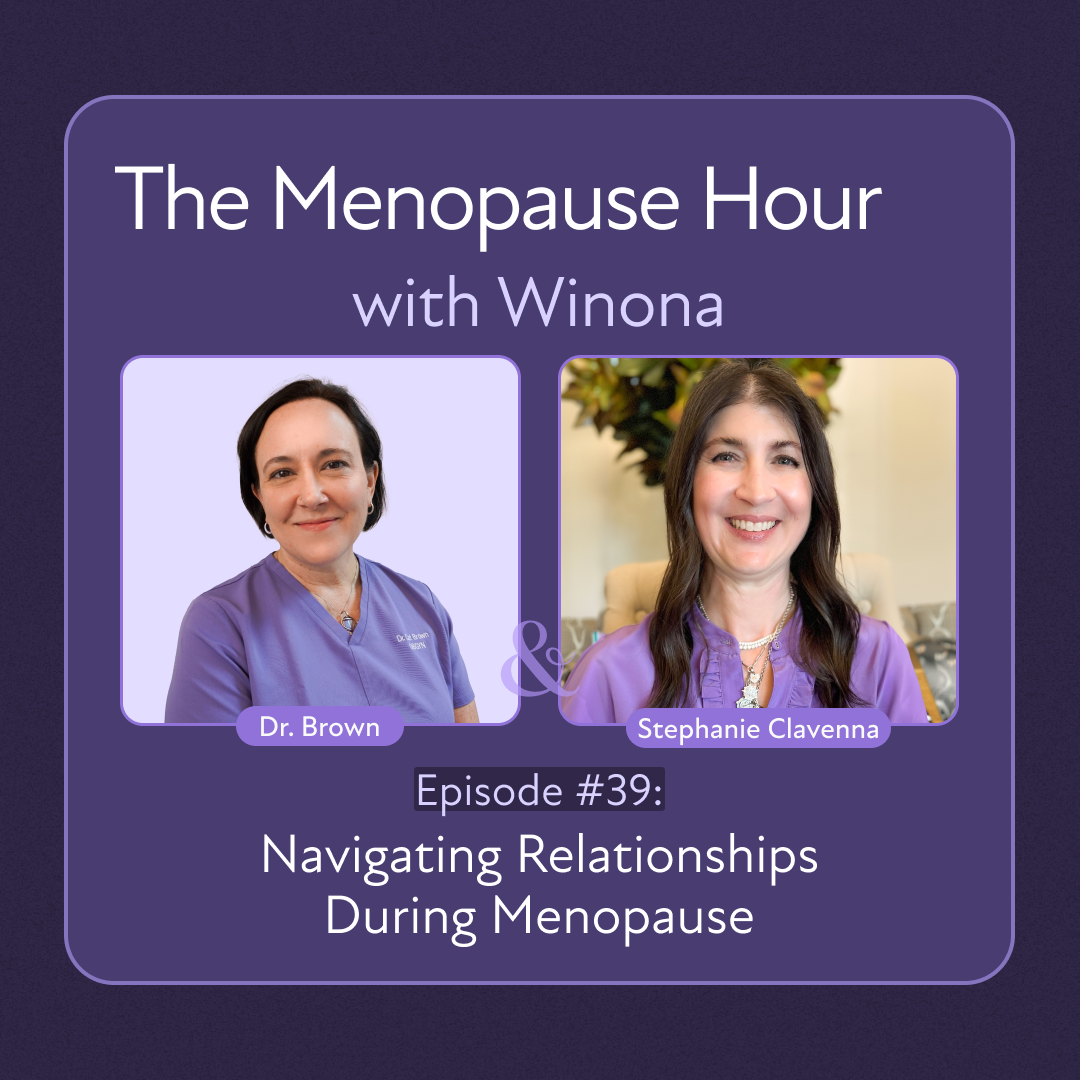
Episode #39 of The Menopause Hour with Winona was a Doctor Dialogue hosted by Winona's Madi Baldwin, featuring Dr. Cathleen Brown alongside guest Stephanie Clavenna, a licensed marriage and family therapist. The two discussed how menopause doesn't just affect the woman going through it — it can affect her relationships too, as mood and intimacy symptoms strain connection with a partner. Dr. Brown and Clavenna discussed how estrogen can help, how vaginal dryness and painful sex factor in, and how to talk to a partner about it all.
Podcast
The Menopause Hour with Winona: Navigating Relationships During Menopause - Episode #39
Published: May, 2026
Published: May, 2026

Featured Physician
Cathleen M. BrownHost
Episode Details
Podcast: The Menopause Hour with Winona
Episode Number: 39
Episode Title: Episode #39: Navigating Relationships During Menopause
Host: Madi Baldwin
Featured Physician: Dr. Cathleen Brown
Guest: Stephanie Clavenna, LMFT (Licensed Marriage and Family Therapist)
Published Date: May 20, 2026
Episode Duration: 40 minutes 27 seconds
Format: Doctor Dialogue
Main Topics: Relationships, Intimacy, Mental Health
About The Menopause Hour with Winona Podcast
The Menopause Hour with Winona is a health and wellness podcast led by Winona's Chief Medical Officer, Dr. Michael Green, and Medical Director, Dr. Cathleen Brown. Each episode tackles real questions about perimenopause and menopause, pairing medical expertise with clear, direct conversations about symptoms, treatment options, and the science behind them.
The format shifts from episode to episode: live Q&A sessions, doctor-led conversations, and patient stories all find their way in. During live Q&As, women from Winona's community submitted questions straight to the hosts, grounding the discussions in the concerns patients commonly raise with their own doctors.
About This Episode
This Doctor Dialogue paired Dr. Cathleen Brown with guest Stephanie Clavenna, a licensed marriage and family therapist, to discuss how menopause affects relationships alongside the woman experiencing it. They explained how mood changes, self-esteem shifts, and changes in physical intimacy during perimenopause and menopause can create misunderstandings with a partner, and emphasized that open, direct communication helps prevent a partner from internalizing these changes personally.
The conversation also addressed why estrogen, rather than antidepressants alone, is increasingly seen as a more appropriate response to some perimenopause mood symptoms, and how vaginal dryness and painful sex are physical changes, not a reflection of attraction or relationship health. Dr. Brown and Clavenna closed by encouraging women to advocate for themselves in finding the right doctor or therapist, noting that virtual therapy has made mental health support more accessible during this stage of life.
Topics Covered
How menopause symptoms affect partners and relationships
Communicating with a partner about mood and intimacy changes
Estrogen versus antidepressants for perimenopause mood symptoms
Vaginal dryness and painful sex as physical, not relational, issues
Rebuilding self-esteem and sense of self during menopause
Finding a therapist or doctor who's the right fit
Virtual therapy as a private, flexible option
Balancing caregiving for children and aging parents
Distinguishing menopause-related mood changes from other life transitions
Resources for helping a partner understand menopause
Framing menopause as an opportunity rather than a crisis
Why every woman's mental health journey through menopause looks different
Key Takeaways
Menopause symptoms can strain relationships, but open communication helps
Dr. Brown and Stephanie Clavenna explained that mood changes, low libido, and vaginal discomfort during menopause can affect emotional connection with a partner. They emphasized that being direct about what's happening, rather than letting a partner assume it's about them, helps prevent misunderstandings.
Estrogen is increasingly seen as a more appropriate first response to some perimenopause mood symptoms than antidepressants alone
Clavenna noted that a growing body of research points to estrogen as a more appropriate response for mood symptoms tied to the menopause transition than antidepressants alone. Dr. Brown added that many women are prescribed an antidepressant before ever being offered hormone therapy, even though it addresses the symptoms only partially.
Painful sex and discomfort during intimacy are often physical, not relational
Dr. Brown explained that vaginal dryness and reduced blood flow to vaginal tissue during menopause can make sex uncomfortable or painful, independent of any relationship issue. She encouraged women to tell a partner directly that discomfort isn't about attraction, since partners can otherwise internalize it as personal rejection.
It's okay to find a new therapist or doctor if the fit isn't right
Clavenna encouraged women not to settle for a therapist or physician who doesn't feel like the right fit, comparing it to advocating for better medical care. She noted this applies to couples therapy too, since an individual therapist may not be the best fit for joint sessions.
Virtual therapy can be a practical, private option during this life stage
Clavenna explained that virtual therapy sessions offer flexibility and privacy for women managing busy schedules, noting she's worked with clients joining from their car or bed when that was their only private space. Dr. Brown compared it to how telemedicine has expanded access to menopause care more broadly.

Dr. Cathleen M. Brown
Obstetrics & Gynecology
Dr. Cathleen Brown is a menopause specialist and physician with Winona. She brings a physician’s perspective to menopause, perimenopause, hormone changes, symptom care, and treatment options during midlife.
At Winona, Dr. Brown helps women better understand symptoms, health history, hormone changes, and when physician-reviewed care may be appropriate.
Watch or Listen to the Episode
Watch the full conversation with Dr. Cathleen M. Brown on
The Menopause Hour with Winona with Madi Baldwin.



About Winona
Winona is a physician-led telehealth company focused on menopause and perimenopause care. Its board-certified physicians help women understand symptoms such as hot flashes, night sweats, sleep disruption, mood changes, brain fog, vaginal dryness, intimacy issues, weight changes, hair thinning, and joint discomfort.
When appropriate, Winona offers personalized treatment plans that may include hormone replacement therapy, bioidentical HRT, estrogen, progesterone, vaginal estrogen, and non-hormonal options. Winona also provides education and community support for women navigating hormone changes, menopause symptoms, perimenopause, and postmenopause.
To learn more, get started with Winona.
Related Winona Resources
Get Physician-Led Menopause Care
Winona helps women access menopause and perimenopause care from home. Start with a short health questionnaire, and a board-certified physician will review your symptoms, health history, and treatment options.