For many women, the years after 40 can feel like the body is aging at a new speed. Joints feel stiffer, skin looks different, energy levels dip, and health risks begin to shift. Scientists have explored menopause at a deeper biological level and have asked the same question women ask themselves: Can menopause speed up aging?
While menopause is a natural stage in the female experience, hormonal shifts may influence aging more than previously thought. Research now shows that menopause can affect biological aging (the wear and tear happening inside cells) beyond what would occur with time alone. This process is known as senescence and is different from chronological age (the number of birthdays celebrated) or visible aging (wrinkles, gray hair, etc.).(1)(2)
Biological aging is measured by how well cells, DNA, and tissues are functioning, which can change depending on genetics, environment, and hormones.(1)
This article explains how estrogen loss drives changes at the cellular level, how those changes affect long-term health, and what proactive steps — especially hormone replacement therapy (HRT) — can do to slow the clock.(2)
The Engine of Aging: How Estrogen Decline Impacts Cells
Many women focus more on how old they look rather than on how old their body is physically. However, prioritizing internal health can naturally contribute to both a youthful appearance and improved longevity.
Biological aging is crucial because it doesn’t always align with chronological age. Some people age faster or slower due to genetics, lifestyle, and environmental factors. On top of that, this “accelerated aging” can happen faster in women during and after menopause due to the drop in key sex hormones.(2)(3)(4)(5)
Hormones do far more than regulate menstrual cycles. They are a key protector of cells, helping them stay youthful, resilient, and efficient. Estrogen loss disrupts several cellular systems that keep the body youthful and disease-resistant. When estrogen levels drop during menopause, the body begins to lose that shield. Cellular processes that were once tightly regulated begin to falter, leading to faster physical aging.(1)(2)(3)(4)
Increased Cellular Senescence: The “Zombie” Cells
Cells have a natural life cycle. They divide, perform their tasks, and eventually die off. However, damaged cells can sometimes linger in a dysfunctional state instead of dying. These cells are known as senescent or “zombie” cells. Instead of doing their job, they build up and trigger oxidative stress that can damage neighboring cells.(1)(2)
Hormones like estrogen and progesterone help control this process by supporting DNA repair and reducing oxidative stress. Without estrogen, senescent cells build up more quickly, fueling inflammation and tissue decline.(4)
In parallel, stem cell reserves also begin to dwindle, reducing the body’s ability to replace aging cells with healthy ones — all hallmarks of biological aging.
Mitochondrial Dysfunction: The Energy Crisis
Mitochondria, often called the “powerhouses” of cells, convert nutrients into energy. Estrogen is essential for mitochondrial efficiency by doing the following:(1)(4)
Enhancing energy production
Regulating free radical balance
Preventing oxidative stress
When estrogen falls, mitochondria become less efficient. Energy output drops, fatigue rises, and inflammation increases, damaging DNA and accelerating tissue breakdown. This energy crisis is one reason women often experience both lower stamina and more noticeable aging after menopause.(3)(4)
At the same time, estrogen helps regulate proteostasis — the system that repairs or removes damaged proteins. Without it, misfolded proteins accumulate, especially in neurons, contributing to neurodegenerative changes. Combined with rising oxidative stress, this creates a cycle of energy loss and cellular damage that accelerates tissue aging.(4)
Telomere Attrition: The Fraying Shoelaces
Telomeres are protective caps at the ends of DNA strands, similar to the plastic tips on shoelaces. Each time a cell divides, telomeres shorten slightly. When they become too short, the cell can no longer divide and enters senescence.(4)
Estrogen helps preserve telomere length through antioxidant effects and DNA protection. Studies have shown that women who experience early menopause also tend to have shorter telomeres, a biological marker of faster aging.(1)(3)(4)
Telomere shortening also interacts with nutrient-sensing pathways like insulin and mTOR signaling. Estrogen normally helps regulate these systems, but they become disrupted after menopause. This imbalance increases risks for diabetes, cardiovascular disease, and other metabolic disorders, further linking cellular aging to bodily decline.
Epigenetic Changes: Rewriting the Genetic Script
Epigenetics refers to how genes can be turned on or off without changing a person's DNA sequence. This turning on or off of genes can be done naturally through lifestyle/habit changes and certain medical interventions.
Research published in Scientific Reports found that postmenopausal women may age faster at a biological level, as shown by changes in DNA methylation — an epigenetic mechanism. This means that even if two women are the same chronological age, the one who has gone through menopause may show markers of biological aging at a faster rate.(3)
Similarly, research from JAMA Network indicates that earlier menopause is linked to faster epigenetic aging.(7)
Women who experience early menopause are at a higher risk of osteoporosis, cardiovascular disease, and neurodegenerative disorders. However, strategies such as hormone therapy, proper nutrition, and lifestyle modifications may help slow biological aging and reduce these risks, supporting overall health and longevity.
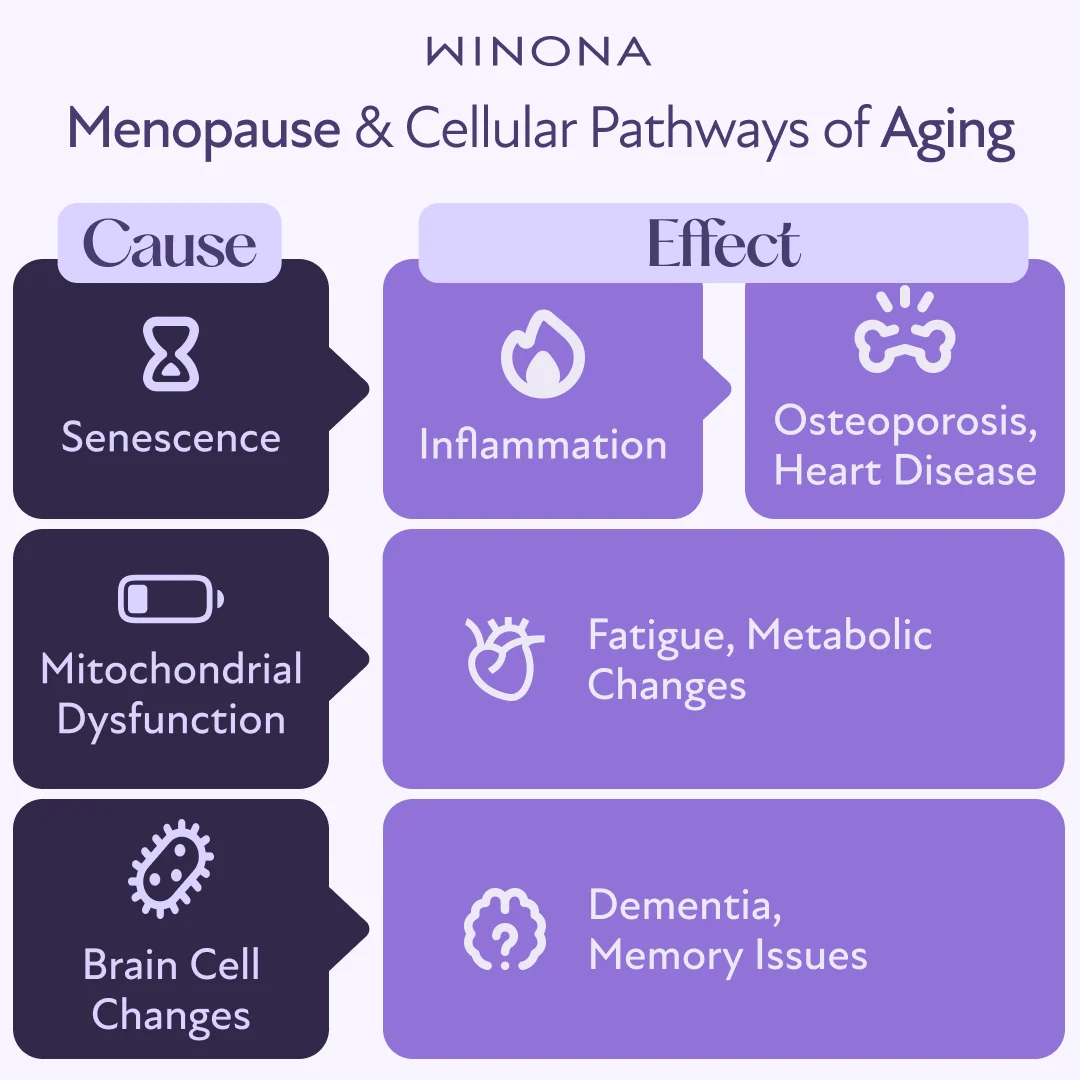
The Clinical Consequences: Accelerated Aging and Long-Term Health
Estrogen and progesterone significantly influence skin health, bone density, cardiovascular function, metabolism, and cognitive well-being. As these hormones decline, the body undergoes several changes, which can increase the risk of chronic diseases and lead to noticeable physical changes.
Heart Health
Starting HRT within 10 years of menopause may reduce serious heart issues by 25% to 50%.(8)
Estrogen helps blood vessels stay flexible, lowers LDL (“bad”) cholesterol, and raises HDL (“good”) cholesterol. It does this by supporting nitric oxide production, which relaxes vessel walls, and influencing how the liver processes fats. Without estrogen, arteries stiffen and plaque builds more easily, raising the risk of heart disease — the leading cause of death in women. Early HRT use has been shown to restore some of these protections.(6)
Bone Density
According to the Bone Health & Osteoporosis Foundation, women can “lose up to 20% of their bone density in the five to seven years around menopause.”
Bone constantly remodels itself, balancing breakdown and rebuilding. Estrogen regulates this cycle by slowing bone breakdown from osteoclasts and promoting bone-building activity from osteoblasts, keeping bones dense and strong. With estrogen loss, bone breakdown speeds up, leading to osteoporosis and higher fracture risk. Preventive care — including HRT and strength training — can preserve bone health.(9)(10)
Brain Function
The Alzheimer's Association states that two-thirds of all Americans with Alzheimer’s are female.
Estrogen supports neurotransmitters by boosting serotonin and dopamine activity, protects against oxidative stress by enhancing antioxidant defenses, and promotes communication between brain cells by strengthening synapses and encouraging new connections. The decline of estrogen contributes to memory changes, brain fog, and greater vulnerability to neurodegenerative diseases. Some research shows that women who begin HRT near the start of menopause may have a lower risk of cognitive issues and dementia later in life.(5)(7)
Skin and Collagen
Collagen production declines by as much as 30% in the first few years of menopause.
Collagen, the protein that gives skin strength and elasticity, depends heavily on estrogen. This leads to thinner skin, dryness, and more visible wrinkles. While skin aging is natural, restoring estrogen can improve skin hydration and elasticity.
Estrogen helps regulate fat distribution, particularly in maintaining a more even fat-to-muscle ratio. As its levels drop, women often experience an increase in abdominal fat, which is linked to metabolic disorders.(6)
Estrogen also has anti-inflammatory properties and helps maintain muscle. Keeping estrogen levels stable may help reduce joint pain and muscle weakness related to aging.
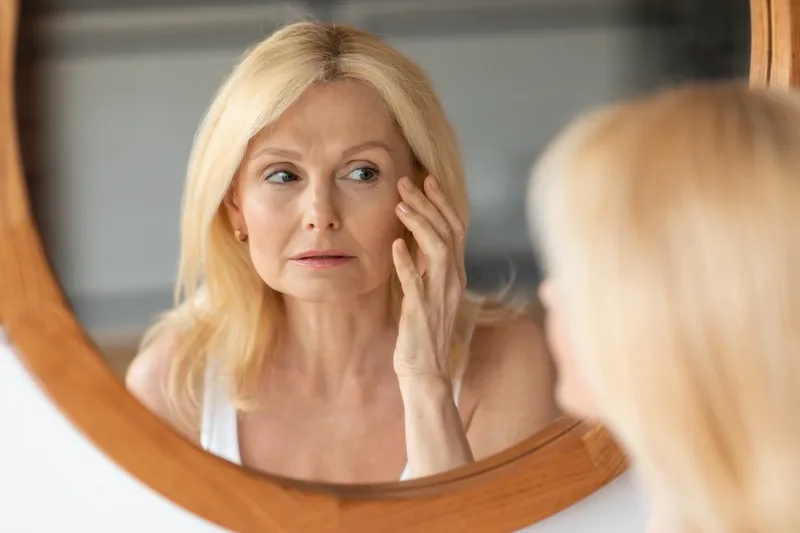
Understanding the biology of how the body ages is helpful because it shows that menopause-related aging isn’t inevitable. Proactive strategies — both medical and lifestyle-based — can slow the pace.
The Role of Hormone Replacement Therapy (HRT)
An international collaborative study looked at how HRT might slow menopause-related aging. Researchers found that women using HRT showed less cellular aging, suggesting that estrogen therapy may help protect specific tissues at the cellular level.(2)
This is because HRT directly addresses the root cause: hormone loss. Restoring lost hormones, particularly estrogen, reverses many cellular changes that drive the aging process.
One pivotal finding from the Women’s Health Initiative reanalysis: Women aged 50–59 in the estrogen-only trial had a 32% decrease in all-cause mortality. That means lower risk of dying from any medical cause, not just relief of menopausal symptoms.
Research indicates that HRT supports the following:(5)(6)(7)
Healthy blood vessels and cholesterol control
Stronger bones and reduced fracture risk
Better brain function and possibly lower dementia risk
Improved skin health and hydration
For many women, HRT is the single most effective intervention to counteract menopause-driven biological aging.
Essential Lifestyle and Diet Choices
While hormones are central, lifestyle choices add undeniable support.
Protecting Cells
Eating Phytoestrogen-Rich Foods: Foods like soybeans, flaxseeds, and legumes can help support estrogen levels and ease menopause-related symptoms.
Following an Anti-Inflammatory Diet: A diet rich in whole foods, lean proteins, healthy fats, and fruits and vegetables supports overall health. Limiting processed foods and excess sugar may also help reduce inflammation.
Taking Key Supplements: Vitamin D, calcium, omega-3s, and antioxidants can support bones, brain health, and cellular repair.
Staying Hydrated: Dehydration can impair cellular function, accelerate skin aging, and contribute to joint pain and fatigue.
Keeping Muscles and Bones Strong
Strength Training: Lifting weights helps maintain muscle mass, bone density, and metabolism.
Daily Movement: Walking, yoga, and resistance exercises help keep joints flexible and maintain strength.
Boosting Mitochondrial and Brain Health
Getting Enough Sleep: Poor sleep accelerates aging and worsens menopause symptoms. Maintaining a cool, dark, and quiet sleep environment promotes better rest.
Managing Stress: Chronic stress increases inflammation and speeds up aging. Mindfulness, deep breathing, and relaxation techniques help mitigate its impact.
Engaging the Brain: Learning new skills, reading, and socializing keep cognitive decline at bay.
Reducing Cellular Damage
Limiting Alcohol and Smoking: Both accelerate biological and visible aging, increasing disease risk and worsening menopause symptoms.
Prioritizing Sun Protection: UV damage speeds up skin aging and contributes to cellular decline.
Balancing Blood Sugar: Eating protein- and fiber-rich meals helps manage insulin resistance and prevent weight gain.
Practicing Intermittent Fasting: Some research suggests fasting may support cell repair and longevity if it aligns with personal health needs.
Slowing Skin Aging
To keep skin youthful, women may benefit from adopting healthy skincare routines:
Applying Sunscreen Daily: A sunscreen with at least SPF 30 is essential to protect the skin from harmful UV rays.
Using Retinoids or Peptides: These help boost collagen and reduce wrinkles.
Hydrating and Moisturizing: Certain skincare treatments, like hyaluronic acid and ceramide-rich creams, can help restore lost moisture and suppleness.
Limiting Sugar and Processed Foods: Excess sugar weakens collagen and accelerates skin aging.
Considering Collagen Supplements: These may help maintain skin firmness but should be discussed with a healthcare provider prior to use.
Can menopause be managed to slow aging?
While it’s true that menopause can influence the aging process, proactive strategies can help slow its impact. By addressing hormonal changes, prioritizing cellular health, and making targeted lifestyle choices, women can maintain both their biological and external youthfulness.
Seeking personalized care from healthcare providers ensures the best approach to managing menopause-related aging effectively.
Experiencing menopausal symptoms? Discover if HRT is right for you.
Aging is a part of life, but accelerated aging from menopause doesn’t have to be. If the transition has been challenging, there’s no need to suffer in silence. Take our brief menopause quiz to see if a personalized HRT plan is right for you, and take the first step toward long-term health and feeling better.