Joint pain, swelling, stiffness, tenderness, or warmth that develops or worsens during the menopause transition can prompt questions about arthritis, especially if symptoms are affecting mobility or quality of life.
Arthritis is an all-encompassing term for health conditions that affect the joints. There are more than 100 types of arthritic conditions. Some are caused by wear and tear, while others are related to autoimmune disease.
Menopause does not cause arthritis, but hormonal changes may increase the risk due to their impact on bone mineral density, inflammation, and cartilage breakdown.
Causes, symptom patterns, and treatment options vary by the type of arthritis, making it important to understand the differences among common forms, such as osteoarthritis, rheumatoid arthritis, psoriatic arthritis, and gout.
Treatment may include physical therapy, medications, supportive devices, steroid injections, or lifestyle changes. HRT is not a direct treatment for arthritis, but it may be considered for women who are experiencing arthritis symptoms as well as broader menopausal symptoms.
Menopause and Arthritis: Symptoms, Causes, and Treatment
 Erin Marie McCluskey
 Dr. Saranne Perman, MD
Article Content
The Bottom Line:
While general joint discomfort during menopause is often related to hormonal shifts, when achy joints start to become increasingly painful, swollen, or tender, it may indicate the progression of arthritis rather than what many women might assume is a normal sign of aging.
Menopause is not a direct cause of arthritis, but estrogen decline during this stage of life may contribute to symptoms due to its effects on the immune system, bone and muscle loss, and changes in joint tissue health.(1) Some women may notice symptoms emerge during or after menopause, while others may find that existing arthritis pain worsens.
This article explores how hormonal fluctuations may influence various types of inflammatory or degenerative arthritis, including osteoarthritis, rheumatoid arthritis, psoriatic arthritis, and gout, and the different treatment methods for each.
Understanding these connections can help clarify why arthritis symptoms may start or become more noticeable during this phase of life. With this knowledge, women can confidently pursue targeted solutions to preserve their mobility and quality of life as they navigate menopause.
Could joint pain during menopause be arthritis?
Arthritis itself is not a symptom of menopause, but joint pain is common during these transitional years, making it hard to tell whether musculoskeletal symptoms are due to hormonal changes or arthritis.
Menopause-related joint pain usually starts in the mid-40s during perimenopause. It often feels like widespread stiffness or soreness that starts in one area and gradually spreads to other parts of the body. On the other hand, arthritis pain is chronic and tends to affect one or more specific joints.
Additional symptoms can also serve as a clue. If joint pain is accompanied by hot flashes, night sweats, or mood changes, it’s likely related to menopause, while symptoms of swelling, warmth, or joint deformity are more strongly associated with arthritis.
To learn about the signs and symptoms of non-arthritic joint pain, read more about joint and muscle pain during menopause.
The Link Between Menopause and Arthritis
Arthritis broadly refers to health conditions affecting the joints. However, there are many types of arthritis that may affect menopausal women, including osteoarthritis, rheumatoid arthritis, psoriatic arthritis, and gout.
More research is needed to better understand the relationship between menopause and arthritis. Although menopause doesn’t directly cause arthritis, research suggests that women may be at an increased risk for developing arthritic conditions during this phase of life due to hormonal changes.(1)
The link is believed to lie in changes in estrogen levels. Estrogen helps protect the body’s joints by regulating inflammation and maintaining bone mineral density, muscle mass, and the structural integrity of the cartilage.(1) When estrogen levels drop, these protective effects are diminished.
While hormonal shifts are believed to be a significant factor, genetics, joint overuse, obesity, and other underlying health conditions can also contribute to arthritis risk, with some of these risk factors becoming more common as women age through the menopause transition.
How Hormonal Changes May Affect Arthritis Symptoms
Levels of estrogen, progesterone, and androgens all fluctuate during menopause. These hormonal shifts may affect the onset or worsening of arthritis symptoms.
Estrogen helps regulate inflammation by suppressing the release of pro-inflammatory proteins. As estrogen levels decline, its defenses are reduced, making it easier for these proteins to circulate through the body. This may influence symptoms of rheumatoid arthritis, an autoimmune disease that causes chronic inflammation.(2)
Hormonal changes may also affect osteoarthritis, a condition caused by wear and tear of the joints. As estrogen levels fall, structural changes in the body’s joint tissues may trigger symptoms. For women already diagnosed with osteoarthritis, symptoms may worsen during menopause due to the acceleration of bone, muscle, and cartilage loss.(1)
Progesterone and androgens, including testosterone and dehydroepiandrosterone (DHEA), are also critical for maintaining musculoskeletal and immune system health during menopause. These hormones help regulate the body’s immune system response and support bone and muscle health.(3) As levels shift, it may further impact different arthritic conditions.
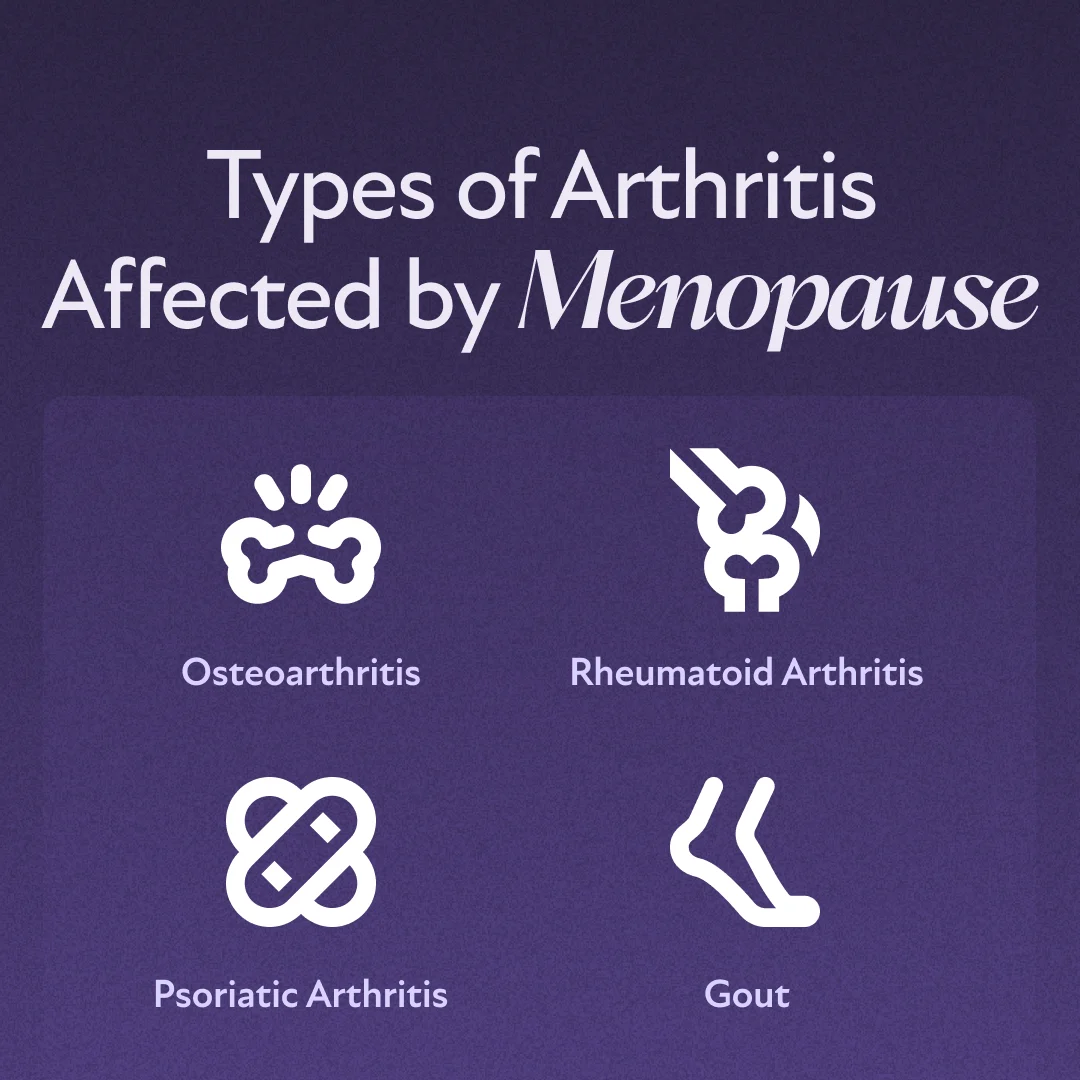
Types of Arthritis Affected by Menopause
With over 100 types of arthritis, it’s important to understand the nuances between them. The following are common arthritic conditions that may be affected by menopause.(1)(4)
Osteoarthritis and Menopause
Osteoarthritis is the most common form of arthritis, frequently affecting the hip, hand, or knee. It’s a degenerative disease that causes a breakdown of cartilage, the tissue that pads the joints against injury.
Recent research highlights a significant rise in osteoarthritis cases during postmenopause. In a 2025 systematic analysis published in BMJ Global Health, researchers examined over 30 years of global data and found that the number of new cases of osteoarthritis among postmenopausal women had increased by approximately 133% from 1990 to 2021.(5)
This is believed to be due in part to estrogen’s regulatory effects on the collagen-producing cells in cartilage that keep the body’s joints strong and flexible. As estrogen levels fluctuate and decline, changes in these cells occur, causing collagen production to slow down and cartilage to degrade. These hormone-related joint changes may contribute to why osteoarthritis becomes more common during and after menopause.
Rheumatoid Arthritis and Menopause
Rheumatoid arthritis is an autoimmune disease that causes chronic inflammation, leading to stiff, painful joints. Although menopause is not a direct cause of the disease, it may play a role in its development.
A 2024 study published in BMC Rheumatology showed that postmenopausal women were 35% more likely to develop rheumatoid arthritis compared to premenopausal women.(6)
The researchers also examined the influence of menopause timing. The findings showed that the risk of rheumatoid arthritis nearly tripled among women who entered menopause before the age of 45 (early menopause) compared to women who reached menopause between the ages of 45 and 55.(6)
Psoriatic Arthritis and Menopause
Psoriatic arthritis is another autoimmune disease that affects the joints. Most cases occur in individuals with a skin condition called psoriasis. Arthritic symptoms often emerge seven to 10 years after skin symptoms develop.(7) However, just because a woman has psoriasis does not guarantee she will develop psoriatic arthritis.
Similar to rheumatoid arthritis, the age at which women reach menopause may influence their risk for the condition. A study demonstrated that women who entered menopause at a later age were less likely to develop psoriasis and psoriatic arthritis than women who entered menopause before the age of 45.(8)
It’s important to seek prompt medical evaluation if arthritis symptoms develop alongside skin symptoms to prevent long-term joint problems.
Gout After Menopause
Gout is a common type of inflammatory arthritis that causes flares of joint pain. It typically occurs in a single joint, most frequently the big toe.(9)
Gout occurs when uric acid crystals form in the joints. When estrogen levels are high, it helps maintain low levels of uric acid in the blood. However, women are more likely to develop the disease after menopause when estrogen levels decrease.(10) One study published in Annals of the Rheumatic Diseases found that the risk of gout increased by 26% in connection with menopause.(11)
Women experiencing symptoms of gout should reach out to their doctor for evaluation to prevent complications and rule out any alternate health conditions.
Symptoms of Arthritis During Menopause
Symptoms of arthritis can vary. That’s why it’s important to recognize the most common arthritic symptoms that some women may experience during menopause.
Common Arthritis Symptoms
The main symptoms of arthritis include the following:(4)
Joint pain
Morning or evening stiffness
Swelling
Tenderness
Warmth
Muscle weakness
Instability
Reduced range of motion
Limited mobility
Recurring flare-ups
Joint deformities in advanced cases
Although some arthritis symptoms may overlap with common menopausal symptoms, like difficulty sleeping, fatigue, or changes in mood, they’re not clear signs of arthritis on their own.
How Symptoms Differ by Arthritis Type
While different arthritic conditions may share many of the same symptoms, there are key factors that can help differentiate inflammatory arthritis (rheumatoid arthritis, psoriatic arthritis, gout) from degenerative arthritis (osteoarthritis).(4)(12)
Symmetric vs. Asymmetric Symptoms: While osteoarthritis joint pain is usually isolated to one side of the body, cases of rheumatoid arthritis pain are typically symmetrical, affecting the same joints on both sides of the body. People with psoriatic arthritis may experience symptoms on one or both sides of the body. Gout symptoms are usually asymmetrical, affecting one joint at a time.
Location of Joint Pain: Osteoarthritis pain is commonly felt in the hip, hand, or knee, while rheumatoid arthritis and psoriatic arthritis often affect the hands and feet. Although the big toe is a signature site of gout pain, postmenopausal women may first experience joint symptoms in the upper extremities.
Time of Day: Osteoarthritis pain is often more severe in the evening and exacerbated by physical activity. Rheumatoid arthritis or psoriatic arthritis pain may also be felt in the morning as well as when a person is inactive. Unlike osteoarthritis, symptoms may lessen with physical activity but become aggravated with ongoing use.
Treatment Options for Arthritis During Menopause
Arthritis requires different treatment approaches depending on symptom severity, the affected joints, and the type of arthritis. Although there’s no cure for arthritic conditions, different treatments can help manage symptoms so menopausal women don’t have to live in discomfort.
Osteoarthritis Treatment During Menopause
Osteoarthritis treatment typically involves a combination of physical therapy, medication, and lifestyle changes.(4)(13)
Physical Therapy: Certain exercises and stretches can help relieve pain and improve the function of the affected joints.
Bracing: A supportive brace, commonly used for cases of knee osteoarthritis, can alleviate pressure on the joint, increase stability, and reduce pain.
Non-Steroidal Anti-Inflammatory Drugs (NSAIDs): Topical or oral NSAID medications may be used to reduce arthritic pain and swelling.
Steroid Injections: Corticosteroid medication delivered into the joint can decrease pain and inflammation.
Surgery: Because of the potential risks, joint replacement surgery is usually only recommended in the event that other treatment methods prove ineffective.
Supplements: Study findings are mixed, but certain supplements, like ginger and curcumin (found in turmeric), may support joint health and help reduce osteoarthritis symptoms. It’s important to consult a doctor before starting any new supplements.
Rheumatoid Arthritis and Psoriatic Arthritis Treatment
Because rheumatoid arthritis and psoriatic arthritis are both forms of inflammatory arthritis, medications are the primary treatment method.(4)(14)
Disease-Modifying Anti-Rheumatic Drugs (DMARDs): These prescription treatment medications hinder the body’s inflammatory immune response and may be used in combination with other anti-inflammatory drugs. However, treatment progress takes time. It may take weeks or months before patients experience improvement.
Biologics: Biologics are medications derived from living organisms, such as plant cells, bacteria, or yeast. When used in the early stages of the disease, biologics appear to be more effective in treating arthritic autoimmune diseases than NSAIDs or steroid medications.
It’s important to monitor for symptoms of inflammatory arthritis during menopause and consult a rheumatologist for evaluation. The earlier the condition is diagnosed and treated, the lower the risk of permanent joint damage and disability.
Gout Treatment After Menopause
Gout is primarily treated with medications to reduce inflammation and manage levels of urate in the body.(4)(15)
Anti-Inflammatory Medications: NSAIDs, oral steroid medications, or other anti-inflammatory drugs like colchicine may be used to treat gout flare-ups.
Urate-Lowering Drugs: Xanthine oxidase inhibitors work by suppressing urate production, while uricosuric agents may be prescribed to increase urate excretion. If these treatments are ineffective, uricase is a medication that may be prescribed to patients experiencing recurrent flares to help break down urate in the body.
It’s important for women experiencing symptoms of gout to consult with a doctor. If left untreated, it can progress into more serious health conditions.
Lifestyle Strategies for Managing Arthritis During Menopause
Arthritis can negatively impact women’s quality of life during menopause. Symptoms can make it difficult to work, perform day-to-day tasks, or maintain an active social life. The following lifestyle strategies can help menopausal women manage arthritic conditions.(14)(16)(17)(18)(19)
Engage in low-impact exercise: Walking, biking, and swimming can help reduce osteoarthritis symptoms. Yoga has been shown to improve physical functioning in patients with rheumatoid arthritis.
Prioritize anti-inflammatory foods: Maintaining a diet rich in anti-inflammatory foods, such as the Mediterranean diet, may help reduce inflammation. The diet pattern is largely made up of fatty fish, nuts, seeds, fruits, vegetables, whole grains, and olive oil.
Avoid smoking: Smoking may increase cartilage loss and osteoarthritis pain symptoms. It can also hinder healing in patients who require joint surgery. Avoiding or quitting smoking can reduce these risks.
Maintain a healthy weight: Weight gain may increase the risk of osteoarthritis. Maintaining a healthy weight with diet and exercise may help reduce symptoms.
Create a comfortable work environment: For women working in an office setting, properly adjusting the height of the desk chair or taking regular movement breaks can improve physical comfort and help in managing osteoarthritis symptoms while on the job.
Engage in mindfulness practices: Practicing mindful awareness and stress-reduction techniques may help with rheumatoid arthritis pain. Meditative practices, such as progressive muscle relaxation, may enhance mental health in patients with the condition.
Try acupuncture: Acupuncture is a traditional Chinese medicine practice that involves inserting needles into the skin to stimulate the nerves and provide short-term pain relief. Although research findings vary, this practice may benefit patients with knee osteoarthritis.
Seek professional mental health support: Menopausal women experiencing stress related to arthritis symptoms may benefit from professional mental health treatment. In-person or online emotional support groups can help patients develop coping skills and foster a sense of community support.
Can HRT help with arthritis symptoms during menopause?
Hormone replacement therapy (HRT) is not a direct treatment for arthritis. However, research shows it may help reduce musculoskeletal symptoms of menopause. This may be beneficial in cases where hormone-related joint pain is compounding arthritic joint pain.
Estrogen supplementation has been shown to protect against bone loss. It may also help regulate inflammation and pain sensitivity, all of which play a role in arthritis.(1)(20)When it comes to arthritis risk, studies have produced conflicting results. Some research shows hormone therapy may reduce postmenopausal women’s risk of certain types of arthritis, like osteoarthritis and gout.(1)(11)
Other studies indicate that treatment may increase the risk of arthritis.(21)(22) This is why menopause treatment must be individualized to each woman based on their unique medical history and potential risk factors.
Hormone therapy may be considered if arthritis symptoms are accompanied by other bothersome symptoms of menopause, like hot flashes, vaginal dryness, or mood changes, but would not be appropriate for treatment of arthritis symptoms alone.
When to Talk to a Doctor About Arthritis Symptoms During Menopause
Women should consult with a doctor if they develop new or worsening arthritis symptoms during the menopause transition that are impacting their daily functioning.
Cases of inflammatory arthritis may be related to other autoimmune disorders, including inflammatory bowel disease (IBD) or celiac disease, so it’s important to speak with a physician to determine the cause of joint inflammation.(4)
Doctor evaluation is also recommended if women experience any of the following during menopause:
Joint pain affecting one or multiple joints
Sudden or severe musculoskeletal pain
Joint swelling, tenderness, or warmth
Joint symptoms that accompany psoriasis skin symptoms
Limited mobility
Persistent symptoms
Recurrent flare-ups
A doctor will review a patient’s medical history and can diagnose different types of arthritis through a physical exam, imaging tests, or laboratory testing. Depending on symptoms, consulting with a rheumatologist may also be recommended.
Arthritis symptom management often requires a multipronged approach with the help of a primary care physician, physical therapist, rheumatologist, or dietitian. Women may also benefit from having a menopause specialist on their care team to develop a holistic treatment plan for both arthritis and menopause-related joint pain.
Experiencing menopause symptoms alongside arthritis?
If you’re struggling with arthritis and have entered the menopause transition, you don’t have to live with the added discomfort of hormone-related joint pain. A Winona physician can help determine whether new or worsening joint symptoms may be related to hormonal changes and if HRT may be appropriate for menopausal symptoms occurring alongside arthritis.
Frequently Asked Questions (FAQs) About Arthritis During Menopause
Menopause doesn’t directly cause arthritis, but hormonal changes may increase the risk of developing new or worsening arthritis symptoms because of estrogen’s effects on inflammation and joint tissue.
Joint pain, stiffness, swelling, tenderness, warmth, and limited mobility are common arthritis symptoms that some women may experience during the menopause transition.
Menopausal joint pain and arthritis can share symptoms, but hormone-related joint pain is often accompanied by additional menopausal symptoms like vaginal dryness, low libido, mood changes, and hot flashes. Women should speak with their doctor if they develop symptoms of arthritis to determine the underlying cause.
Some types of arthritis that have been associated with menopause include osteoarthritis, rheumatoid arthritis, psoriatic arthritis, and gout.
Arthritis is a chronic disease, so cases that develop or worsen during the menopause transition are unlikely to resolve on their own. However, different treatment options can help effectively manage symptoms and improve women’s quality of life.
HRT is not a primary arthritis treatment, but for some women, it may help reduce menopause-related joint pain that may be contributing to added arthritis pain during this phase of life. However, study findings are mixed, and more research is needed.
This article is for informational purposes only and does not constitute medical advice. The information contained herein is not a substitute for professional medical advice. Always talk to your doctor about the risks and benefits of any treatment.
References
Complex role of oestrogens in the risk and severity of rheumatoid arthritis in menopause
Menopausal state and rheumatoid arthritis: a systematic review and meta-analysis
Menopause, Postmenopausal Hormone Use and Risk of Incident Gout
A Meta-Analysis of the Impact of Nutritional Supplementation on Osteoarthritis Symptoms
Psoriatic Arthritis: Diagnosis, Treatment, and Steps to Take
The Effect of Meditation, Mindfulness, and Yoga in Patients with Rheumatoid Arthritis
The effectiveness and safety of acupuncture for knee osteoarthritis