Key Takeaways
Estrogen plays a key role in brain health and memory
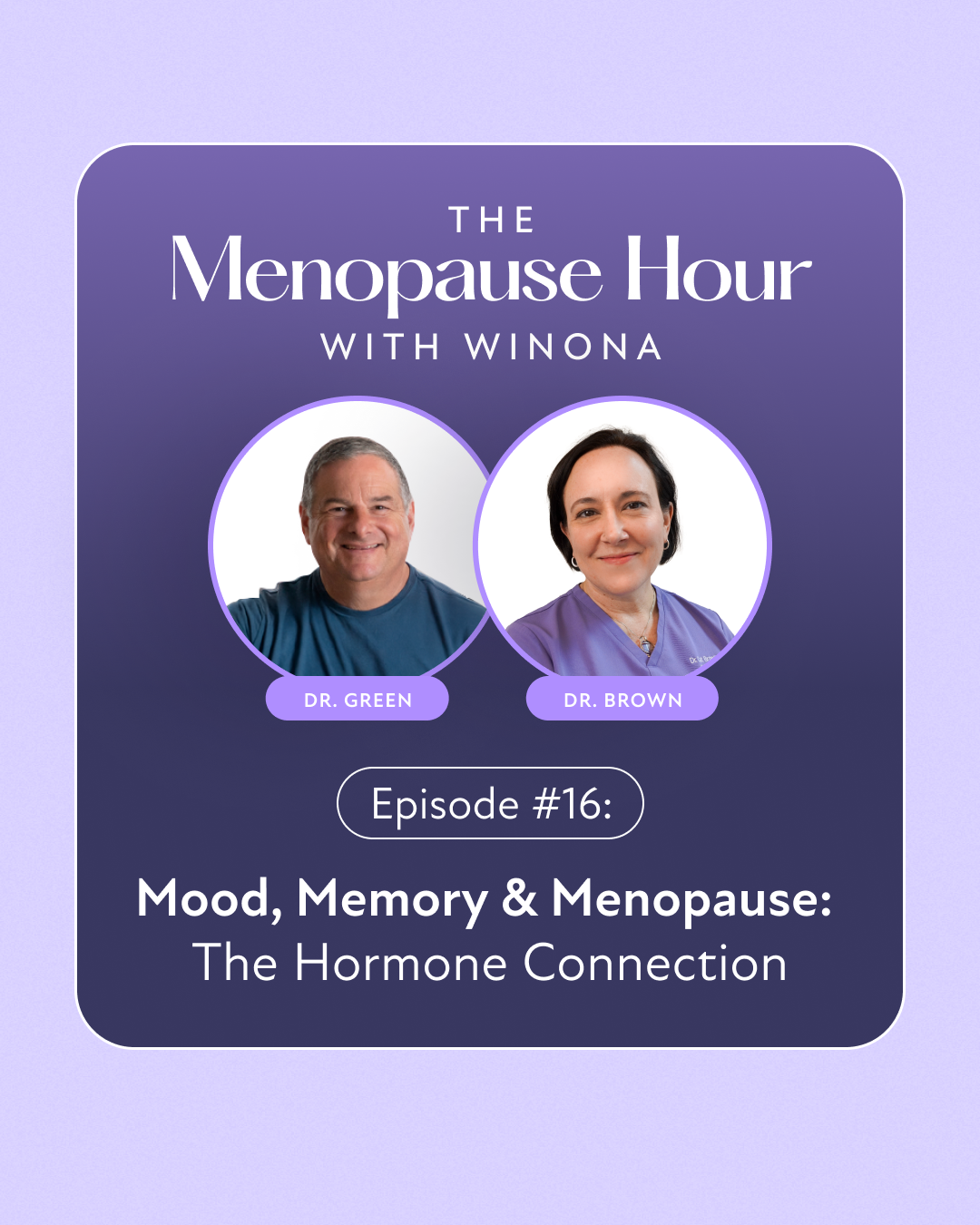
Dr. Brown explained that estrogen is essential to neurotransmitter production, which is why many women notice mood changes or brain fog as estrogen declines in perimenopause — and why supplementing it, alongside staying mentally active, can help support long-term cognitive health.
A psychiatric diagnosis doesn't disqualify someone from HRT
Dr. Brown noted that conditions like bipolar disorder don't rule out hormone therapy, though she recommends achieving mental health stability first, since starting multiple new treatments at once can complicate finding the right balance.
Family History of Breast Cancer Alone Doesn't Rule Out HRT
Dr. Brown explained that family history only meaningfully changes the risk calculation when paired with a known genetic marker like BRCA1 or BRCA2 — without that, a family history alone doesn't disqualify someone from treatment.
Weighing breast cancer risk means looking at the full health picture
Many women worry that HRT will cause breast cancer. Dr. Brown noted that the modest increase in risk comes from progesterone, not estrogen, and encouraged weighing that risk against women's broader health picture — since heart disease remains a leading health concern for women overall — rather than treating it as a single, standalone risk.
GLP-1 medications and HRT may work better together
Dr. Brown pointed to emerging research showing that combining GLP-1 medications like Zepbound with HRT can lead to greater weight-loss success than either treatment alone, describing the effect as complementary rather than competing.