The Menopause Hour Season 2 - Episode -1 Surprising Signs of Perimenopause
Podcast

The Menopause Hour with Winona: Not Just Hormones: The Lifestyle Habits That Support Your Menopause Journey - Episode #37

Published: April, 2026

Dr. Cathleen Brown

Featured Physician

Cathleen M. Brown

Host

Madi Baldwin

Episode #37 of The Menopause Hour with Winona was a replay of a live Ask the Experts Q&A, hosted by Winona's Madi Baldwin and featuring Medical Director Dr. Cathleen Brown answering listener questions. Dr. Brown opened the show with a few timely health reminders before diving into questions about HRT delivery methods, lifestyle habits, and what to expect when starting treatment.

The conversation covered the difference between transdermal estrogen cream and patches, why changes in weight distribution tend to be one of the later benefits of hormone therapy, and how to tell gastroesophageal reflux disease (GERD) symptoms apart from hot flashes. Dr. Brown also addressed joint pain, supplements, and how to talk to a doctor who may be hesitant to prescribe HRT.


LISTEN TO THE EPISODE

Episode Details

  • Podcast: The Menopause Hour with Winona

  • Episode Number: 37

  • Episode Title: Episode #37: Not Just Hormones: The Lifestyle Habits That Support Your Menopause Journey

  • Host: Madi Baldwin

  • Featured Physician: Dr. Cathleen Brown

  • Published Date: April 22, 2026

  • Episode Duration: 31 minutes 59 seconds

  • Format: Menopause Q&A

  • Main Topics: HRT Delivery Methods, Lifestyle Habits, Menopause Myths

About The Menopause Hour with Winona Podcast

The Menopause Hour with Winona is a health and wellness podcast featuring Winona Chief Medical Officer Dr. Michael Green and Medical Director Dr. Cathleen Brown. The show addresses common questions about perimenopause and menopause, combining medical expertise with straightforward discussions of symptoms, treatment options, and the science behind the menopause transition.

Episodes include live Q&A sessions, doctor-led conversations, and patient stories. In its live Q&A format, women from Winona's community submit questions directly to the hosts, creating practical discussions shaped by the concerns women commonly bring to their own doctors.

Visit The Menopause Hour on Buzzsprout.

About This Episode

This live Q&A covered practical questions about starting and staying consistent with hormone therapy. Dr. Brown explained the difference between transdermal cream and patch delivery methods, and why benefits like weight redistribution and reduced joint pain tend to show up later than earlier benefits like hot flash relief and improvements in sleep.

She also clarified how to distinguish GERD symptoms from hot flashes, and answered listener questions about collagen, creatine, and general nutrition habits to support women during the menopause transition.

Dr. Brown shared actionable strategies for communicating with primary care physicians who may have reservations about hormone therapy safety, such as referencing the FDA's landmark July 2025 expert panel on HRT. She closed the show by encouraging listeners to keep a personal symptom diary and to learn everything they possibly can about perimenopause, menopause, and what’s happening hormonally in the body to help women feel informed and empowered during this stage of life.

RSVP here to join our next Menopause Q&A.

Topics Covered

  • The difference between estrogen cream and patch delivery methods

  • Why changes in weight distribution are often a later HRT benefit, not an early one

  • Joint pain linked to declining estrogen versus other causes

  • Potential benefits of collagen and creatine supplements

  • Telling GERD symptoms apart from hot flashes

  • Best time of day to use estrogen cream and DHEA

  • Talking to a hesitant primary care doctor about HRT safety

  • The FDA's 2025 expert panel on hormone therapy

  • Whether progesterone or testosterone is needed alongside estrogen

  • Colorectal cancer screenings as women age

  • Keeping a symptom diary to track perimenopause changes

  • Timing and consistency as the two key components to HRT success

Key Takeaways

Weight redistribution is one of the later benefits of hormone therapy

Dr. Brown explained that improvements in sleep and hot flashes are among the earlier benefits of HRT, while shifts in weight distribution and reduced joint pain often require at least five to six months of consistent use to develop.

Joint pain is common in perimenopause, but it’s important to rule out other potential causes 

Dr. Brown explained that declining estrogen levels can cause diffuse joint pain, especially in joints affected by prior injuries. She cautioned that sudden, severe, or widespread joint pain requires medical evaluation to rule out other conditions like rheumatoid arthritis or autoimmune disease rather than assuming symptoms are solely hormonal.

GERD and hot flashes have distinct symptoms and require different treatments

Dr. Brown clarified that GERD causes a burning sensation in the throat and chest, often triggered by lying down or eating acidic foods. Hot flashes are a sudden rush of heat typically felt in the chest, neck, or face that may be accompanied by flushing or sweating. She noted they each require completely different treatment approaches.

Progesterone is necessary alongside estrogen for women who still have a uterus

Dr. Brown explained that the primary role of progesterone is to protect the uterine lining from overgrowth caused by the stimulating effects of estrogen. Therefore, women without a uterus generally don't need it. She added that testosterone isn't FDA-approved for women, which is why Winona uses DHEA as a gentler way to support testosterone levels.

Referencing the FDA's 2025 expert panel can help if a doctor is hesitant to prescribe HRT

Dr. Brown encouraged women whose doctors may have reservations about hormone therapy to share educational resources, such as the publicly available video link to the FDA's 2025 expert panel on HRT. She advised patients to ask their physician directly whether they feel comfortable managing menopause care, and to seek a referral or new doctor if needed.
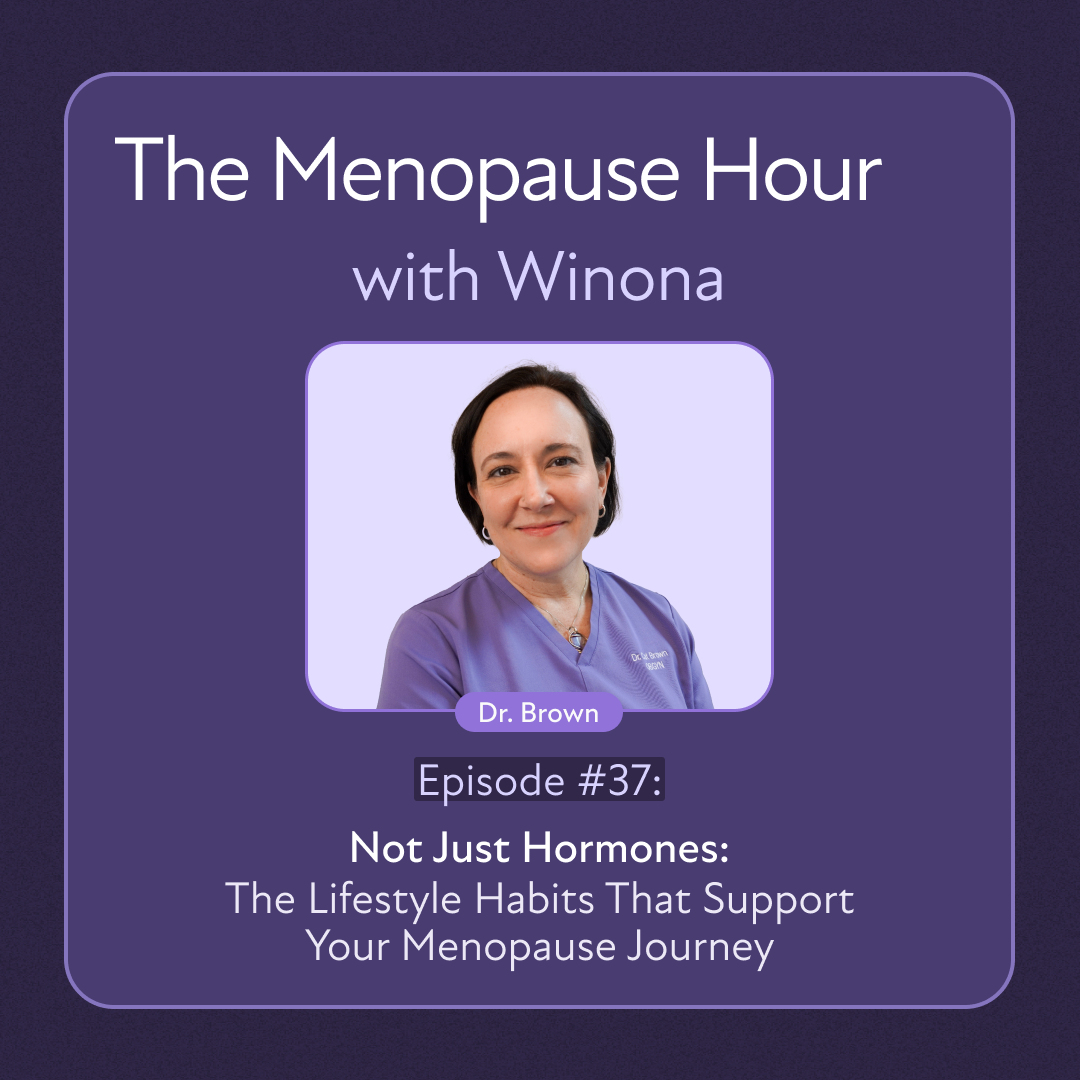

Cathleen M. Brown

Dr. Cathleen M. Brown

Obstetrics & Gynecology

Dr. Cathleen Brown is a menopause specialist and physician with Winona. She brings a physician’s perspective to menopause, perimenopause, hormone changes, symptom care, and treatment options during midlife.

At Winona, Dr. Brown helps women better understand symptoms, health history, hormone changes, and when physician-reviewed care may be appropriate.

Meet Dr. Cathleen M. Brown

Watch or Listen to the Episode

Watch the full conversation with Dr. Cathleen M. Brown on
The Menopause Hour with Winona with Madi Baldwin.

Get Physician-Led Menopause Care

Winona helps women access menopause and perimenopause care from home. Start with a short health questionnaire, and a board-certified physician will review your symptoms, health history, and treatment options.

Start Your Visit
lead-banner-woman-holding-mug-mobile