The Menopause Hour - Episode -38 Know Your Body Real Answers, Verified Truths About HRT and Menopause
Podcast

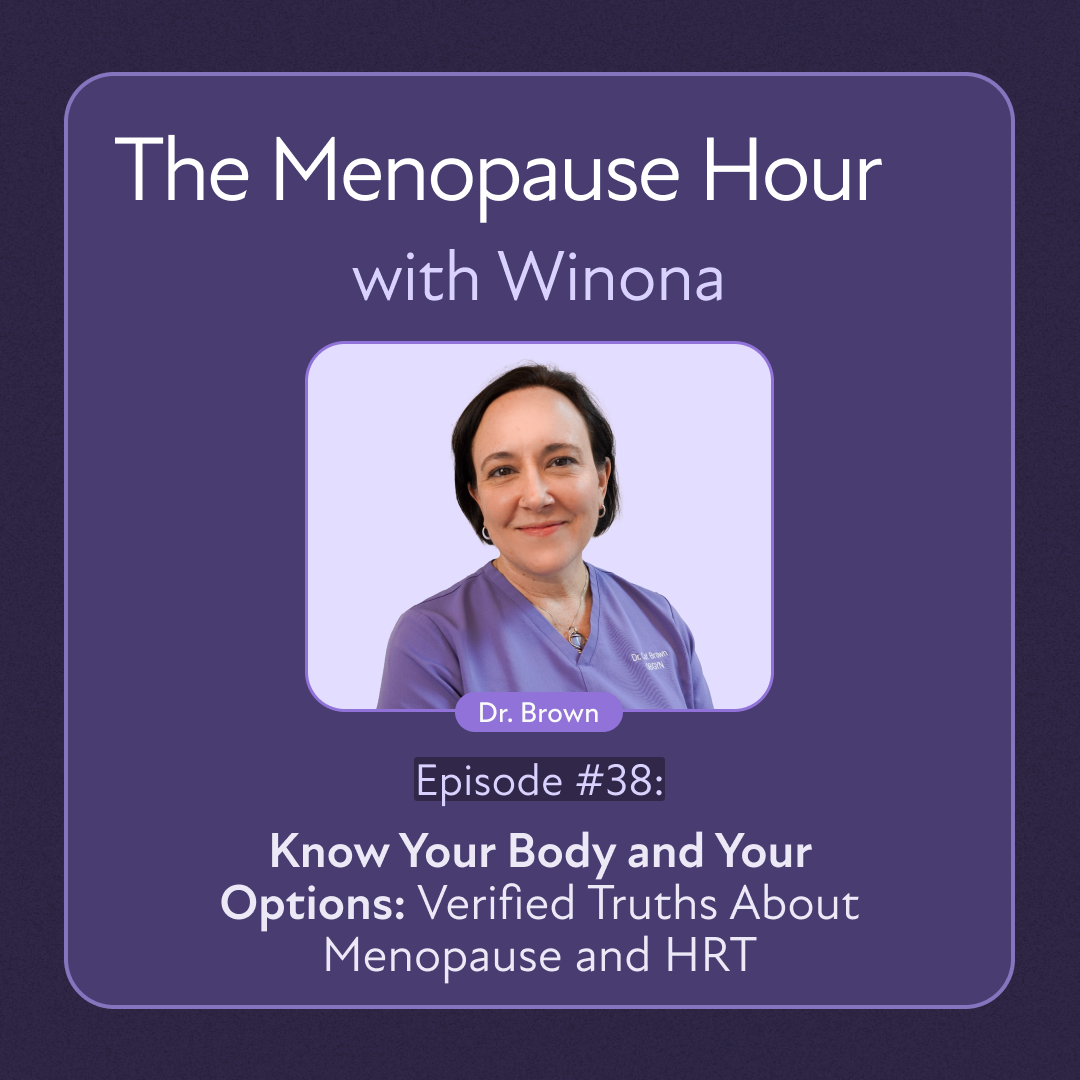
The Menopause Hour: Know Your Body and Your Options: Verified Truths About Menopause and HRT - Episode #38

Published: May, 2026

Dr. Cathleen Brown

Featured Physician

Cathleen M. Brown

Host

Madi Baldwin

This episode of The Menopause Hour with Winona is a replay of a live Ask the Experts Q&A, originally hosted by community manager Madi Baldwin with Winona's Medical Director, Dr. Cat Brown, answering real patient questions live. Episode #38, "Know Your Body and Your Options," runs 40 minutes.

Dr. Cat covers how long women can safely stay on HRT, how dosing gets personalized, why DHEA is used and at what doses, and why hormone testing isn't the tool many people assume it is — practical, judgment-free answers to the questions women bring to their own doctors every day.

LISTEN TO THE EPISODE

Episode Details

  • Podcast: The Menopause Hour with Winona

  • Episode: 38

  • Episode Title: Episode #38 Know Your Body and Your Options: Verified Truths About Menopause and HRT

  • Episode Format: Menopause Q&A

  • Host: Madi Baldwin

  • Published Date: May 13, 2026

  • Episode Duration: 40 minutes

  • Format: Audio Interview

  • Main Topics: HRT dosing & duration, DHEA, Hormone testing

About The Menopause Hour with Winona Podcast

The Menopause Hour with Winona is the show where listeners get answers to the menopause questions they often can't get from their own OB/GYN. It's hosted by Winona's Chief Medical Officer, Dr. Michael Green, and Medical Director, Dr. Cat Brown, who bring expert insight and straightforward, real-talk guidance to navigating menopause.

Each episode digs into the symptoms, treatment options, and science behind menopause, with an emphasis on cutting through stigma and common misconceptions. It's produced by Winona, the menopause telehealth company, as part of its broader effort to make menopause care and education more accessible.

Visit The Menopause Hour on Buzzsprout.

About This Episode

Hormone replacement therapy can feel overwhelming, especially with so much conflicting information circulating and so many questions left unanswered. In this episode, Dr. Cat takes on real questions from women navigating perimenopause and menopause — from how long someone can safely stay on HRT to how to recognize when a dose needs adjusting.

The conversation also covers what the first few weeks of starting HRT can look like, why hormone testing isn't as necessary as many people assume, and how sleep and nutrition play a bigger role in results than most expect. Whether you've been on HRT for years, just started, or are still weighing your options, this episode is a grounded look at what's actually happening in your body at this stage of life.

RSVP here to join our next Menopause Q&A.

Topics Covered

  • How long you can safely stay on HRT

  • Personalized HRT dosing, and signs a dose may be too high

  • DHEA supplementation and safe testosterone support

  • Best time of day to take DHEA and HRT

  • What to expect in the first weeks of starting hormone therapy

  • Why routine hormone testing isn't recommended

  • Whether hormone levels still fluctuate while on HRT

  • How a hysterectomy affects the need for progesterone

  • Managing energy levels and sleep disruption during menopause

  • Spotting or bleeding when starting a new HRT regimen

  • Winona's asynchronous telemedicine model for prescriptions and support

Key Takeaways

HRT duration and dosing are personalized, not fixed

Current research supports many women staying on HRT long-term for both symptom relief and preventive health benefits, a shift from older guidance to use "the lowest dose for the shortest time." Dosing isn't based on age or years since menopause — it's tailored to each person's symptoms and response, typically starting low and adjusting gradually.

DHEA is a gentle, low-dose way to support testosterone

DHEA is a naturally occurring precursor hormone the body converts into estrogen and testosterone. The negative reputation it has comes mostly from high-dose misuse in athletic and bodybuilding circles — the low doses used in menopause care are meant to raise testosterone gently without prescribing a controlled substance.

Hormone testing isn't the best guide to treatment

Because hormone levels fluctuate significantly throughout the day, major medical societies don't recommend routine hormone testing to guide HRT. Tracking symptoms is more useful, and finding the right regimen is often a process of adjustment rather than a single correct number.

Hysterectomy changes the HRT equation

Progesterone's main role in HRT is protecting the uterine lining, so women without a uterus typically don't need it. Taking estrogen alone doesn't carry the same breast cancer concerns once feared — it's specifically the combination of estrogen and progesterone that's associated with a small, not statistically significant, increase in risk.

Sleep quality shapes how HRT feels day to day

Estrogen affects neurotransmitters involved in sleep, so many women notice more restful sleep once hormone levels stabilize. Simple habits — like managing evening fluid intake or setting a consistent routine for patches or creams — can meaningfully affect both sleep and daytime energy.
Cathleen M. Brown

Dr. Cathleen M. Brown

Obstetrics & Gynecology

Dr. Cathleen Brown is a menopause specialist and physician with Winona. She brings a physician’s perspective to menopause, perimenopause, hormone changes, symptom care, and treatment options during midlife.

At Winona, Dr. Brown helps women better understand symptoms, health history, hormone changes, and when physician-reviewed care may be appropriate.

Meet Dr. Cathleen M. Brown

Watch or Listen to the Episode

Watch the full conversation with Dr. Cathleen M. Brown on
The Menopause Hour with Madi Baldwin.

Get Physician-Led Menopause Care

Winona helps women access menopause and perimenopause care from home. Start with a short health questionnaire, and a board-certified physician will review your symptoms, health history, and treatment options.

Start Your Visit
lead-banner-woman-holding-mug-mobile