Inside Winona's New Women's Health Research Initiative
Podcast

MedCity FemFwd: Dr. Cathleen Brown on Winona's Women's Health Research Initiative

Published: June, 2026

Dr. Cathleen Brown

Featured Physician

Cathleen M. Brown

Host

Marissa Plescia

Dr. Cathleen Brown, Medical Director at Winona, joined MedCity FemFwd host Marissa Plescia to discuss the newly launched Winona Women’s Health Research Initiative, a company-funded initiative supporting early-career researchers in women's health.

Dr. Brown traces the research gap that has left women's health chronically understudied. She shares findings from Winona's new state-of-menopause report, and makes the case for why access to care, both telehealth and in-person, remains the field's biggest challenge.


[WATCH THE EPISODE]

Episode Details

  • Podcast: MedCity FemFwd

  • Episode Title: Inside Winona's New Women's Health Research Initiative

  • Host: Marissa Plescia

  • Guest: Dr. Cathleen Brown

  • Published Date: June 30, 2026

  • Episode Duration: 16 minutes

  • Format: Audio & Video Interview

  • Main Topics: Winona Research Initiative, Women's Health Research, HRT, Menopause, Perimenopause, Telehealth

About MedCity FemFwd

MedCity FemFwd, hosted by reporter Marissa Plescia, explores the historical neglect of women's health and how that's gradually changing. The podcast unpacks how women were largely excluded from clinical research until as late as 1993, and highlights the growing wave of startups and employers investing in areas like fertility, menopause, and heart health.

In this episode, Plescia sits down with Winona's Dr. Cathleen Brown to discuss a new company initiative aimed at closing that research gap directly.

Visit MedCity FemFwd.

About This Episode

Dr. Brown opens by sharing how her own perimenopause symptoms, which were dismissed as "too early" by other providers, led her to Winona, and how that experience shaped her advocacy for better research and medical training. 

She explains that the newly launched Winona Research Initiative will fund medical students, residents, and early-career physicians who already have a women's health research project in mind, helping them reach peer review and presentation at scientific meetings.

The conversation also covers just how little menopause training doctors actually receive (as little as one to two hours across medical school and residency), and how the media coverage of the early 2000s Women's Health Initiative (WHI) study embedded a fear of HRT that many physicians still haven't overcome. Dr. Brown closes by sharing findings from Winona's new state-of-menopause report, including that patients report an average of nine or more symptoms simultaneously and often spend one to three years searching for a provider willing to help.

Topics Covered

  • Dr. Brown's own perimenopause experience and path to joining Winona

  • Why women were historically excluded from clinical trials

  • The launch of The Winona Research Initiative and its funding goals

  • How medical students and residents can apply for research support

  • The reality of medical training: one to two hours spent on menopause

  • How media coverage of the early 2000s Women's Health Initiative (WHI) study embedded lasting HRT fear

  • Findings from Winona's new state-of-menopause report

  • Why women report nine or more symptoms simultaneously

  • The one-to-three-year gap many women face before finding care

  • Why telemedicine can't fully replace in-person women's health exams

  • What needs to change to expand access to menopause care

  • How research funding could reshape medical school curricula

The Winona Research Initiative Funds Early-Career Women's Health Research

Dr. Brown explains that the newly launched initiative funds medical students, residents, and early-career physicians who already have a women's health research project in mind, helping them reach peer review and presentation at scientific meetings.

Women Were Historically Excluded From Clinical Trials

Dr. Brown notes that researchers long viewed women's hormonal fluctuations as a "confounding variable," leading to decades of clinical trials, including those for birth control, that excluded women almost entirely. This gap persists across women's health research today.

Menopause Gets Just One to Two Hours of Medical Training

Dr. Brown shares that her own OB-GYN training devoted only one to two hours total to menopause care, compared to months spent on fertility and obstetrics. This left many physicians unprepared once the Women's Health Initiative (WHI) study spread fear about HRT.

Women Report Nine or More Symptoms and Years of Delayed Care

Winona's new state-of-menopause report found that patients present with an average of nine or more simultaneous symptoms, and many spend one to three years being turned away before finding a provider willing to help.

Telemedicine Complements, But Can't Replace, In-Person Care

Dr. Brown emphasizes that while telemedicine expands access to menopause care, women still need in-person exams like Pap smears and breast exams. Both approaches are necessary, and access to menopause care overall remains the field's biggest challenge.
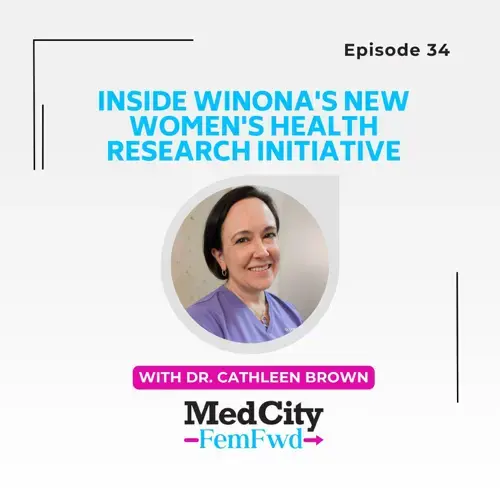


Cathleen M. Brown

Dr. Cathleen M. Brown

Obstetrics & Gynecology

Dr. Cathleen Brown is a menopause specialist and physician with Winona. She brings a physician’s perspective to menopause, perimenopause, hormone changes, symptom care, and treatment options during midlife.

At Winona, Dr. Brown helps women better understand symptoms, health history, hormone changes, and when physician-reviewed care may be appropriate.

Meet Dr. Cathleen M. Brown

Watch or Listen to the Episode

Watch the full conversation with Dr. Cathleen M. Brown on
MedCity FemFwd with Marissa Plescia.

Get Physician-Led Menopause Care

Winona helps women access menopause and perimenopause care from home. Start with a short health questionnaire, and a board-certified physician will review your symptoms, health history, and treatment options.

Start Your Visit
lead-banner-woman-holding-mug-mobile

Frequently Asked Questions About This MedCity FemFwd Podcast Episode

  • The episode is available on YouTube, Apple Podcasts, and Spotify.

  • The Winona Research Initiative is a Winona-funded initiative that supports medical students, residents, and early-career physicians conducting women's health research, with the goal of getting their work peer-reviewed and presented at scientific meetings.

  • Dr. Brown explains that researchers viewed women's hormonal fluctuations as a confounding variable, leading to decades of research, including for birth control, that largely excluded women.

  • Winona’s State of Menopause Report found that women present with an average of nine or more symptoms simultaneously and often spend one to three years seeking care before finding a provider willing to help.

  • No. Dr. Brown explains that telemedicine expands access but can't replace in-person exams like Pap smears and breast exams; both are necessary for complete care.