The time it takes to experience symptom improvement after starting hormone replacement therapy (HRT) can vary. On average, it may take up to three months to feel the full benefits of treatment.
Some women may experience mild side effects during the first days or weeks after initiating treatment as the body adjusts to the medication. Possible side effects include mood changes, breast tenderness, or digestive symptoms.
Treatment benefits often become more noticeable within the first month or two as hormone levels reach a steady state. Many women experience fewer hot flashes, improved sleep, and relief of vulvovaginal symptoms.
Most symptoms resolve within the first few months of treatment or can be managed by adjusting the dose or form of HRT.
The decision about when to start HRT is individualized and made in consultation with a doctor. Factors like age, symptom severity, and existing health conditions are considered, along with an evaluation for any contraindications, to determine whether HRT is an appropriate treatment option.
Starting HRT: What to Expect in Your First Days, Weeks, and Months
 Erin Marie McCluskey
 Dr. Cathleen M. Brown, DO
Article Content
The Bottom Line:
About to start hormone replacement therapy (HRT) but not sure what to expect? This article will serve as a guide for what to expect during the first 90 days of HRT treatment, including how long it may take before women start to feel better and how to manage initial side effects like bloating or breast tenderness.
HRT can provide lasting relief from exhausting hot flashes, uncomfortable vaginal dryness, and mood swings that can disrupt work, relationships, and emotional well-being. However, like any medication, it can take time to feel the full effects.
Understanding how long it takes for the body to adjust to HRT can help women have realistic expectations about their treatment progress and avoid disappointment if it doesn’t produce instant results.
Before You Begin: A Quick Checklist
HRT is a treatment that increases low hormone levels during menopause. According to the Menopause Society, it’s considered the most effective treatment for hot flashes, night sweats, and vulvovaginal symptoms.(1)
HRT treatment plans may include the following hormones:
Estrogen
Progesterone
DHEA (to increase testosterone levels)
Before starting HRT, it’s important to complete the following steps:
Consult with a qualified physician.
Decide on an appropriate dosage and method (patch, cream, or pills) with a doctor.
Book a follow-up appointment.
Now that you’ve taken the first few steps towards reclaiming your health, here’s what to expect in the days, weeks, and months after starting HRT.
Your HRT Timeline: What to Expect and When
While every woman’s HRT timeline is different, here’s what commonly happens after starting treatment — from initial reactions to long-term changes.
The First Week: Your Body Adjusts
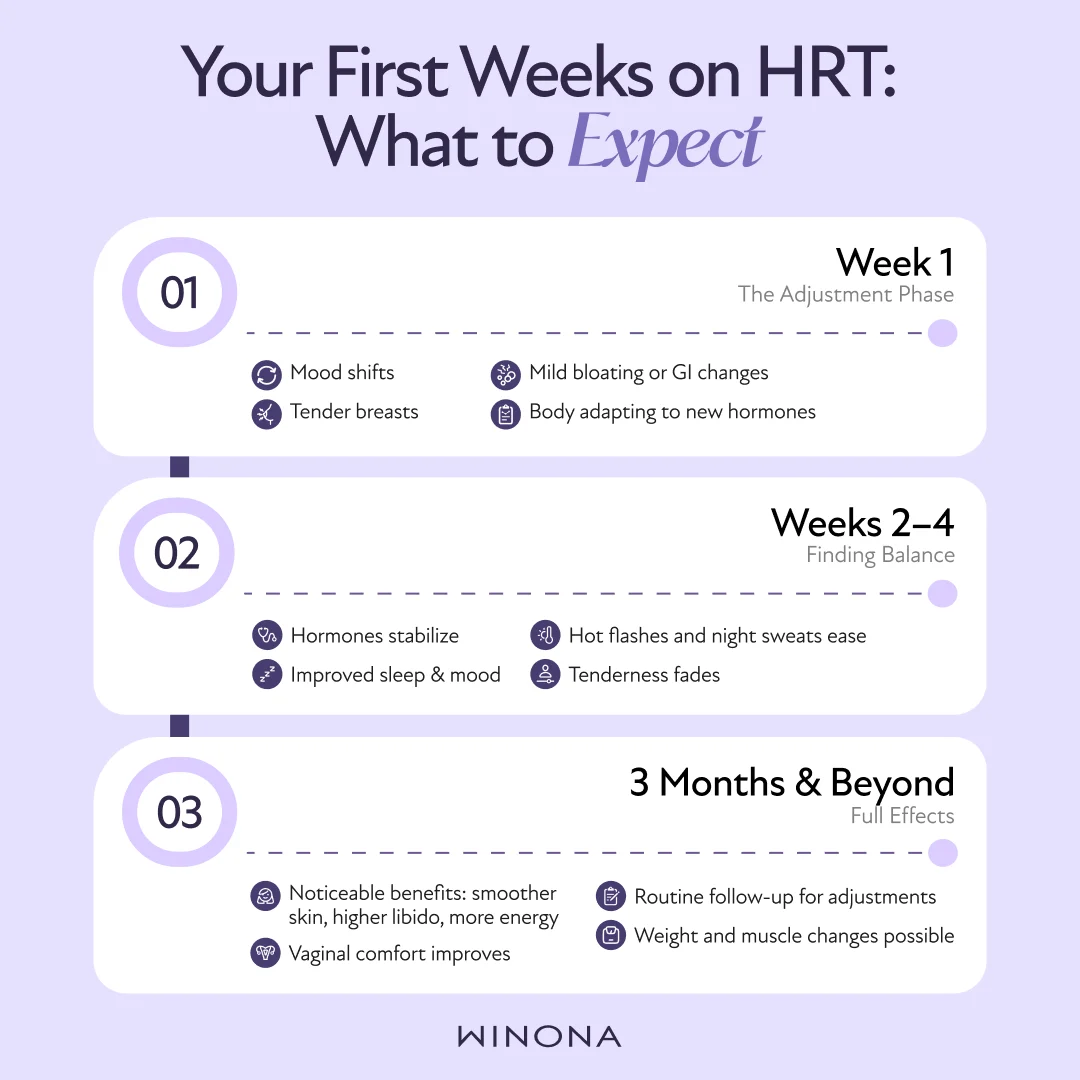
As the body adjusts to the increase in hormones, mood changes, breast tenderness or swelling, and gastrointestinal (GI) symptoms are common side effects during the first week on HRT.(2) This is because estrogen and progesterone have wide-reaching effects on the body’s tissues, mood-related neurotransmitters, gut motility, and fluid retention.(3)(4)(5)
Some women have concerns about gaining weight when starting HRT, but treatment is not associated with significant weight gain.(6) It can, in fact, even be beneficial in weight management. However, it’s recommended that patients avoid weighing themselves within the first week or two of treatment as weight-related benefits tend to occur later in the treatment process.
While some women may notice improvements more quickly than others, HRT takes time to work, and it’s unlikely that patients will feel drastically different within the first seven days. Instead of concentrating on symptom improvement, the first week on HRT is a great time to focus on integrating the medication into daily routine. It’s also important to focus on diet, proper sleep hygiene, and staying hydrated during the early days of treatment to help the body adjust.
The First Month: Early Benefits
During the first month of HRT, treatment benefits tend to become more noticeable as hormone levels begin to reach a steady state in the blood. Women often feel improvement in mood and a reduction in hot flashes, night sweats, and sleep disturbances.
However, it can take days to weeks for the body to reach this steady state based on the type of HRT (patch or oral), each woman’s unique metabolic rate, and how consistent patients are in their HRT use. Therefore, more significant improvements are usually seen in the following months.(7)
In a study published by the American College of Obstetricians and Gynecologists (ACOG), findings showed that postmenopausal women experiencing around 50 or more hot flashes a week who were given transdermal HRT reported a 50% decrease in the frequency of hot flashes after two weeks. The frequency further decreased by 70% after approximately one month of treatment.(8)
Mild side effects like breast tenderness or bloating may also begin to subside within the first month of treatment and often go away completely within a few months.(9)
Three Months and Beyond: Seeing the Full Picture
The full benefits of HRT are often felt after three or more months of treatment.(10) Some women may feel like their menopausal symptoms are mostly gone, while others may experience total symptom relief.
In the ACOG study, postmenopausal women experienced a 95% reduction in hot flashes after using transdermal HRT for 12 weeks.(8) The three-month mark is also when vaginal dryness tends to significantly improve, which may boost sexual desire.(11) Women may also see visible reductions in fine lines and wrinkles. It’s also around this time when improvement in weight and muscle mass may become more noticeable.
Beyond symptom relief, women also begin to enhance their long-term bone and heart health with continued HRT use. Treatment may reduce the risk of osteoporosis from menopause-related bone loss. HRT may also lower the risk of heart disease when started before the age of 60 or within 10 years of menopause.(1)
Most treatment side effects are expected to significantly subside at this point in the process. However, breakthrough vaginal bleeding is one side effect that can occur within the first four to six months of treatment.(12) After 10 weeks of HRT use, a follow-up appointment should be conducted to assess treatment progress. If a patient is still struggling with side effects or menopausal symptoms, the dosage, formulation, or route of administration can be adjusted.
Managing Common Initial Side Effects of HRT
Most side effects of starting HRT naturally resolve as the body gets used to the medication. However, that doesn’t mean women have to live in discomfort while waiting for the first few months to pass. There are various ways in which HRT side effects can be managed with medical intervention or lifestyle approaches.
Side Effect | Breakthrough Bleeding | Bloating | Breast Tenderness |
Why It Happens | Hormonal changes can cause greater endometrial sensitivity, thinning of the endometrium, or vascular changes | Changes in levels of estrogen and progesterone can increase fluid retention and slow gut motility | Estrogen affects the breast tissue and can cause tenderness or soreness |
Management Tip | A doctor can adjust the form or dose of HRT | Adjusting the portion size and timing of meals during the day | Wearing a soft, properly-fitted bra |
Breakthrough Bleeding
Abnormal vaginal bleeding or spotting that occurs after starting HRT may be related to increased endometrial sensitivity, thinning of the uterine lining, or vascular changes. The type of HRT, dose, and ratio of estrogen to progesterone may influence whether a woman experiences breakthrough bleeding.(13)(14)
While it usually resolves within the first few months of treatment, it should always be reported to a doctor. If bleeding starts or continues after three to six months of treatment, a doctor will investigate potential alternate causes. Breakthrough bleeding can be managed by adjusting the dose or type of HRT. In 90% of women, it tends to stop completely after one year of treatment.(6)(13)(15)
Bloating
Diet is key after starting HRT. Eating a healthy diet, as well as adjusting the portion size and timing of meals, may help reduce digestive discomfort. Getting regular exercise can also help reduce bloating and abdominal distension.(16)
Practicing good sleep hygiene and stress-reduction techniques like yoga, meditation, or progressive muscle relaxation may also help alleviate gastrointestinal distress. Sleep disturbances and high stress levels are common during menopause, and both have been linked with gastrointestinal symptoms.(16)
Breast Tenderness
Strategies that can help manage breast tenderness include wearing a soft, properly fitted bra and making certain dietary changes. Coffee, tea, and chocolate contain compounds called methylxanthines, which have been associated with breast pain. Eating less of these foods, while eating more fiber and unsaturated fatty acids, may ease breast soreness.(17)
Guidelines for Maximum HRT Benefits
If treatment progress feels slow, it’s recommended to check and make sure all instructions are being followed for maximum benefits:(18)
Take tablets or capsules at the same time every day.
Check prescription instructions to see if oral HRT needs to be taken with food.
Only place transdermal patches below the waist (on the buttocks or thighs).
Do not place the patch in skin folds, under tight clothing, or on broken or irritated skin.
Wait one hour after applying the patch before engaging in vigorous exercise.
Apply a new patch once or twice a week, depending on treatment instructions.
Your HRT Journey Begins Now
Knowing what to expect when starting HRT allows women to begin treatment with confidence. From initial side effects to relief strategies, understanding how the body reacts to treatment within the first 90 days can help women navigate the process one step at a time.
If you're experiencing symptoms and still exploring treatment options, take our brief health quiz to find out if HRT is right for you. If you're already in your HRT journey with Winona, simply log in to your Patient Portal to consult with your physician.
Frequently Asked Questions (FAQs) About Starting HRT
Some of the first signs that HRT is working include improvement in hot flashes, mood swings, and sleep disturbances.
It’s recommended that healthy women who are eligible for HRT start treatment within 10 years of menopause or before the age of 60. When treatment is started during this window, the benefits are shown to outweigh the potential health risks. However, different factors can influence when a woman should start HRT. Treatment initiation should be discussed with a healthcare provider.
It can take up to three months for HRT to start working. However, some women may experience symptom relief within the first few weeks.
Perimenopausal women who are still having regular or irregular periods will likely continue to get their period after starting HRT. However, postmenopausal women will not get their period again on HRT. Some postmenopausal women may experience spotting after starting treatment, but this does not mean their periods have restarted.
Because hot flashes are influenced by hormonal fluctuations, it’s possible that hot flashes may initially feel more intense after starting HRT as hormone levels shift in response to the medication. Vasomotor symptoms will improve after hormones progressively reach a steady state in the body.
This article is for informational purposes only and does not constitute medical advice. The information contained herein is not a substitute for professional medical advice. Always talk to your doctor about the risks and benefits of any treatment.
References
The 2022 hormone therapy position statement of The North American Menopause Society
The Role of Estrogen Receptors and Their Signaling across Psychiatric Disorders
Hormonal Changes During Menopause and the Impact on Fluid Regulation
Abnormal Bleeding During Menopause Hormone Therapy: Insights for Clinical Management
Disturbances of endometrial bleeding with hormone replacement therapy
Irritable bowel syndrome in midlife women: a narrative review