Hormone replacement therapy (HRT) is a common treatment for managing symptoms of menopause and perimenopause. It works by supplementing the body with hormones that naturally decline during this stage of life. HRT can help reduce hot flashes, night sweats, vaginal dryness, and bone loss.
There are different ways to administer HRT (such as tablets, skin patches, gels, etc.), and it can be prescribed using different regimens, including sequential and continuous approaches. Each method delivers hormones in a slightly different way, affecting how the body responds.(1)
Types of HRT: Sequential, Continuous & Combined HRT
Sequential HRT delivers estrogen continuously and adds progesterone in cycles, usually monthly. Continuous HRT delivers both estrogen and progesterone daily without a break. Combined HRT just means that both hormones are used in the same regimen, which can follow either a sequential or continuous schedule.(1)(2)(3)
Combined HRT
Combined HRT includes both estrogen and progesterone in the same treatment plan. This combination protects the endometrium from overgrowth (known as endometrial hyperplasia) caused by unopposed estrogen.(1)(4)
How It Works
In sequential combined HRT, estrogen is taken daily, and progesterone is added partway through the month. In continuous combined HRT, both hormones are taken daily, helping reduce the risk of endometrial hyperplasia and eventually stopping withdrawal bleeding — the light to moderate bleeding that occurs when hormone levels temporarily drop, often by design in cyclical HRT.(1)(4)
Sequential (Cyclical) HRT
Sequential HRT, also known as cyclical HRT, mimics the natural menstrual cycle. It’s sometimes recommended for individuals who are still having periods or are in early perimenopause.(1)(2)
How It Works
This approach provides estrogen daily and introduces progesterone for 10 to 14 days each month. The withdrawal of progesterone at the end of each cycle triggers a monthly bleed, similar to a menstrual period. This schedule aims to maintain regular withdrawal bleeding patterns while relieving menopausal symptoms.(1)(4)
Continuous HRT
Continuous HRT delivers both estrogen and progesterone every day without interruption. It’s typically recommended for postmenopausal women.(3)
How It Works
This method maintains steady hormone levels, eliminating the hormonal fluctuations seen in cyclical administration. Over time, monthly withdrawal bleeding stops, though some irregular spotting or "breakthrough bleeding" may occur in the early months.(3)
Advantages and Disadvantages of Each Type of HRT
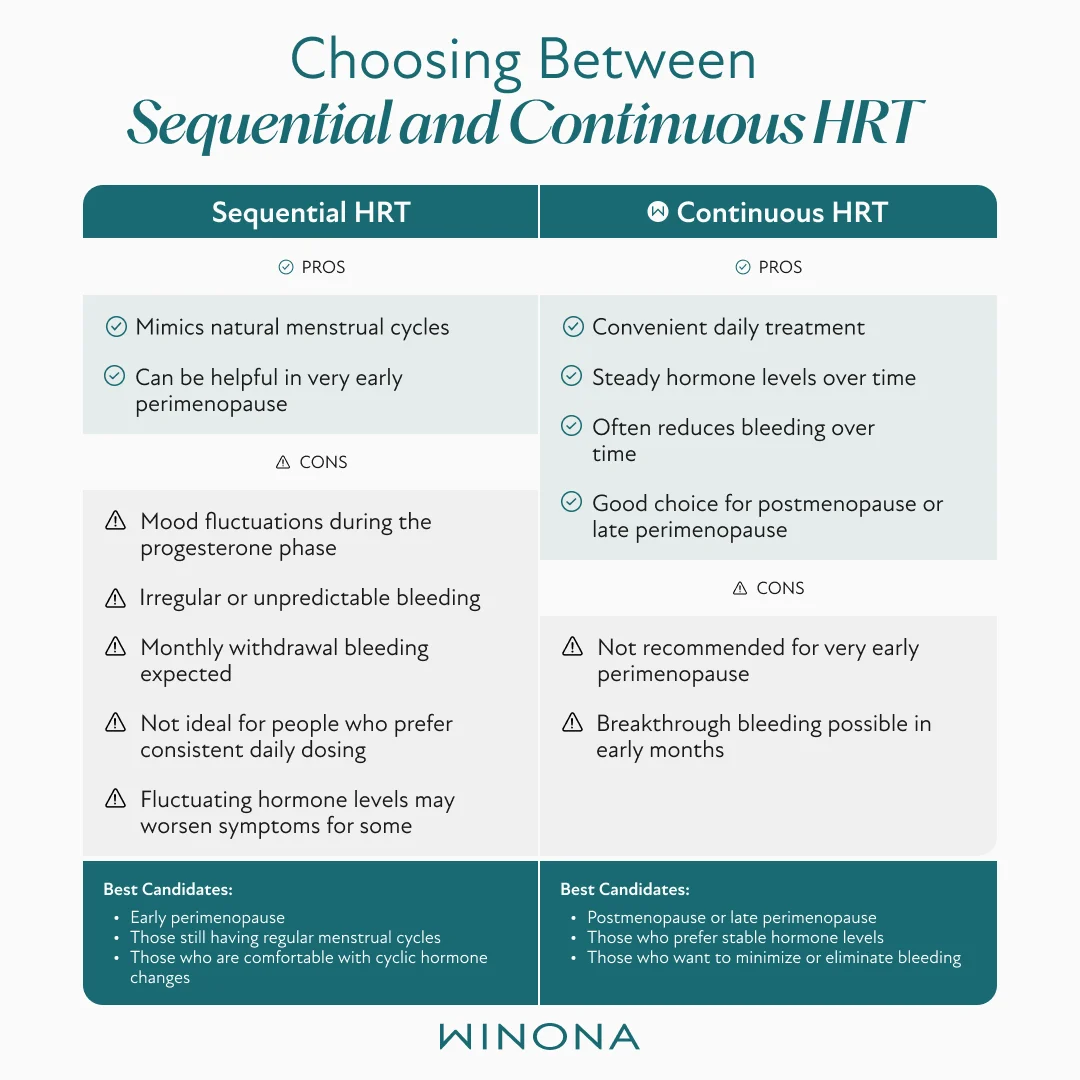
When to Switch from Sequential to Continuous HRT
Switching from sequential to continuous HRT often depends on changes in bleeding patterns and how well symptoms are managed. In the past, many doctors recommended switching around age 50 or once monthly periods had stopped. But today, continuous HRT is commonly used as the first option — even earlier in the menopause transition.(4)(6)
For women who are currently on sequential therapy, signs that it may be time to switch to continuous HRT include the following:
Continuous HRT can help keep hormone levels steadier, reduce unexpected bleeding, and make it easier to stay on track with daily dosing.(4)(6)
Continuous HRT in Perimenopause
In the past, sequential HRT was traditionally used for perimenopause because the ovaries were still active and the patient was still getting a period. Some physicians believed that continuous HRT could cause more bleeding or make cycles harder to predict. But recent research hasn’t shown that sequential HRT works well during this stage. (4)(6)
Sequential HRT used to be the standard, but there’s not enough evidence showing better outcomes. We now recommend continuous HRT, as it tends to be better tolerated and more effective overall. We may consider sequential HRT if a patient requests it, but continuous therapy is our preferred approach.
Dr. Cathleen M. Brown
DO, undefined
Many specialists now start with continuous HRT. The goal is to control symptoms effectively — especially if symptoms are disruptive to daily life. Some spotting or breakthrough bleeding may happen at first, but this usually improves with time. Any irregular, persistent, or heavy bleeding should be checked by a doctor.
Managing HRT and Side Effects
Some individuals may experience side effects during HRT, including spotting and other cycle-related symptoms. The following strategies may help manage these issues:(6)
Missed Doses: A missed dose should be taken as soon as possible, unless it's close to the next dose. Missing doses can cause hormonal dips and breakthrough bleeding. Consistent daily timing supports more stable hormone levels.
Spotting or Bleeding: This is common during the first 3–6 months of HRT, especially with continuous treatment. Keeping a symptom diary can help track patterns.(4)(7)
Breast Tenderness and Bloating: These symptoms may improve with dose adjustments or by switching to a different hormone formulation.(1)(7)
Headaches: Some women may notice changes in headache patterns after starting HRT. These often improve with dose adjustments or by changing to a non-oral form of estrogen. If headaches become frequent or severe, a medical review is recommended.(1)(6)(7)
Mood Changes: Tracking mood and emotional symptoms can help determine whether they are related to the progesterone phase of treatment.(7)
Persistent or heavy bleeding should be reported to a physician, as it may require an adjustment in dosage or further evaluation.(7)
Which HRT is the right option?
The best HRT choice depends on an individual’s health, age, and menstrual history. Combined HRT adds necessary endometrial protection for those with an intact uterus.
Hormone therapy should always be tailored to individual needs, and there’s no one-size-fits-all answer. A board-certified, menopause-trained physician can help determine the best approach. With the right guidance, HRT can provide meaningful symptom relief and improve quality of life during the menopausal transition.