Iron has a crucial role in various bodily functions, including oxygen transport, energy production, and immune support. During menopause and perimenopause, iron levels can fluctuate, sometimes leading to deficiencies that affect overall health.(1)(2)(3)
Low iron and anemia are related but distinct conditions. Low iron refers to depleted iron stores, while anemia is a more severe condition marked by reduced red blood cells and/or low levels of hemoglobin (an oxygen-carrying protein). Understanding these differences is key to effective management.(1)(2)
The Role of Iron in Women's Health
Iron is essential for hemoglobin production, allowing red blood cells to regulate oxygen levels and carry it throughout the body. It also supports cognitive function, muscle metabolism, and immune response. During the reproductive years, women lose iron through menstruation, making dietary intake essential. As menopause approaches, iron needs change, and both excess and deficiency can pose health concerns.(1)(2)(3)(4)
How Menopause Affects Iron Levels
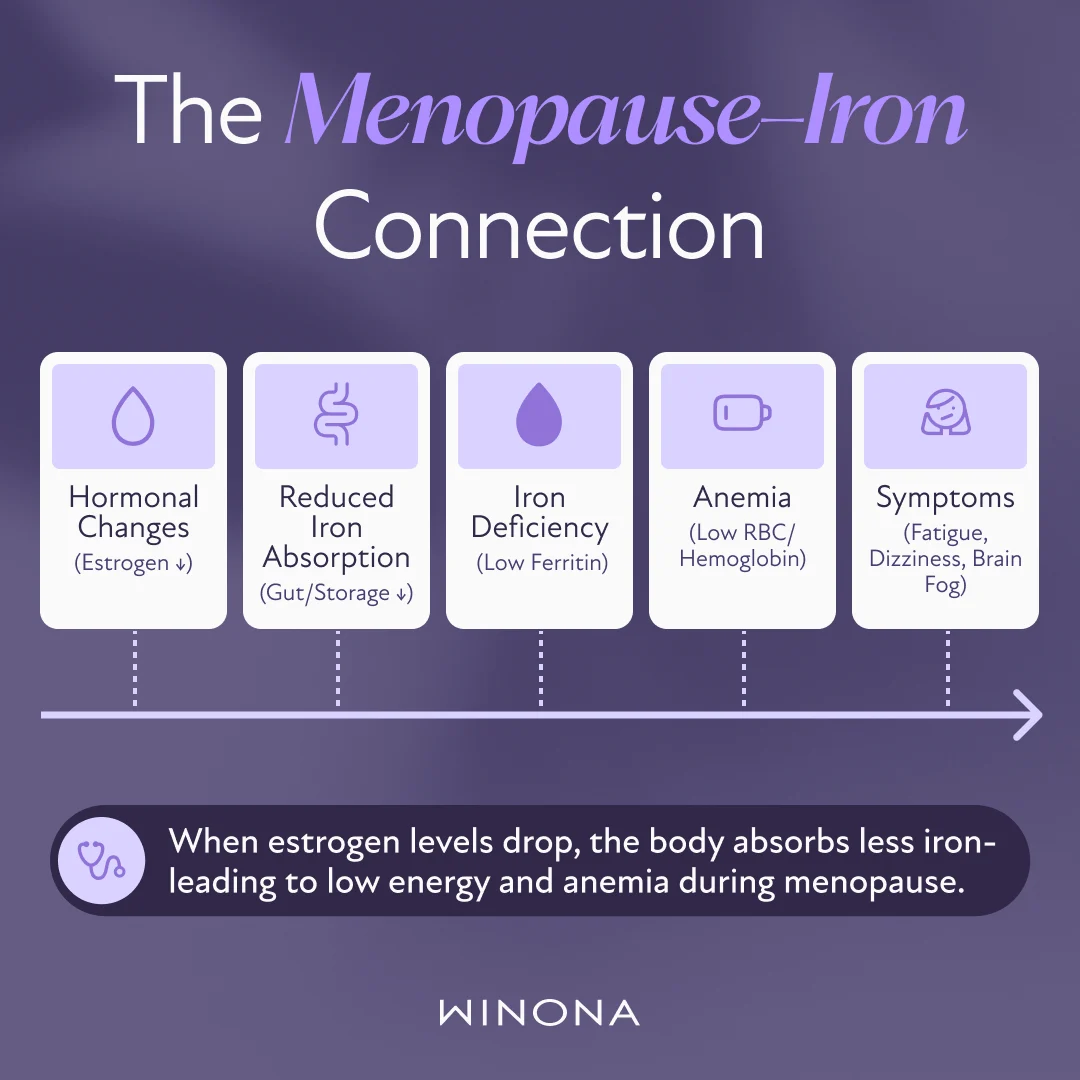
Menopause can significantly impact iron metabolism. While the end of menstruation reduces monthly iron loss, other factors influence overall levels. Hormonal changes, dietary intake, and shifts in gastrointestinal absorption all play a role in iron status during this transition. Perimenopause and low iron may also be linked, as fluctuating hormone levels can affect iron storage.(1)(2)(4)(5)
Causes of Low Iron During and After Menopause
Several factors contribute to declining iron levels during menopause:(1)(2)(4)(5)(6)
Malabsorption: Gastrointestinal changes can reduce iron absorption.
Hormonal Changes: Lower estrogen levels may affect how the body stores and uses iron, resulting in iron deficiency.
Dietary Intake: Changes in appetite and food choices can impact iron consumption.
Chronic Blood Loss: Conditions like gastrointestinal bleeding, fibroids, or endometrial polyps can persist into menopause, affecting iron levels.
Inflammation and Chronic Disease: Metabolic disorders and chronic inflammation can impair the body’s ability to use iron effectively.
Anemia in Menopausal Women
A common concern among women is: Can menopause cause anemia? While menopause itself does not directly cause anemia, changes in iron absorption, dietary intake, and underlying health conditions can all contribute to its development.(1)
Anemia occurs when iron levels drop too low and the body struggles to produce enough hemoglobin. Iron deficiency can lead to anemia, but anemia itself can have multiple causes beyond iron deficiency. And while less common after menopause, postmenopausal anemia may be linked to chronic diseases or nutritional deficiencies.(1)(6)
Low Iron and Anemia Symptoms in Menopause
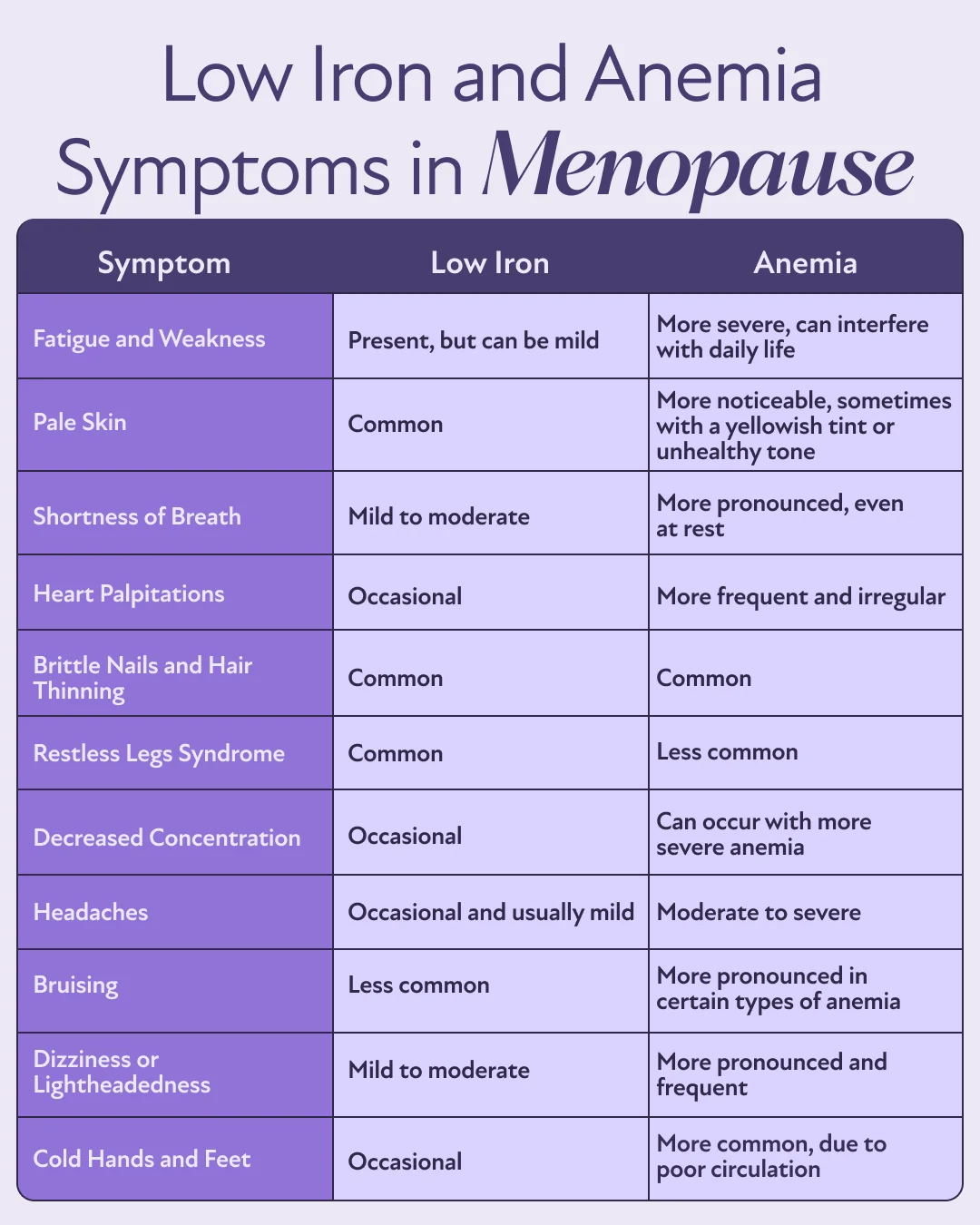
Low iron and anemia share symptoms, but anemia tends to be more severe. It's also important to note that symptoms can vary between individuals. The following chart breaks down the signs to watch for:(6)(7)(8)
What to Do if You Suspect Low Iron or Anemia
Anyone experiencing persistent fatigue, dizziness, or other symptoms listed above should consult a doctorhealthcare provider for evaluation.
Identifying the root cause of symptoms is necessary for effective treatment. A thorough medical history and lab testing can guide appropriate solutions.
Diagnosing and Treating Iron Deficiency
Diagnosing low iron and anemia — during any life stage — requires comprehensive blood tests, including the following:(5)(7)
CBC: Complete blood count
Serum ferritin: Measures iron storage
Hemoglobin and hematocrit: Assesses red blood cell levels
Total iron-binding capacity (TIBC) and transferrin saturation: Evaluates iron availability
Treatment depends on the underlying cause. Dietary changes, iron supplementation, and addressing malabsorption issues can help restore iron levels. These options should be discussed in depth with a doctorhealthcare provider.
Preventing and Managing Low Iron During Menopause
Maintaining healthy iron levels involves simple dietary and lifestyle changes:(7)(8)
Incorporating Iron-Rich Foods: Consume lean meats, leafy greens, legumes, and fortified cereals to boost iron.
Enhancing Absorption: Pairing iron sources with vitamin C-rich foods, such as citrus fruits or bell peppers help optimize absorption.
Avoiding Inhibitors: Limiting tea, coffee, and calcium-rich foods around iron-rich meals will prevent absorption interference.
Scheduling Routine Screenings: Regular blood tests can help detect and address deficiencies early.
Iron Supplements and Treatment Options
For many women, taking iron becomes an important part of maintaining optimal health, especially for those at risk of anemia or low ferritin levels. Iron supplementation is recommended when diet alone is insufficient. Below are some options:(1)(7)(8)
Oral Supplements: Common choices include ferrous sulfate, gluconate, or bisglycinate.
Intravenous Iron: This is recommended for severe deficiencies or absorption issues.
Lifestyle Modifications: Supporting gut health, reducing inflammation, and optimizing nutrition can improve iron levels.
Iron and Menopause
Proper iron management during menopause boosts energy, sharpens the mind, and improves overall well-being — making the transition smoother and laying the groundwork for long-term health. Diagnosing and treating low iron or anemia can reduce symptoms and significantly enhance daily life. By keeping iron levels in check and seeking the right care, women can minimize complications and maintain vitality for years to come.