Estradiol replacement therapy focuses on restoring the body’s primary and most active form of estrogen (E2), which declines during perimenopause and menopause and drives many common symptoms.
Delivery methods differ in how estradiol enters the body. Transdermal options (patches, gels, creams) deliver hormones through the skin and avoid first-pass liver metabolism, while oral tablets are processed through the liver. Vaginal formulations act locally to relieve genitourinary symptoms with minimal systemic absorption.
Response is individualized. Some women prioritize steady systemic relief for hot flashes and sleep disruption, while others seek targeted local therapy. Time to improvement, side effects, and dose adjustments vary.
Doctors evaluate symptom patterns, uterine status (to determine progesterone need), cardiovascular and clotting risk, patient preference, and tolerance when selecting a formulation and dose. Treatment decisions are typically guided by a personalized assessment of risks, goals, and medical history.
When prescribed and monitored appropriately, bioidentical estradiol therapy is designed to restore hormonal balance while supporting each woman’s overall health plan.
What Estradiol Is and Its Role in the Body
 Hailey Kean
 Dr. Saranne Perman, MD
Article Content
The Bottom Line:
The term estrogen is often used to describe a single hormone, but in reality, it refers to a family of hormones with distinct functions. Among them, estradiol — also known as E2 — is the most powerful and influential during a woman’s reproductive years. It shapes puberty, drives the menstrual cycle, and supports vital systems throughout the body, including the bones, brain, skin, and heart.
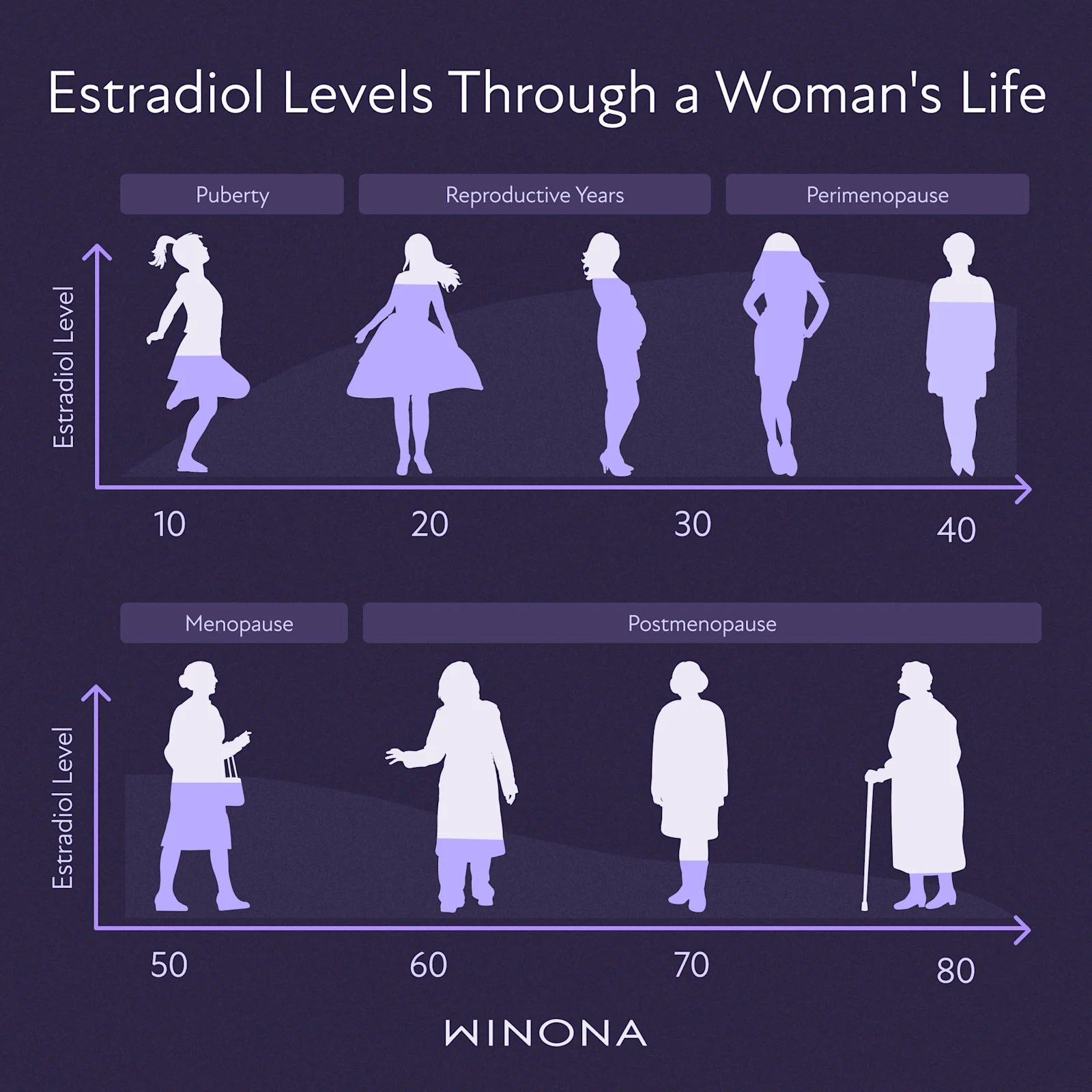
As women enter perimenopause, estradiol levels begin to fluctuate and eventually decline, giving rise to the hallmark symptoms of menopause. Understanding how this hormone works, and what happens when it decreases, is essential for recognizing the root cause of many midlife changes.
What you’ll learn in this article:
How estradiol supports reproductive and overall health
Why declining estradiol levels trigger menopause symptoms
The role of bioidentical estradiol in modern hormone therapy
What to expect from estradiol treatment, including forms and side effects
What does estradiol do in the body?
The Four Types of Estrogen
Type | Description |
Estrone (E1) | A weaker form of estrogen that can convert into other types when needed |
Estradiol (E2) | The dominant estrogen that supports fertility, bone health, and hormonal balance |
Estriol (E3) | The weakest form of estrogen, produced in large amounts during pregnancy by the placenta |
Estetrol (E4) | Produced only during pregnancy and involved in fetal development |
(1)Estradiol (E2) is the dominant form of estrogen during the reproductive years and influences nearly every organ system in the body. Beyond its role in fertility and reproduction, it supports bone strength, heart and brain health, and even skin elasticity. Its actions are carried out through estrogen receptors found in tissues throughout the body, allowing estradiol to directly influence how genes work and cells behave.(1)
According to the Endocrine Society, estradiol is essential for sexual development, reproductive function, and overall long-term health. Its effects help to maintain physical and mental well-being through adulthood.(2)
Regulating the Menstrual Cycle
Estradiol is a key driver of the menstrual cycle. It’s produced in the ovaries and rises during the follicular phase, triggering the growth and maturation of ovarian follicles. This increase stimulates the uterine lining (endometrium) to thicken in preparation for potential sperm implantation.(1)(2)
When ovulation occurs, estradiol briefly drops. If pregnancy does not occur, it then rises again during the luteal phase. These rhythmic changes guide the timing of menstruation and help regulate reproductive hormone balance throughout the cycle.(1)
Maintaining Bone Density
One of estradiol’s most critical long-term functions is maintaining bone health. It promotes the activity of osteoblasts — the cells responsible for building new bone. It also suppresses osteoclasts, which break down old bone. This balance protects against bone loss and fracture risk.(1)(2)
When estradiol levels decline during menopause, bone breakdown accelerates, often leading to decreased bone mineral density, bone loss, and an increased risk of osteoporosis. Maintaining adequate estradiol levels through lifestyle, nutrition, and hormone therapy can help preserve skeletal strength over time.(1)(2)
Supporting Heart and Brain Health
Estradiol contributes to cardiovascular protection by improving lipid metabolism and vascular function. It raises HDL “good” cholesterol, lowers LDL “bad” cholesterol, and promotes flexible, healthy blood vessels. Early in the postmenopausal years, restoring estradiol levels may help reduce the risk of coronary artery disease when initiated under medical supervision.(1)(3)
In the brain, estradiol aids in neurotransmitter activity and blood flow, supporting memory, cognition, and mood regulation. Research from major medical centers, including Harvard Health, shows that estradiol influences serotonin and dopamine pathways, helping to maintain brain function, emotional stability, and mental clarity.(3)(4)(5)
Keeping Skin Healthy and Hydrated
Estradiol also affects collagen production, skin elasticity, and hydration. It helps maintain the thickness and resilience of the dermis by stimulating collagen production and increasing the skin’s ability to hold moisture.(6)
As estradiol declines during perimenopause and menopause, many women notice drier, thinner, or less elastic skin. Restoring estradiol levels — either systemically or locally with topical treatments — can help support the skin’s natural barrier, improve texture and hydration, and maintain a youthful appearance.(6)
Estradiol’s Role in Perimenopause and Menopause
As women approach perimenopause, the transitional years leading up to menopause, estradiol levels begin to fluctuate unpredictably. These hormonal shifts can cause noticeable symptoms long before menstrual periods stop.(3)
During perimenopause, the ovaries become less consistent in producing estradiol. Some days, levels may spike; on others, they drop sharply. This irregularity disrupts the feedback loop between the ovaries, hypothalamus, and pituitary gland that normally keeps hormones balanced. The result is a cascade of changes across multiple systems in the body — explaining why menopause symptoms are wide-ranging.(1)(3)
Once ovulation stops and a woman reaches menopause, defined as 12 consecutive months without a period, estradiol production from the ovaries falls to very low levels, often below 20 pg/mL. Without its stabilizing influence, the body adapts to this new hormonal environment, leading to both short-term symptoms and long-term health effects.(1)(3)(7)
Estradiol and Menopause Symptoms
Common symptoms linked to low estradiol include the following:
Hot flashes and night sweats (vasomotor symptoms)
Sleep disturbances
Vaginal dryness, itching, or discomfort
Pain during intercourse
Mood changes and anxiety
Brain fog or difficulty concentrating
Thinning skin and hair changes
While these changes are natural, they stem directly from the loss of estradiol’s protective effects on the brain, bones, and connective tissue.
Declining estradiol disrupts the body’s ability to thermoregulate (control temperature), which is why hot flashes and night sweats are among the most common symptoms. It also affects the urogenital tissues, leading to dryness and discomfort, known collectively as genitourinary syndrome of menopause (GSM).(1)(3)
In the brain, lower estradiol levels can alter mood and cognitive function. Many women notice subtle shifts in memory, focus, or motivation during this time.
Bone loss can accelerate as well. Within the first five years after menopause, women can lose up to 20% of their bone density due to decreased estradiol levels. This underscores the hormone’s vital role in maintaining skeletal strength and reducing fracture risk.(1)(8)

Nearly every symptom of menopause can be traced back to the decline of estradiol. Restoring it to a balanced range sustains the body, relieving symptoms and supporting long-term health.

This understanding has reshaped how menopause is managed. Rather than treating individual symptoms, hormone therapy (HT) focuses on replenishing estradiol itself. By restoring balance, women often find that multiple symptoms improve at once.
Estradiol as a Medication: Forms, Uses, and What to Expect
When prescribed as part of menopause hormone therapy, estradiol is used to restore the body’s natural estrogen balance. The estradiol found in modern HT is bioidentical — meaning it’s chemically identical to the estrogen naturally produced by the ovaries. This makes it well-tolerated and effective for relieving the symptoms caused by declining estrogen levels during menopause.
Restoring estradiol through HT supports more than symptom relief. It helps preserve bone density and improves skin and vaginal health. It may also protect cardiovascular and cognitive function when started early in the menopause transition and managed under medical supervision.(1)(3)(8)
Forms of Estradiol in Hormone Therapy
Estradiol can be prescribed in several forms, allowing treatment to be tailored to individual needs and preferences. Each route of administration delivers estrogen differently, influencing how it’s absorbed and how consistently it maintains hormone levels in the body.
1. Estradiol Patches (Transdermal Therapy)
Transdermal patches release estradiol through the skin directly into the bloodstream. They’re typically replaced every three to four days, offering a steady dose without passing through the liver. Patches are often preferred for their convenience and cardiovascular safety profile.
Best for: Women seeking stable hormone levels and lower risk of clotting compared with oral tablets.
2. Estradiol Tablets (Oral Therapy)
Oral estradiol tablets are taken once daily. They’re easy to use but undergo something called first-pass metabolism, meaning they’re processed through the liver before reaching the bloodstream. This can slightly alter lipid metabolism and may not be suitable for everyone.
Best for: Women who prefer a familiar pill format and can tolerate oral estrogen safely.
3. Estradiol Creams and Gels (Topical Therapy)
Topical forms, such as body creams or gels, deliver estradiol through the skin, similar to patches, but with more flexible dosing. These formulations allow physicians to adjust hormone levels gradually.
Best for: Women who prefer a non-oral option and desire a customizable regimen or those who have skin that’s sensitive to adhesives.
4. Estradiol Vaginal Creams, Tablets, or Rings (Local Therapy)
Vaginal estradiol products deliver low doses directly to the vaginal tissues to relieve local symptoms like dryness, itching, or discomfort caused by GSM. These products act locally and have minimal systemic absorption. They may also not require progesterone to balance estrogen's effects.
Best for: Women with vaginal or urinary symptoms seeking targeted relief.
Form | How It’s Used | Key Benefit |
Patch (Transdermal Therapy) | Applied to the skin and replaced every 3–4 days, releasing estradiol directly into the bloodstream | Provides steady hormone levels and avoids liver metabolism, lowering the risk of clotting |
Pill (Oral Therapy) | Taken once daily by mouth; processed through the liver before entering circulation | Simple and familiar option for women more comfortable with oral medication |
Cream or Gel (Topical Therapy) | Applied to the skin, allowing gradual absorption and flexible dose adjustments | Customizable dosing and non-oral delivery |
Vaginal Cream, Tablet, or Ring (Local Therapy) | Inserted directly into the vagina to target local tissues affected by GSM | Offers localized relief for dryness and discomfort with minimal systemic absorption |
Understanding the Side Effects
Most women tolerate estradiol therapy well, especially when treatment is tailored to the individual. Common, usually mild, effects may include the following:(1)
Breast tenderness
Nausea or bloating
Mild headaches
Temporary hair fall
Temporary spotting or breakthrough bleeding
These side effects are most common at the start of therapy and typically resolve as the body adjusts. Any persistent or unusual symptoms should be discussed with a physician, as dosage or formulation adjustments can often resolve discomfort.
How long does estradiol take to work?
For those starting HT, it's important to keep in mind that symptom relief does not happen instantly. Estradiol takes time to restore hormonal balance. Many women notice improvement within a few weeks, but full benefits often appear after two to three months of consistent therapy.
As the body gradually restores hormonal balance, improvements in sleep, mood, and temperature regulation typically appear first — becoming noticeable after six to 12 weeks. This is followed by gradual improvements in skin elasticity, vaginal comfort, and bone protection over a few months.
Consistency in treatment and communication with a doctor are key. If needed, adjustments in dose or delivery method can make a significant difference in comfort and outcomes.
Understanding Estradiol: The Key to Understanding Menopause
Estradiol lies at the center of nearly every change experienced during the menopause transition. When this vital hormone declines, the effects ripple across the body, impacting sleep, mood, bone strength, and skin health. Estradiol medication restores what the body naturally loses during menopause. Whether delivered as a patch, pill, or cream, bioidentical estradiol can help ease symptoms and support long-term health when prescribed under expert care.
Women don’t have to guess whether low estradiol is behind their symptoms. Working with a specialized physician can provide clarity and individualized options for treatment.
Experiencing Menopausal Symptoms? Discover More About HT.
Take a quick, science-based quiz to understand if declining estradiol might be affecting your body and whether hormone therapy could help.
Treatment Options
Learn more about Winona’s personalized, physician-guided hormone therapy designed to restore optimal estradiol levels and help women feel like themselves again.
Frequently Asked Questions (FAQ) about Estradiol
Yes. Estradiol (E2) is one of the three main types of estrogen produced in the body, and it’s the most powerful and active form during the reproductive years. While estrogen refers to a family of related hormones, estradiol is the primary one responsible for menopausal symptoms. When physicians prescribe estrogen therapy for menopause, they’re most often referring to bioidentical estradiol, which matches the hormone naturally made by the ovaries.
Consistency is more important than timing. For oral estradiol, taking it at the same time each day — morning or evening — helps maintain stable hormone levels. Transdermal forms, like patches, gels, or sprays, should be used according to specific instructions from a physician or product labeling to ensure proper absorption and consistent dosing.
Mild side effects may occur as the body adjusts to new hormone levels. These can include temporary breast tenderness, mild nausea, bloating, or headaches. Such symptoms typically ease within a few months of treatment. Persistent or bothersome effects should be discussed with a doctor, as small adjustments to the dose or formulation often resolve them.
No. Estradiol is a prescription medication in the United States because it’s a potent hormone that affects multiple body systems. A licensed physician must evaluate an individual’s medical history, symptoms, and risk factors to determine the appropriate type and dose. This ensures that estradiol is used safely, effectively, and in a way that supports long-term health.
This article is for informational purposes only and does not constitute medical advice. The information contained herein is not a substitute for professional medical advice. Always talk to your doctor about the risks and benefits of any treatment.