Women with premenstrual dysphoric disorder (PMDD) often find their symptoms worsen as they reach perimenopause, the years leading up to menopause. PMDD is a psychiatric disorder in which more severe symptoms of premenstrual syndrome (PMS) significantly impact relationships, work, and mental health. Many women with the condition describe an overwhelming feeling of being out of control.(1) Researchers link this to the hormonal fluctuations that can disrupt the sensitive neurohormonal system driving PMDD symptoms.
Approximately 3% to 8% of women who experience symptoms of PMS are diagnosed with PMDD.(1) It’s a serious and often misunderstood condition that not only impacts women’s quality of life, but is associated with an increased risk of suicidal thoughts.(2)
To help empower women to access the support they need, this article will explain the complex scientific link between PMDD and perimenopause. It will also explore research-backed treatment options as well as effective lifestyle modifications to help manage symptoms, so women don’t have to suffer in silence during the menopause transition.
Why PMDD Gets Worse During Perimenopause
Before perimenopause, PMDD symptoms follow a consistent pattern. They occur in sync with the rhythmic rise and fall of hormone levels during the menstrual cycle.
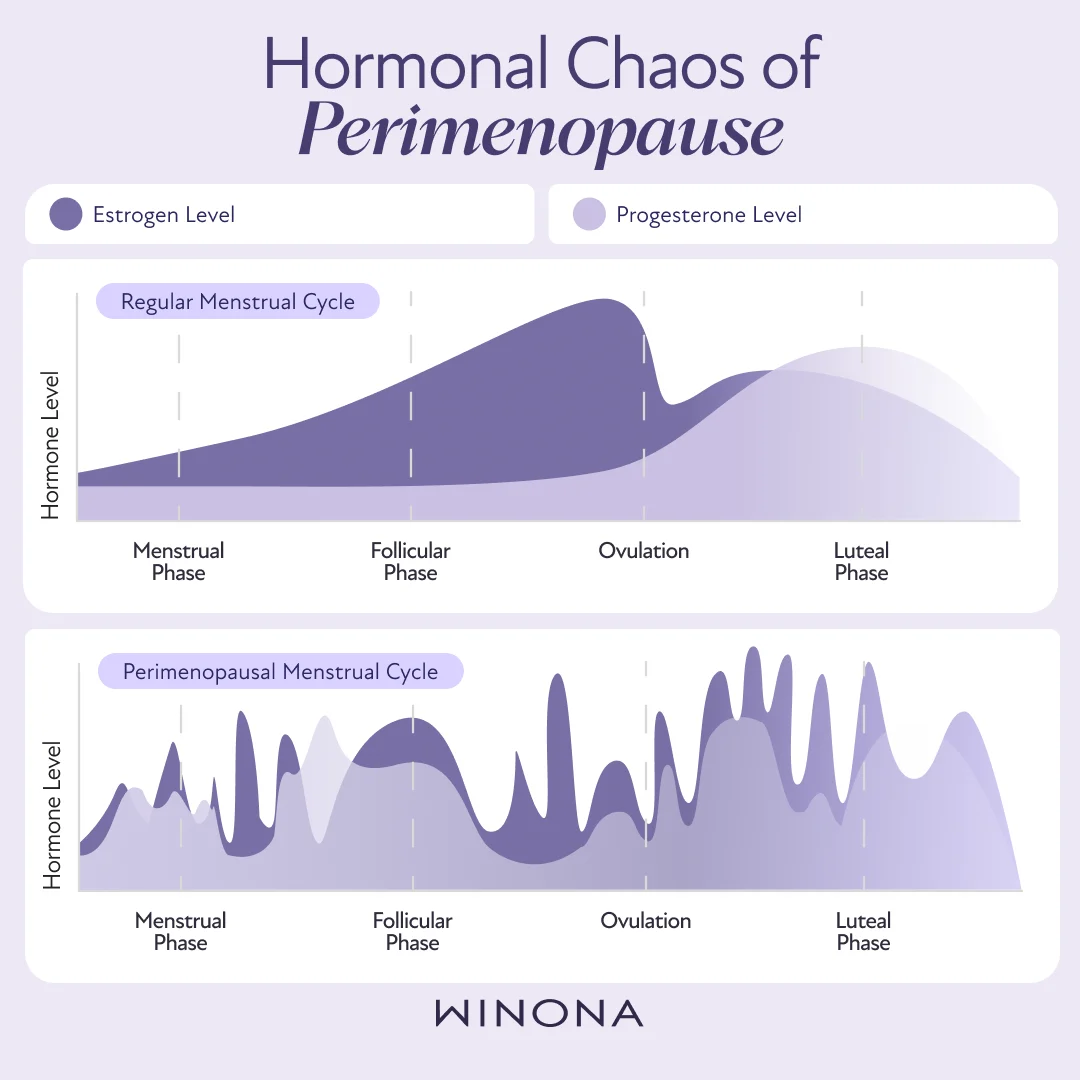
Levels of estrogen and progesterone fluctuate unpredictably during perimenopause. These irregular shifts can worsen symptoms in women with PMDD, who are believed to be particularly sensitive to changes in reproductive hormones.(1)Scientists believe there are two main mechanisms that drive PMDD symptoms. The first is an increased sensitivity to progesterone and its metabolites. The second action involves the effects of estrogen on serotonin activity in the brain.(1) Here’s how these mechanisms are affected during perimenopause.
Progesterone and Allopregnanolone Sensitivity
Levels of progesterone increase after ovulation and fall rapidly during the late luteal phase of the menstrual cycle, the phase just before the period starts. This rise and fall of progesterone is suggested to be a contributing factor to the development of PMDD symptoms.(1)
Progesterone gets broken down in the body into a metabolite called allopregnanolone, which interacts with gamma-aminobutyric acid (GABA) receptors in the brain. GABA is a calming neurotransmitter that helps regulate emotions.
Some research suggests that GABA receptors in women with PMDD may have a reduced sensitivity to allopregnanolone. As a result, the GABA system may be less effective at regulating stress, which may contribute to emotional symptoms of PMDD.(1)
Levels of progesterone and allopregnanolone also rise and fall during perimenopause. However, unlike during the menstrual cycle, these fluctuations occur unpredictably, which may worsen psychological symptoms of PMDD.
The Role of Fluctuating Estrogen on Serotonin
The fluctuation of estrogen levels during perimenopause has an effect on serotonin activity, a key mood-regulating hormone nicknamed the “happy hormone.”
Estrogen affects the serotonin system in several ways. It promotes serotonin production, influences serotonin receptor activity, and helps keep serotonin active in the brain for longer. However, shifting estrogen levels during the menopause transition can diminish these effects.(3)Compared to women without PMDD, research suggests that women with the condition have differences in serotonin signaling, fewer serotonin transporter receptors, and changes in serotonin responsiveness during specific phases of the menstrual cycle.(1)
The hormonal effects of perimenopause on the serotonin system may worsen emotional symptoms in women with PMDD who may already have altered serotonin activity.
How PMDD Symptoms Change During Perimenopause
The following symptoms of PMDD and perimenopause can overlap with one another:(1)(4)(5)
Mood instability
Increased emotional sensitivity to triggers like rejection
Difficulty concentrating, leading to cognitive challenges
Heightened anxiety or irritability
Frequent interpersonal conflicts with others
Hot flashes, chills, or night sweats
Persistent sleep disturbances
Changes in appetite
Joint or muscle aches
Bloating
Weight gain
However, symptoms of PMDD that occur before perimenopause versus during perimenopause differ in timing, predictability, and severity.
PMDD Symptoms That May Worsen During Perimenopause
During a woman’s premenopausal years, PMDD symptoms follow a predictable pattern as hormone levels rise and fall rhythmically during the menstrual cycle, which spans an average of 28 days.(6)
Hormonal shifts during perimenopause follow no consistent pattern. As a result, menstrual cycles become irregular. Periods may start earlier or later than normal, making the timing of PMDD symptoms less predictable. This unpredictability in hormonal fluctuations may also make symptoms more severe.
The following common symptoms of PMDD may intensify during perimenopause:(1)(4)
Anxiety
Depression
Hopelessness
Irritability
Anger
Tearfulness
Lack of energy
Insomnia
Appetite changes
Breast tenderness
Joint or muscle pain
Bloating
Weight gain
PMDD symptoms typically start a week or two before the menstrual period and often worsen two days before. Symptoms usually resolve within two to three days after menstruation starts, and go away permanently once a woman reaches menopause and her periods stop entirely.(1)(7)

An Integrated Treatment Strategy for PMDD in Perimenopause
A holistic treatment strategy is the best approach for managing PMDD symptoms during perimenopause. With a combination of medication, lifestyle changes, and complementary and alternative medicine treatments, women can get the relief they need to feel strong, healthy, and emotionally balanced during this stage of life.
According to the International Association for Premenstrual Disorders (IAPMD), selective serotonin reuptake inhibitors (SSRIs) are currently the most effective first-line treatment method for PMDD.(8) These antidepressant medications are often helpful for younger women, but perimenopausal women tend to benefit more from hormonal treatments, particularly hormone replacement therapy (HRT), which can help relieve symptoms of both PMDD and perimenopause.
Hormonal Treatments: Stabilizing Fluctuating Hormones
Hormonal treatments such as combined oral contraceptive pills (COCs) are also used to treat PMDD symptoms, although study findings regarding their effectiveness are mixed.
Research shows that birth control pills containing ethinyl estradiol (EE) and a specific type of progesterone called drospirenone appear to be most effective. It’s currently the only FDA-approved birth control pill for PMDD symptom relief.(1)(9)
Hormone replacement therapy (HRT), more accurately referred to as menopause hormone therapy (MHT), contains similar types of hormones as birth control pills. Although MHT is not an established treatment for PMDD, it may be particularly beneficial for women struggling with both symptoms of PMDD and perimenopause. This is because MHT treats the root cause of symptoms by stabilizing hormonal fluctuations.
MHT can be administered in the following forms:
Oral pills
Transdermal patches
Topical creams
Experts are continuing to explore the potential benefits of different forms of MHT on PMDD symptoms. Researchers from a 2025 scientific article published in Frontiers in Pharmacology cited a study in which cyclical progestogen treatment in combination with an estrogen patch or gel was found to improve physical and emotional symptoms of PMDD.(10)
When considering MHT, it’s important to consult with a menopause specialist who can determine the most effective dose and form of treatment for women who are sensitive to hormonal shifts.
Lifestyle and Supportive Strategies
Medical treatment can be combined with lifestyle changes and other supportive strategies to help manage symptoms of premenstrual disorders during perimenopause. While there’s little research on PMDD specifically, many studies have focused on PMS symptom relief more broadly.
Because PMDD involves more severe symptoms of PMS, the research findings may also apply to PMDD. However, more studies are needed as there are distinct differences between the two. That said, the following lifestyle modifications during perimenopause may help reduce symptoms of PMDD:(9)
Making Dietary Changes: Making intentional food choices may help in managing symptoms of premenstrual disorders. Researchers from a 2019 study published in Public Health Nutrition examined the effects of three different dietary patterns on PMS symptoms: a western dietary pattern, a traditional diet, and a healthy diet.(11)
A western dietary pattern, which included soda, fast food, processed meats, and sugary treats, was associated with an increased risk of PMS symptoms.
A traditional diet, which consisted of coffee, eggs, fruit, red meat, skinless poultry, vegetables, refined grains, and whole wheat grains, was linked with a reduced risk of PMS symptoms. The same was true for a healthy dietary pattern, which featured an increased intake of dried fruits, nuts, vegetables, fruit, fish, and legumes.
Using Supplements: Research on supplements for premenstrual disorders is inconsistent, with some studies suggesting potential benefits while others have found no effect at all.
Vitamin B6, vitamin B1, and vitamin D are a few different supplements that have been studied for their potential to reduce symptoms of PMS. While vitamin B6 has shown some promise in smaller studies, evidence supporting the use of vitamin B1 and vitamin D is limited. Overall, evidence is not currently strong enough to recommend these supplements for PMS treatment.(9)
Some research has shown women with PMS to have lower levels of zinc or magnesium. Changes in the body’s ability to regulate calcium levels across the menstrual cycle have also been seen in women with PMS and PMDD. Calcium supplementation has been found to produce some benefits, but the effects of zinc or magnesium supplementation are less clear. More high-quality research is needed to support the use of these minerals for managing premenstrual disorders.(9)
Foods are the best source of vitamins and minerals, and supplementation is typically only recommended for individuals with nutrient deficiencies. It’s important to talk with a doctor before trying any new supplements or medications, as they can pose health risks, including possible side effects and food or drug interactions.
Getting Regular Exercise: Regular physical activity supports women’s overall health, but some research suggests it may be particularly beneficial for alleviating PMS symptoms.
In a 2020 meta-analysis, various studies showed that women who engaged in eight weeks or more of exercise experienced significant symptom relief compared to control groups. Studies that examined specific forms of exercise, including swimming, Pilates, and simple aerobic exercise, produced similar results.(9)
Managing Stress Levels: Keeping stress levels low with relaxation techniques may help in managing symptoms of PMDD during perimenopause.
While most studies have broadly focused on PMS symptoms, a 2025 study published in Health Care for Women International explored the effects of relaxation training specifically among women with PMDD.(12)
Compared to the control group, women who completed 12 training sessions involving progressive muscle relaxation and guided imagination exercises experienced improved symptoms and enhanced quality of life.
The following complementary and alternative medicine approaches may also help relieve symptoms of PMDD:(9)
Acupuncture, Acupressure, and Reflexology: Acupuncture and acupressure are therapeutic treatments that target specific points on the body to alleviate physical and mental health problems. Acupuncture involves the insertion of needles into the skin, while acupressure uses applied pressure.
Similar to acupressure, reflexology involves stimulating pressure points on the body, but only on areas of the hands, feet, and ears. Although more research is needed, these practices show promise in reducing symptoms of PMS and PMDD.
Cognitive Behavioral Therapy (CBT): CBT is an effective psychotherapeutic treatment for PMS and PMDD. It involves recognizing and shifting unhelpful thinking patterns to change behavior. Treatment can be effective on its own, but some experts believe it may be more effective when combined with medication.
Get expert guidance during perimenopause.
PMDD is a complex medical condition that can become further complicated by unpredictable hormonal shifts during perimenopause. Although symptoms typically resolve once menopause is reached, women shouldn’t have to endure debilitating emotional and physical symptoms in the years leading up to it.
It’s important to work with a physician who understands the effects perimenopause can have on premenstrual disorders. A knowledgeable healthcare provider can counsel women on effective medication options, lifestyle modifications, and other supportive treatments to help manage symptoms during this phase of life.
If you’re in perimenopause and experiencing worsening period symptoms, complete a brief intake to be connected with a Winona doctor today and receive expert guidance on whether hormone therapy may be an appropriate treatment option.