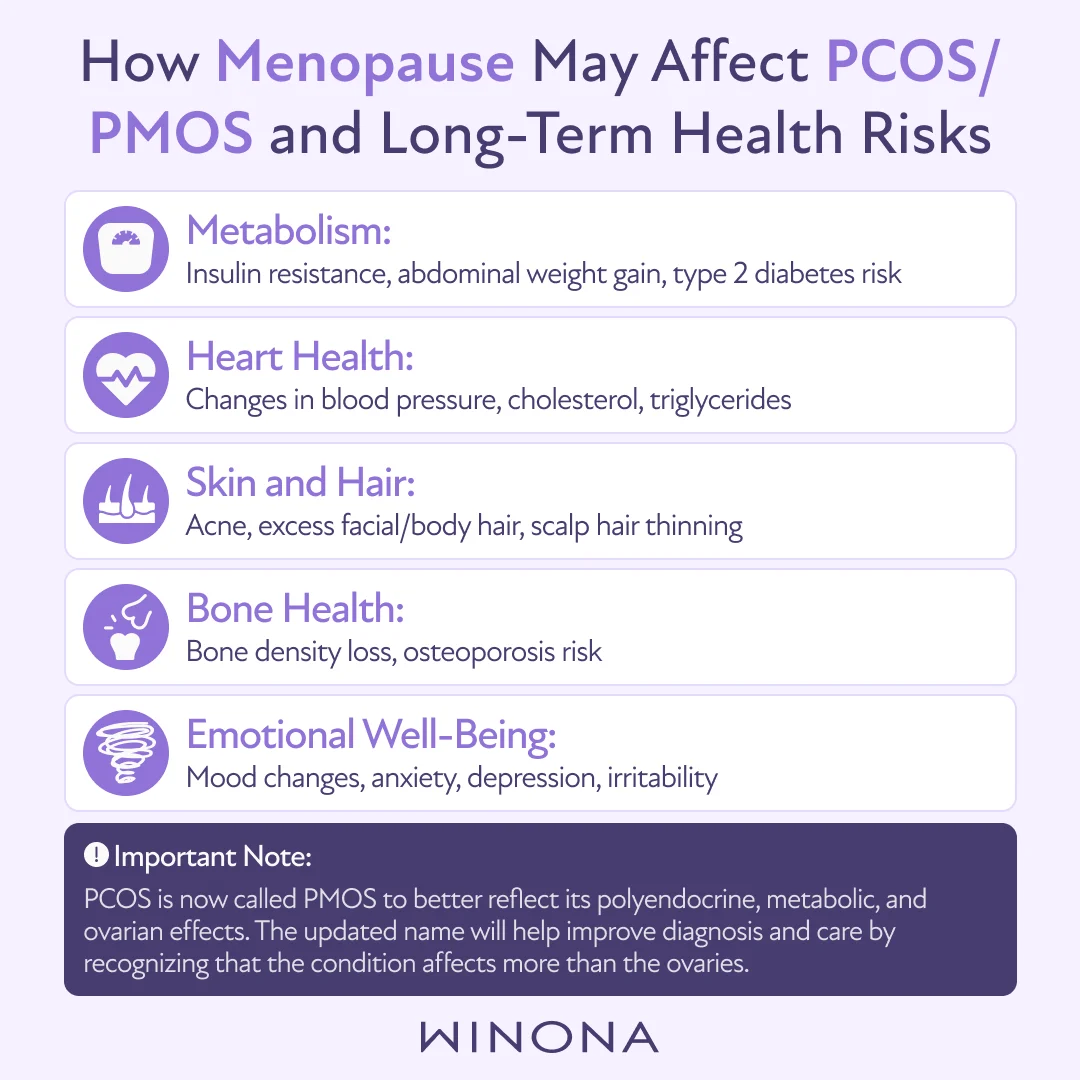
After more than a decade advocating to rename what is widely known as polycystic ovary syndrome (PCOS), global experts announced that the condition will now be medically referred to as polyendocrine metabolic ovarian syndrome (PMOS).(1) The name change more accurately captures the ways in which PMOS affects multiple systems in women’s bodies, not just the ovaries. Experts emphasize that the shift from PCOS to PMOS will improve quality of care by minimizing delayed diagnoses, bridging knowledge gaps, and ensuring women receive holistic care rather than solely focusing on the reproductive features of the condition.
PMOS is a common endocrine disorder that begins during the reproductive years but can continue to affect women during menopause. PMOS symptoms are caused by hormonal imbalances, the effects of which may be exacerbated by the hormonal shifts that occur during menopause.(2)
This article explores the connection between PMOS and menopause, highlighting shared symptoms, potential health risks, and effective symptom management strategies to help women with the condition approach this phase of life with greater awareness.
Is there a connection between PMOS and menopause?
The link between PMOS and menopause is that both are driven by hormonal changes. PMOS results from elevated androgen levels (like testosterone), which can cause irregular periods, excess hair growth, and insulin resistance.(2)
Menopausal symptoms occur when estrogen and progesterone decline, triggering common symptoms like hot flashes, night sweats, and vaginal dryness. Estrogen declines more rapidly than androgens, causing a relative increase in androgen levels during the menopause transition.
PMOS and menopause are both influenced by androgen levels as well as changes in insulin sensitivity. They can also share several symptoms, including mood swings, sleep disturbances, weight gain, and low libido.(2)(3)
How does menopause affect PMOS?
As menopause approaches, women with PMOS may notice shifts in their metabolism, heart health, emotional well-being, and bone strength.(2)(3)(4)(5)(6)
Metabolic Changes
As estrogen levels decline during menopause, the body tends to store more fat around the abdomen. This effect can become even more pronounced as the adrenal glands continue to produce androgens during menopause, levels of which are already high in women with PMOS. This is one of the key features of the recent terminology change from PCOS to PMOS, with the name change emphasizing the endocrine and metabolic effects of the condition.
Elevated androgen levels contribute to insulin resistance, a condition where the body struggles to use insulin effectively, leading to persistently high insulin levels. This further promotes fat accumulation in the abdominal area, increasing the risk of metabolic issues. As a result, some menopausal women with PMOS may face a higher risk of developing type 2 diabetes, especially those with a higher body weight.
Cardiovascular Health Risks
Research shows that women with PMOS may have a higher risk of elevated blood pressure, lower HDL (good) cholesterol, and increased triglycerides during the menopause transition, all of which can impact heart health. These changes are often associated with long-standing insulin resistance and low-grade inflammation, both common in PMOS.
Although not all women with PMOS will develop heart problems, studies indicate that some may experience arterial stiffness or a buildup of calcium deposits in the blood vessels over time, which can increase the risk of heart disease or stroke.
Hormonal and Hair Changes
Although ovarian androgen production progressively slows down after menopause, the endocrine effects of PMOS persist, with adrenal androgens often remaining elevated. This can prolong symptoms like facial hair growth (hirsutism) and thinning scalp hair during the menopause transition.
Bone and Joint Health
Bone density naturally declines after menopause, and women with PMOS may be at even greater risk for bone loss due to insulin resistance. Additionally, years of irregular menstrual cycles, which reduce exposure to protective estrogen, can weaken bones. As estrogen levels drop further during menopause, the risk of osteoporosis and fractures increases, especially in those with long-term anovulation.
Emotional Well-Being
Hormonal fluctuations during menopause can cause mood changes, but for women with PMOS, the risk of emotional distress may be even greater. Insulin resistance and chronic low-grade inflammation, both common in PMOS, can contribute to increased anxiety and depression during this stage of life.
Cancer Risk
Irregular periods that occur with PMOS leads to prolonged exposure to unopposed estrogen — estrogen without the balancing effect of progesterone — which increases the risk of endometrial cancer. However, research has not established a clear connection between PMOS and breast or ovarian cancer.
Age at Menopause
Menopause occurs when the ovarian reserve (the supply of eggs) declines to a critical level. Women with PMOS often have a larger ovarian reserve, which may delay the natural decline of ovarian function.
Research suggests that women with PMOS reach menopause approximately two to four years later than average, likely due to higher levels of anti-Müllerian hormone (AMH), a marker of ovarian reserve.
Managing Symptoms of PMOS During Menopause
Managing PMOS during menopause requires a comprehensive approach, with a strong focus on lifestyle changes, particularly diet and physical activity.
Both PMOS and menopause can contribute to weight gain and make weight management more challenging due to hormonal changes, insulin resistance, and a slower metabolism. However, targeted dietary changes and regular exercise can help manage symptoms and support overall health during this transition.
Dietary Changes
Diet plays a central role in managing symptoms of PMOS and menopause. Since insulin resistance is a common concern, adopting a diet that helps regulate blood sugar levels and reduces inflammation is essential.
The following foods may help reduce symptoms of PMOS during menopause:(7)
Low-Glycemic Foods: Choosing foods with a low glycemic index (GI), such as whole grains, legumes, vegetables, and fruits, can help manage blood sugar and improve insulin sensitivity.
Fiber: High-fiber foods, including leafy greens, nuts, and seeds, slow digestion and help prevent blood sugar spikes, making them especially beneficial for managing insulin resistance.
Healthy Fats: Incorporating foods rich in omega-3 fatty acids, such as fatty fish, chia seeds, and walnuts, can help reduce inflammation and support heart health.
Antioxidant-Rich Foods: A diet rich in antioxidants from berries, citrus fruits, and colorful vegetables helps combat oxidative stress, which is known to worsen insulin resistance and inflammation.
Consistent Exercise
Regular exercise is essential for improving insulin sensitivity, supporting weight management, and enhancing cardiovascular health. It also helps reduce oxidative stress and inflammation.(7)
The following types of physical activity may help menopausal women manage PMOS symptoms later in life:
Aerobic Exercise: Activities like walking, swimming, and cycling improve heart health and burn calories.
Resistance Training: Strength training builds muscle, boosts metabolism, and reduces insulin resistance.
Mind-Body Exercise: Yoga can reduce stress, improve mood, and support hormonal balance.
Medications
Metformin is an oral medication classified as a biguanide, a type of drug that helps manage blood sugar levels. While primarily used to treat type 2 diabetes, it’s also prescribed for managing PMOS, especially in women with insulin resistance.(8)
Although metformin can help manage PMOS symptoms during and after menopause, it’s not a standalone solution. It works best when paired with dietary changes, regular physical activity, and other healthy lifestyle habits.
Spironolactone, a diuretic and aldosterone antagonist, is another medication used to help manage unwanted hair growth and acne related to PMOS.(8)
Glucagon-like peptide-1(GLP-1) medications can serve as helpful adjuncts to treat insulin resistance, manage or prevent weight gain associated with PMOS, and reduce the risk of progression to diabetes. GLP-1 is a naturally occurring hormone in the body that plays a key role in blood sugar regulation, appetite control, and metabolism.(8)
Can HRT help manage menopausal symptoms in women with PMOS?
Hormone replacement therapy (HRT) is a direct treatment method for managing menopausal symptoms by replenishing declining hormone levels during menopause. It’s not a primary treatment for PMOS and is not prescribed solely for managing PMOS-related concerns.(9)
However, hormone therapy may be considered for women with PMOS if they are also dealing with menopausal symptoms that are impacting their daily life such as hot flashes, night sweats, brain fog, or vulvovaginal symptoms.
The decision to use HRT depends on an individual’s health history, symptoms, and risk factors. The delivery method and combination of hormones used also varies based on a woman’s specific health needs.
Estrogen is the primary hormone used for symptom relief with the addition of progesterone for women with a uterus for necessary endometrial protection. DHEA (dehydroepiandrosterone) is a hormone precursor that the body converts into androgens as needed. However, it’s not routinely prescribed for menopausal women with PMOS because women with PMOS already have high androgen levels and DHEA may worsen symptoms.
Women with PMOS considering HRT should consult with their doctor to ensure the treatment is tailored to their unique health profile and goals.
Managing PMOS Through Menopause
PMOS may continue to affect women beyond menopause, but with the right strategies, many symptoms can be effectively managed through lifestyle changes and medications.
HRT may also help reduce overlapping symptoms of PMOS and menopause. However, it’s essential that women reach out to a physician to determine if treatment is appropriate. With holistic care and a personalized hormone therapy treatment plan, women with PMOS can maintain their health and quality of life during menopause and beyond.
Frequently Asked Questions (FAQs) About PMOS and Menopause
No, PMOS doesn’t cause early menopause. In fact, studies suggest that women with PMOS often reach menopause later than average.
Women with PCOS, now referred to as PMOS, can be prescribed HRT if they are experiencing menopausal symptoms that interfere with their day-to-day life, such as vasomotor symptoms or vaginal dryness. Hormone therapy is not a direct treatment for PMOS, but it may help relieve overlapping symptoms during menopause, including sleep issues and mood changes.
PMOS can continue to affect women beyond menopause. Although reproductive cycles stop after menopause, the hormonal and metabolic imbalances linked to PMOS often persist.
This article is for informational purposes only and does not constitute medical advice. The information contained herein is not a substitute for professional medical advice. Always talk to your doctor about the risks and benefits of any treatment.