Menopause in women with developmental disabilities may look different, with hormonal changes showing up as shifts in sleep, behavior, sensory tolerance, or daily routines rather than clearly described physical symptoms.
Because communication styles vary, caregivers often notice patterns first — such as changes in clothing due to heat, increased agitation at night, or withdrawal from usual activities — which can reflect hot flashes, discomfort, or sleep disruption.
Consistent routines, sensory-aware environments, and simple tracking of mood, sleep, and physical changes provide practical context that helps connect daily experiences to possible hormonal transitions.
Treatment decisions, including hormone therapy or non-medical supports, are typically adapted to communication needs, medication use, and sensory preferences to reduce distress and improve comfort.
Clinically, the focus remains on interpreting new patterns carefully and avoiding diagnostic overshadowing, ensuring that menopause is recognized as a biological transition rather than being attributed solely to an existing disability.
Management of Menopause in Women with Developmental Disabilities
 Hailey Kean
 Dr. Saranne Perman, MD
Article Content
The Bottom Line:
Menopause is a natural stage of life, but it can be challenging when symptoms are hard to describe or recognize. Many women with developmental disabilities face extra barriers — like limited access to informed healthcare, misunderstandings about symptoms, or difficulty finding doctors who understand their needs. These challenges can lead to delayed care or uncomfortable symptoms going untreated.
The following explains what menopause in women with disabilities may feel like, how symptoms may show up in daily life, and why some changes may be confusing or unexpected. It also includes supportive information for caregivers, whose observations often guide diagnosis and treatment decisions.
The Core Challenge: Identifying Symptoms and Diagnostic Overshadowing
Recognizing menopause symptoms can be difficult when a woman communicates in non-traditional ways or relies on behavior to express discomfort. The American Journal on Intellectual and Developmental Disabilities suggests that this can lead to diagnostic overshadowing, which happens when menopause-related symptoms are mistaken for behaviors linked to a disability.(1)(2) For example, increased agitation might be viewed as part of a cognitive condition when it is actually a response to hot flashes or sleep disruption.
Research from the National Library of Medicine notes that women may notice changes in their bodies but may not always have the words, gestures, or communication tools to describe them. Some may adjust clothing due to warmth, wake more often at night, or show stronger emotions without understanding the cause.(3)Studies on menopause in women with developmental disabilities — especially intellectual disabilities — remain limited. Many studies focus on aging or general gynecologic care rather than the specific symptoms and needs of this group. These gaps contribute to significant healthcare disparities. This means women often enter menopause without guidance tailored to their communication styles, sensory needs, or daily patterns.(3)(4)
Caregivers can support the process by observing new patterns in sleep, comfort, or energy and bringing these changes up during medical visits — preventing menopause from being overlooked. Still, the goal is to keep women centered in their own healthcare. When symptoms are recognized early and interpreted through the woman’s lived experience, doctors can offer better support and treatment.

For many patients with developmental disabilities, behavioral changes are a key part of symptom reporting. When a new pattern appears, it should be considered a form of communication.

Key Factors That Shape the Menopause Experience in Women With Developmental Disabilities
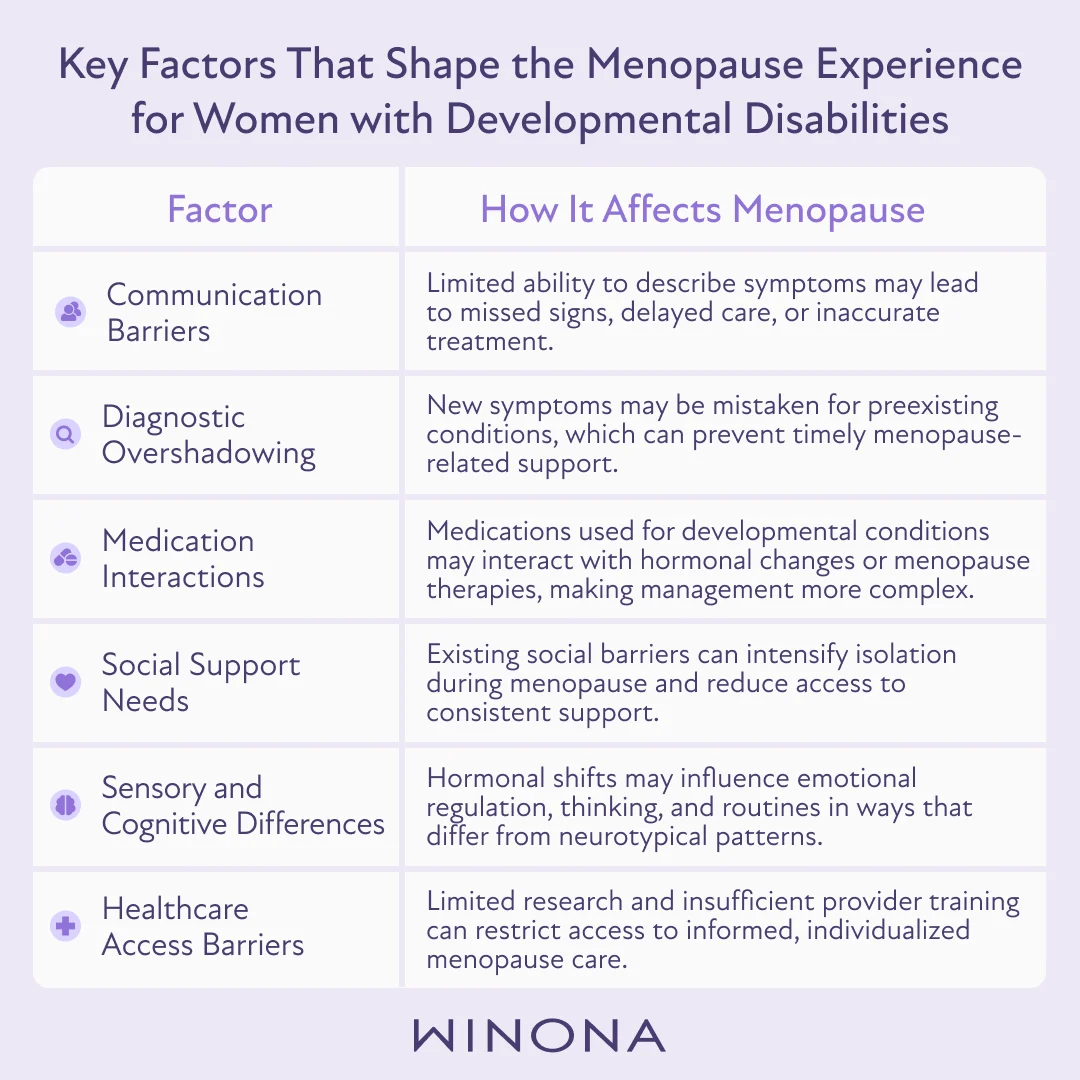
Condition-Specific Considerations in Menopause
Delayed or misdiagnosed symptoms are common among women with developmental disabilities because physical and emotional changes may be interpreted as behavioral concerns instead of hormonal shifts.(4)
Limited knowledge of women's health can make this even more challenging. Clinical research emphasizes that it’s important for women to understand their care, and information should be tailored to each individual's comprehension levels. Because many rely on caregivers for decision-making, caregivers also need accurate, easy-to-understand details about menopause.(4)
Down Syndrome
The National Down Syndrome Society notes that women with Down syndrome often enter menopause earlier than those in the general population, sometimes by 8 to 10 years. This earlier timing is linked to changes in how the ovaries work and a faster drop in the number of follicles over time, which shortens the reproductive window. These factors can lead to an earlier decrease in estrogen. Early menopause may increase the risk of bone loss and heart disease, which makes screening important.(7)
Some women may show signs like frustration, withdrawal, or agitation in response to discomfort.(4)
Autism Spectrum Disorder (ASD)
Women with ASD may react strongly to symptoms like hot flashes, night sweats, and skin changes because of heightened sensory sensitivities. Changes in routines, sleep, or energy may also affect stress response and emotional regulation.(3)(5)(6)
Additionally, some women with ASD may struggle to recognize and report menopause-related changes, making it difficult for them to ask for appropriate medical care.
Intellectual Disabilities
Women with intellectual disabilities — including those with genetic conditions like Fragile X syndrome and Prader-Willi syndrome — may face unique barriers in recognizing and managing menopause symptoms. They may show menopause symptoms through behavior rather than words because communication difficulties make it hard to describe discomfort.(4)(8)(9)
Withdrawal, distress, or a change in activity level may reflect physical or emotional discomfort related to hormonal changes.
A Clinical Toolkit for Women and Caregivers
Caregivers are essential allies in supporting women with developmental disabilities through menopause, offering guidance and understanding during this significant life transition. This role is invaluable but comes with its own challenges.
Below are a few tips to help make this transition smoother for both the caregiver and the person receiving care:(1)(4)(10)
Symptom Tracking: Keeping notes on physical, emotional, and behavioral changes helps identify patterns.
Building a Supportive Environment: Talking openly about menopause in caregiving and community settings helps everyone feel more informed and prepared.
Caregiver Support Networks: Accessing respite and mental-health resources helps maintain steady care.
Caregiver Education Programs: Training provides the knowledge needed to interpret symptoms and respond with confidence.

Observational Menopause Symptom Checklist
Each woman may experience menopause in different ways. The symptoms checklist below can help identify and track changes.
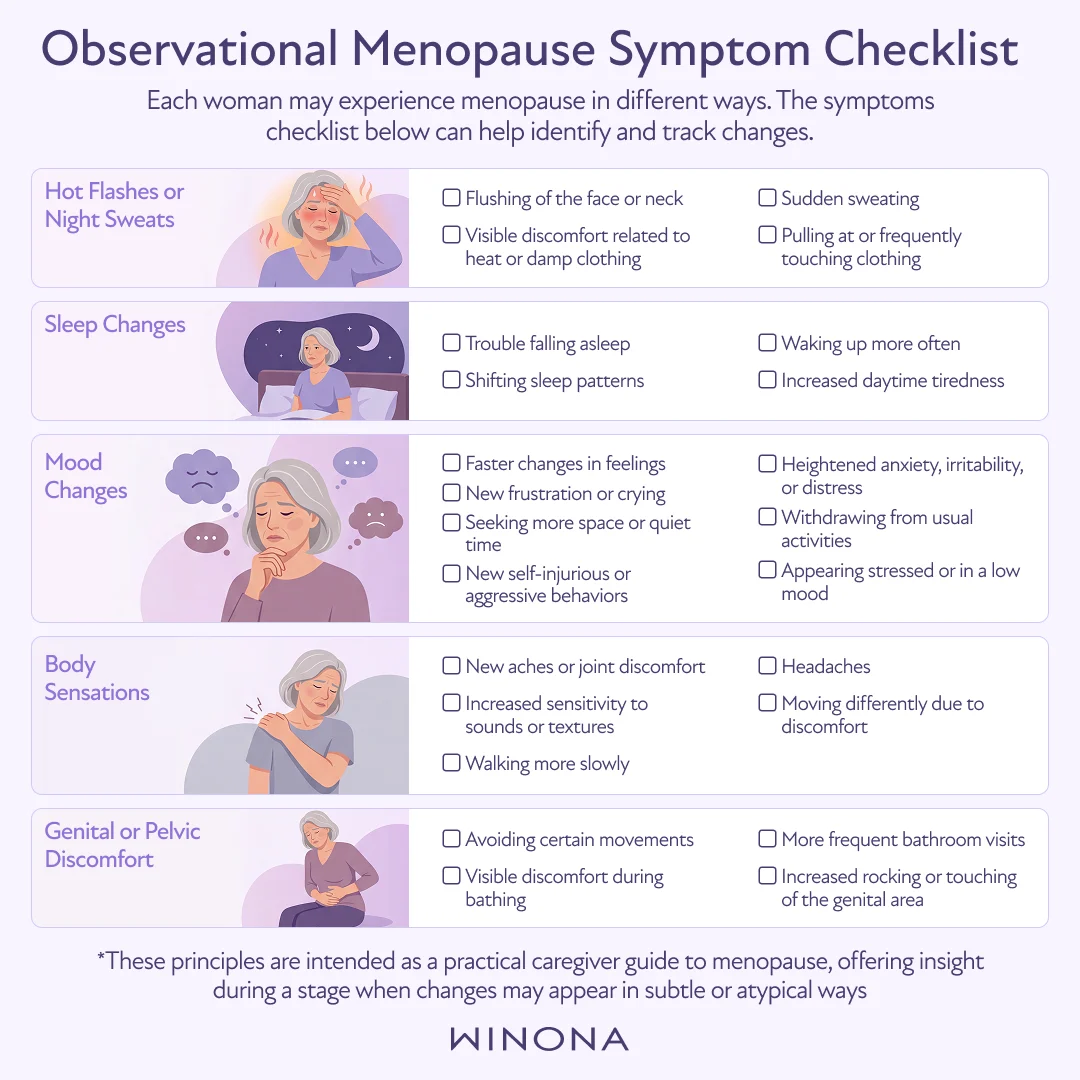
These principles are intended as a practical caregiver guide to menopause, offering insight during a stage when changes may appear in subtle or atypical ways:
Daily Routines and Predictability
Hormonal shifts can affect emotions, concentration, and energy. A clear daily routine helps provide stability. When women know what to expect, it becomes easier to manage their shifts in comfort or mood. Schedules also help caregivers notice or identify when new symptoms arise.
Communication and Advocacy
For caregivers, gentle communication and regular check-ins strengthen trust and help keep women with disabilities engaged in their care.
Supportive strategies and communication aids include the following:
Clear explanations
Sensory-friendly environments — like breathable fabrics, cooling aids, or quiet spaces
Visual feelings charts, color-coded scales, pictorial guides, and symbol-based communication
These structured tools can help women understand what to expect and stay oriented through daily changes.
Asking doctors to include menopause symptoms in routine medical check-ups helps prevent missed diagnoses. Repeated explanations and hands-on demonstrations improve understanding during visits.
Helpful phrases during appointments include:
“These changes/symptoms have been happening for several weeks/months.”
“This new pattern may be related to menopause, not only her underlying condition.”
Across all settings, care should center on each woman’s comfort, preferences, and participation in decisions whenever possible. The idea is to ensure that each woman’s experience guides her care, not the assumptions of others.
Tailoring Treatments: HRT and Other Interventions
Women with developmental disabilities often face extra challenges when trying to access menopause care, especially treatments like hormone therapy (HT), also known as hormone replacement therapy (HRT). Some barriers come from assumptions about a woman’s reproductive needs or worries about how hormones might interact with other medications. These assumptions can limit treatment options and delay relief from symptoms that affect comfort, mood, and daily life.(1)(3)(10)
Another challenge is that many doctors receive little clinical training on how menopause shows up in women with developmental disabilities. Without this knowledge, symptoms may be overlooked, misunderstood, or explained only as part of a disability, reducing access to meaningful care.(1)(3)(10)
Why Adapted Hormone Therapy Matters
Hormone therapy can be a safe and effective option when care is adapted to a woman’s health history, daily routines, and sensory needs. Many women take long-term medications for conditions like epilepsy, anxiety, or autism-related challenges; some of these can change how the body processes hormones, which means dosages may need adjustment.(4)
Different HT forms also matter. Some women may prefer or need options that avoid swallowing pills. A patch placed on the skin provides steady hormone levels throughout the day and reduces the chance of sudden changes that might cause discomfort. Gels, creams, and compounded formulations can also be useful, depending on sensory preferences and motor abilities.(4)(11)
At Winona, every treatment plan is unique. For a patient with sensory sensitivities, a transdermal patch is often superior to a cream. For a patient on certain medications, we may need to adjust the hormone dosage. It’s a highly individualized process.
Non-Medical Strategies That Support Comfort
Small daily adjustments and non-medical strategies can offer real relief and support independence.
Cooling Strategies: Fans, cool packs, and lightweight clothing can help manage hot flashes and night sweats, especially for women sensitive to heat.
Sleep Routines: A calm, predictable bedtime routine supports better rest. This may include dimming lights, reducing noise, or using weighted blankets if preferred.
Nutrition: Foods rich in calcium, vitamin D, and protein help protect bone and heart health.
Movement: Gentle activities like walking or stretching support energy and emotional balance.
Support Networks That Strengthen Care
A strong, informed support system makes menopause easier to manage. Family members, caregivers, and doctors play an important role, but women’s experiences and needs must remain the foundation of the care plan. Support groups — in person or online — are safe spaces to learn, share experiences, and ask questions.
Thoughtful, Responsive Care
Menopause is a significant transition, and women with developmental disabilities deserve care that recognizes their individuality, respects any communication barriers, and supports their comfort.
When physicians, caregivers, and communities understand how symptoms may look different, it becomes easier to deliver thoughtful, responsive care. The Menopause Society notes that informed, compassionate support helps women move through this stage with greater ease and long-term well-being — a reminder that tailored care is not optional but essential.(12)
With individualized medical care, sensory-aware strategies, and stable routines, women with developmental disabilities can move through menopause with clarity, comfort, and control.
Winona serves as a dedicated clinical partner in this process, offering tailored evaluations and treatment options that adapt to each woman’s needs. To explore personalized treatment options for patients, start a visit at Winona.
Frequently Asked Questions (FAQS) About Menopause in Women with Disabilities
Yes. Research shows that women with Down syndrome often experience menopause earlier than women in the general population, sometimes by eight to 10 years. This earlier timing is linked to differences in ovarian function, which lead to a faster decline in estrogen. Earlier menopause may increase risks related to bone and heart health, so regular screening and proactive symptom tracking are especially helpful.
Diagnostic overshadowing happens when new or unexplained symptoms are attributed only to a woman’s developmental disability rather than being considered potential signs of menopause. According to the American Journal on Intellectual and Developmental Disabilities, diagnostic overshadowing is a known bias that makes it harder for physicians to identify other health conditions.
Caregivers can help prevent this by noting changes in sleep, comfort, energy, or behavior; bringing these observations to medical visits; and clearly stating when a new pattern has emerged. Mentioning that the woman is in the menopausal age range can also help doctors evaluate symptoms more accurately.Hormone therapy (HT) or hormone replacement therapy (HRT) can be safe and effective when tailored to a woman’s medical history, medications, and individual needs. Many women with developmental disabilities take long-term medications, including those for epilepsy or behavioral health, which can influence hormone metabolism. A physician experienced in menopause care can adjust formulations and dosing to ensure safety and comfort.
Simple, consistent explanations paired with visual supports can make menopause easier to understand. Tools like picture-based symptom charts, color-coded scales, and predictable routines help many women stay oriented and engaged. Sensory-aware environments — quiet and/or temperate spaces and breathable clothing — also support comfort and reinforce understanding during daily changes.
This article is for informational purposes only and does not constitute medical advice. The information contained herein is not a substitute for professional medical advice. Always talk to your doctor about the risks and benefits of any treatment.
References
“A perfect storm”: Autistic experiences of menopause and midlife
Understanding the menopausal experiences of women with intellectual disabilities: A scoping review
Fundamental intersectionality of menopause and neurodivergence experiences at work
Endocrine manifestations and management of Prader-Willi syndrome
Addressing Health Disparities in Adults with Developmental Disabilities
The Effects of Hormone Therapy Decision Support for Women with Mobility Impairments
Menopause Step-by-Step, A New Monthly Resource Addressing Key Issues About Managing Menopause