Low estrogen (hypoestrogenism) occurs when the body produces insufficient estrogen, a hormone critical for reproductive, skeletal, cardiovascular, and neurological health. Its decline is most commonly linked to menopause but can also result from surgery, medical treatments, or lifestyle factors.
Vasomotor symptoms, including hot flashes and night sweats, arise because low estrogen disrupts hypothalamic temperature regulation. These are often among the earliest and most noticeable signs during perimenopause and menopause, though intensity varies among individuals.
Urogenital changes, such as vaginal dryness, dyspareunia, and urinary urgency, occur from reduced estrogen-dependent tissue hydration and collagen, a process clinically recognized as genitourinary syndrome of menopause. Local or systemic hormone therapy can specifically target these symptoms.
Psychological, cognitive, and dermatological effects — including mood shifts, memory issues, fatigue, skin thinning, and hair loss — reflect estrogen’s influence on neurotransmitters, collagen synthesis, and bone metabolism. Severity and timing differ based on age, health status, and hormone fluctuation patterns.
Hormone therapy and supportive lifestyle measures can help restore hormonal balance, relieve symptoms, and support long-term health. Personalized approaches consider underlying causes, treatment delivery, and concurrent lifestyle adjustments for optimal outcomes.
Low Estrogen: Causes, Symptoms, and Treatment
 Hailey Kean
 Dr. Cathleen M. Brown, DO
Article Content
The Bottom Line:
For many women, the first signs of low estrogen appear quietly. Fatigue lingers despite rest, moods shift for no clear reason, and familiar routines start to feel strangely difficult. These changes can seem random, but they often signal something deeper — a hormonal imbalance that deserves attention.
Low estrogen, clinically known as estrogen deficiency, is a medical condition that can affect many aspects of health. Estrogen plays a central role in regulating numerous body systems, from bone density and heart function to cognitive and emotional balance. It also helps regulate the menstrual cycle and fertility throughout the reproductive years. When levels drop below the optimal range, individuals may experience a broad spectrum of symptoms — some subtle, others life-altering.(1)
It’s common to experience signs of low estrogen without realizing that a hormonal imbalance is the underlying cause. Understanding how estrogen functions, what leads to its decline, and the treatments available can help identify next steps and improve women's health overall.
Symptoms of Low Estrogen
Low estrogen symptoms vary in intensity depending on age, health status, and the underlying cause. They can affect multiple organ systems, producing changes in temperature regulation, mood, sexual health, and physical appearance.(1)(2)(3)
Below are the most recognized clinical signs of estrogen deficiency, grouped by physiological category.
Vasomotor Symptoms (Hot Flashes & Night Sweats)
Estrogen helps regulate the hypothalamus, the brain’s temperature control center. When levels fall, the body’s ability to maintain a stable temperature becomes erratic, leading to the following symptoms:(1)(3)
Hot flashes — sudden sensations of heat, often accompanied by flushing and sweating
Night sweats — episodes of excessive sweating during sleep, sometimes disrupting rest
These vasomotor symptoms are among the earliest and most common indicators of low estrogen, particularly during perimenopause and menopause. They may also appear after medical treatments that suppress estrogen, such as chemotherapy.(3)(4)
Urogenital Atrophy (Vaginal Dryness, Dyspareunia, Urinary Changes)
Estrogen helps maintain the health and elasticity of the vaginal and urinary tissues. A decline in estrogen causes thinning and dryness of the mucosal lining, known as genitourinary syndrome of menopause (GSM). Symptoms include the following:(4)(5)
Vaginal dryness and itching
Painful intercourse (dyspareunia)
Increased urinary urgency or frequency
Recurrent urinary tract infections (UTIs)
These changes reflect decreased blood flow and reduced collagen production in estrogen-dependent tissues.
Psychological & Cognitive Symptoms (Mood, Memory, and Sleep)
Estrogen interacts with neurotransmitters such as serotonin, dopamine, and acetylcholine, which influence mood and cognition. Low estrogen can contribute to the following symptoms:(1)(6)
Low mood, irritability, or anxiety
Difficulty concentrating or remembering
Fatigue and disrupted sleep
While these symptoms may resemble depression or stress-related responses, they often stem from hormonal changes that affect brain chemistry and energy regulation.
Dermatological and Skeletal Changes (Skin, Hair, and Bone Health)
Estrogen promotes collagen synthesis and helps maintain skin hydration and elasticity. It also slows bone resorption, protecting skeletal strength. A decline in estrogen may cause these changes to occur:(1)(2)(3)
Thinning or dry skin and hair loss
Loss of muscle tone or increased joint stiffness
Accelerated bone density loss (osteopenia or osteoporosis)
Women with long-term estrogen deficiency have a higher risk of fractures and visible signs of skin aging due to reduced collagen production and structural support.(1)(3)
Menstrual and Reproductive Changes
Low estrogen directly affects ovulation and the menstrual cycle, disrupting hormonal rhythm and menstrual regularity. Common reproductive symptoms include the following:(1)(7)
Irregular or absent periods (amenorrhea)
Reduced fertility
Lower libido or reduced sex drive
In younger women, these signs may indicate hypothalamic amenorrhea or other causes of ovarian suppression. In midlife, they typically signal the onset of perimenopause.(7)(8)
Cardiovascular and Metabolic Symptoms
Estrogen has a protective role in cardiovascular health, helping maintain balanced cholesterol levels and vascular function. Low levels can lead to these changes:(3)(7)
Increased LDL (“bad”) cholesterol and decreased HDL (“good”) cholesterol
Higher risk of hypertension, atherosclerosis, and heart disease
Unexplained weight gain, particularly around the abdomen
These effects illustrate why maintaining hormonal balance is not only important for comfort but for long-term health.
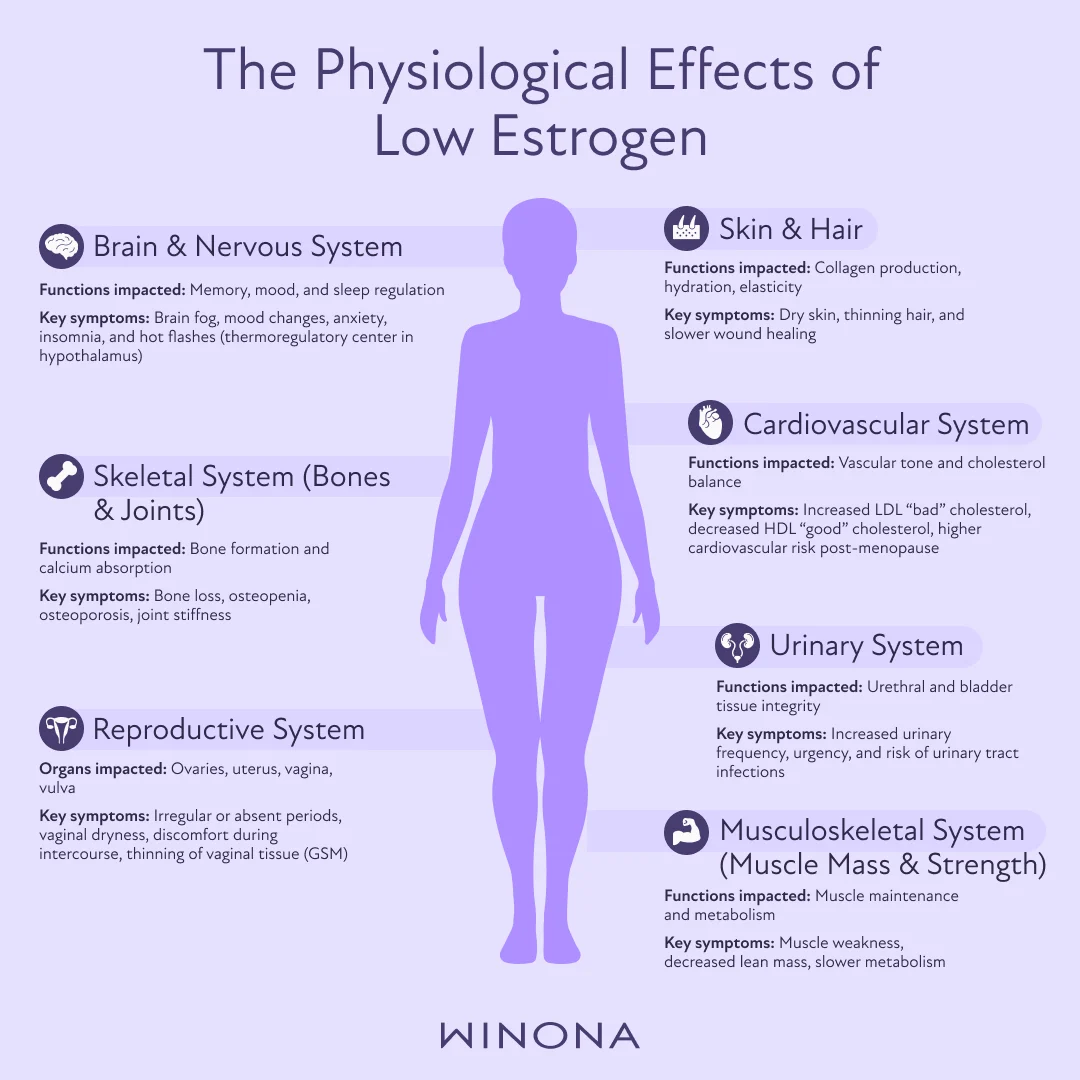
What causes estrogen deficiency?
Estrogen levels fluctuate naturally throughout a woman’s life, but certain medical and lifestyle factors can cause premature or severe deficiencies. Understanding the underlying cause is critical for accurate diagnosis and treatment.(1)
The Menopause Transition (The Most Common Cause of Low Estrogen)
Menopause represents the natural decline in ovarian function that occurs with age, leading to reduced estrogen production.(1)(3)
Perimenopause begins in the mid-30s to early 40s, when estrogen levels become irregular. Symptoms may appear years before menstrual periods stop completely.
Menopause is diagnosed after 12 consecutive months without menstruation, typically around age 51.
Postmenopause follows, with persistently low estrogen levels that continue throughout later life.
This transition is the most common cause of estrogen deficiency. The associated decline in estrogen contributes to vasomotor instability, urogenital atrophy, bone density loss, and cognitive changes.(3)
Medical Conditions Causing Estrogen Deficiency
Several medical disorders can interfere with the body’s ability to produce or regulate estrogen.
Primary Ovarian Insufficiency (POI): The ovaries stop functioning before age 40, often due to autoimmune disease, genetic factors, or prior medical treatments.(4)
Turner/Noonan Syndrome: This involves the partial or complete absence of one X chromosome, resulting in underdeveloped ovaries and lifelong low estrogen.(9)
Pituitary or Hypothalamic Disorders: Tumors or dysfunction in these brain regions can disrupt the hormones and signal the ovaries to produce estrogen, leading to irregular cycles and infertility.(7)
Polycystic Ovary Syndrome (PCOS): Commonly associated with excess androgens, PCOS can cause periods of suppressed estrogen due to disrupted ovulation.(10)
Thyroid Disorders: Both hyperthyroidism and hypothyroidism can affect reproductive hormone regulation, indirectly lowering estrogen levels.(4)(7)
Post-Treatment Ovarian Failure: Chemotherapy, radiation therapy, or surgical removal of the ovaries (oophorectomy) can cause abrupt estrogen deficiency.(11)
According to the Endocrine Society, identifying the specific etiology through a comprehensive medical evaluation is essential before initiating any treatment.(12)
Lifestyle and Physiological Factors
Lifestyle and metabolic factors can also suppress estrogen production, especially in premenopausal women.
Low Body Weight or Eating Disorders: Adipose tissue contributes to estrogen production; insufficient fat stores reduce circulating levels.(8)
Excessive Exercise: Overtraining combined with inadequate caloric intake can disrupt hypothalamic signaling and suppress ovulation, a condition known as functional hypothalamic amenorrhea.(7)(8)
Chronic Stress: Prolonged cortisol elevation interferes with gonadotropin release, suppressing estrogen synthesis.(13)
Poor Nutrition: Deficiencies in essential fatty acids, vitamin D, and B-complex vitamins can affect estrogen metabolism.(8)
Substance Use: Smoking and excessive alcohol consumption accelerate estrogen breakdown and lower circulating levels.
Because these factors are often reversible, early intervention through lifestyle modification can help restore balance before more advanced treatment is needed.
Common Causes of Low Estrogen
Cause | Clinical Description |
1. Menopause/ Perimenopause | This is the primary cause of low estrogen. Ovarian function declines naturally with age, leading to reduced production of estradiol and other estrogens. This transition marks the end of the reproductive years and is associated with vasomotor, urogenital, and metabolic changes. During perimenopause, estrogen levels can swing between high and low, often triggering irregular cycles, mood changes, and early vasomotor symptoms. |
2. Surgical Menopause (Oophorectomy) | The removal of both ovaries results in an immediate and profound drop in estrogen, regardless of age. Symptoms are typically more sudden and severe compared to natural menopause. |
3. Hypothalamic Amenorrhea | This condition occurs when stress, excessive exercise, or low body weight suppresses the hypothalamic-pituitary-ovarian (HPO) axis, reducing gonadotropin release and estrogen production. It’s most common among athletes and individuals with disordered eating or malnutrition. |
4. Premature Ovarian Insufficiency (POI) | This is defined as early loss of ovarian function before age 40, often due to autoimmune, genetic, or idiopathic causes. It leads to persistently low estrogen and infertility if left untreated. |
5. Hyperprolactinemia | Elevated prolactin levels interfere with gonadotropin-releasing hormone (GnRH) secretion, suppressing ovarian function and reducing estrogen production. |
6. Thyroid Disorders | Both hypothyroidism and hyperthyroidism can disrupt ovarian hormone regulation, leading to irregular cycles and low estrogen levels. |
7. Chemotherapy or Radiation Therapy | Cancer treatments can damage ovarian tissue, resulting in temporary or permanent estrogen deficiency depending on treatment intensity and age. |
8. Chronic Illness or Stress | Chronic inflammatory or systemic illnesses and prolonged psychological stress can alter hypothalamic signaling, reducing ovarian hormone output. |
Treatment Options to Increase Estrogen Levels
Treating low estrogen involves addressing the root cause while relieving symptoms and protecting long-term health. Understanding how different levels of estrogen influence various body systems helps physicians tailor treatment effectively. Therapeutic options range from hormone therapy to lifestyle interventions, depending on age, medical history, and symptom severity.
Hormone Replacement Therapy (HRT): The First-Line Treatment for Menopausal Low Estrogen
Hormone replacement therapy (HRT) is the standard medical treatment for estrogen deficiency related to menopause. It replenishes declining hormone levels using either bioidentical or synthetic estrogen formulations.(11)(14)
Bioidentical hormones have the same molecular structure as natural human estrogen (estradiol) and are generally well tolerated.
Synthetic hormones differ slightly in chemical structure and may have unwanted metabolic effects.
HRT can be delivered through several routes:
Transdermal patches provide a steady release of estrogen through the skin, minimizing liver metabolism.
Topical creams or gels are applied directly to the skin for localized or systemic absorption.
Oral tablets are convenient but associated with a slightly higher risk of clotting due to first-pass liver metabolism.
Dosage and formulation are best when personalized based on the individual's needs and medical profile with the primary goal of restoring hormonal balance, relieving symptoms, and improving overall quality of life.
Targeted Local Estrogen Therapy for Urogenital Symptoms
For women whose primary symptoms affect the vaginal or urinary tract, local estrogen therapy can be highly effective.
Vaginal estrogen creams, tablets, or rings deliver low doses of estradiol directly to the affected tissues. This treatment improves vaginal moisture, elasticity, and pH balance while minimizing systemic absorption.
Local therapy can be used alone or alongside systemic HRT for comprehensive symptom management.
Supportive Lifestyle and Nutritional Approaches
Lifestyle modification plays a supportive role in managing mild estrogen deficiency and enhancing the effectiveness of medical treatments.
Evidence-based recommendations include the following:(1)(7)
Balanced Nutrition: Incorporate whole grains, lean proteins, and healthy fats. Foods rich in phytoestrogens, such as soy and flaxseed, may offer mild estrogenic effects.
Regular Weight-Bearing Exercise: This helps maintain bone density and cardiovascular health.
Adequate Sleep and Stress Management: Yoga, mindfulness, and breathing exercises can help regulate cortisol, which indirectly supports hormonal stability.
Smoking Cessation and Reduced Alcohol Intake: Changing these habits improves estrogen metabolism and overall vascular health.
While these approaches alone cannot replace HRT in severe cases, they form a strong foundation for long-term wellness.
Understanding and Managing Low Estrogen
Low estrogen is more than a hormonal fluctuation — it’s a clinical condition that affects multiple systems throughout the body. Identifying the root cause, whether menopause, medical illness, or lifestyle factors, is the first step toward effective treatment.
With proper evaluation and evidence-based care, symptoms can be managed, and health can be restored. Estrogen replacement therapy combined with supportive lifestyle measures help women regain vitality, protect bone and heart health, and improve quality of life.
Experiencing symptoms of low estrogen? Discover if HRT is right for you.
Understanding the science behind estrogen deficiency is the first step. The next is learning how these insights apply to individual health needs.
Winona offers a simple, physician-guided quiz to help identify possible hormonal imbalances and explore whether bioidentical hormone therapy may be appropriate.
Frequently Asked Questions (FAQs) About Low Estrogen
The earliest signs of low estrogen often appear gradually. Common symptoms include irregular periods or missed cycles, hot flashes, night sweats, and sleep changes. Many women also notice vaginal dryness, reduced libido, or mood changes. Over time, declining estrogen can affect bone density and cognitive function, leading to joint stiffness or difficulty concentrating.
Although menopause is the leading cause, estrogen levels can drop for other reasons. Surgical removal of the ovaries, certain medical treatments (like chemotherapy or radiation), excessive exercise, eating disorders, and chronic stress can all lead to estrogen deficiency. Some autoimmune and genetic conditions may also affect estrogen production.
Lifestyle approaches may help support hormonal balance, though they typically cannot fully replace lost estrogen. A balanced diet rich in healthy fats, whole grains, and plant-based proteins supports hormone production.
Regular exercise, adequate sleep, and stress management can also help stabilize hormone levels. Some plant compounds, like phytoestrogens found in soy or flaxseed, may offer mild estrogen-like effects, but their impact is generally limited compared with hormone replacement therapy (HRT).
Doctors typically evaluate symptoms first, then some may opt to confirm a diagnosis through blood tests that measure estradiol — the main form of estrogen in women. Other hormones, like follicle-stimulating hormone (FSH) and luteinizing hormone (LH), may also be checked to assess ovarian function and rule out other causes of hormonal imbalance.
Testing helps identify whether low estrogen is related to menopause or another underlying condition, guiding the most effective treatment plan.
This article is for informational purposes only and does not constitute medical advice. The information contained herein is not a substitute for professional medical advice. Always talk to your doctor about the risks and benefits of any treatment.
References
Estrogen's Effects on the Female Body | Johns Hopkins Medicine
Genitourinary Syndrome of Menopause | Treatment & Management | Point of Care
The Impact of Irregular Menstruation on Health: A Review of the Literature
Treatment of Symptoms of the Menopause: An Endocrine Society Clinical Practice Guideline
Female infertility as a result of stress-related hormonal changes