Preventing postmenopausal bone loss often involves comparing systemic hormone therapy with non-hormonal osteoporosis medications and lifestyle-based strategies.
Estrogen therapy supports bone strength by slowing breakdown, while other agents like bisphosphonates target bone breakdown through different pathways. Delivery forms of hormone replacement therapy (oral vs. transdermal) differ in metabolism and systemic effects.
Doctors evaluate age, years since menopause, fracture risk, bone density scores, cardiovascular profile, breast cancer risk, and whether additional menopausal symptoms are present.
Response and tolerability vary, and fracture risk reduction depends on the timing of initiation and baseline bone health.
Treatment decisions are individualized, integrating bone data, overall health profile, and patient priorities within an ongoing monitoring plan.
Menopause Hormone Therapy for Osteoporosis Prevention & Treatment
 Hailey Kean
 Dr. Saranne Perman, MD
Article Content
The Bottom Line:
Osteoporosis is often described as a silent disease because bone loss happens quietly, without symptoms, until a fracture occurs. The Endocrine Society notes that up to 20% of bone loss can happen within 5–7 years post-menopause. Many women first learn they have low bone density only after a broken wrist, hip, or spine. This condition becomes far more common after menopause, when estrogen and progesterone levels fall.(1)
Estrogen plays a central role in maintaining bone strength. During the reproductive years, it helps regulate bone turnover and keeps bone breakdown in balance with bone formation. After menopause, this balance shifts. Bone is lost faster than it can be rebuilt, leading to a steady decline in bone mineral density (BMD) and a higher risk of fractures.
Hormone replacement therapy (HRT), also known as menopausal hormone therapy (MHT), directly addresses estrogen loss. It’s one of the most effective tools available for preventing postmenopausal osteoporosis, particularly in women who are newly menopausal or experiencing other menopause-related symptoms.
The Science: How Estrogen Decline Leads to Bone Loss
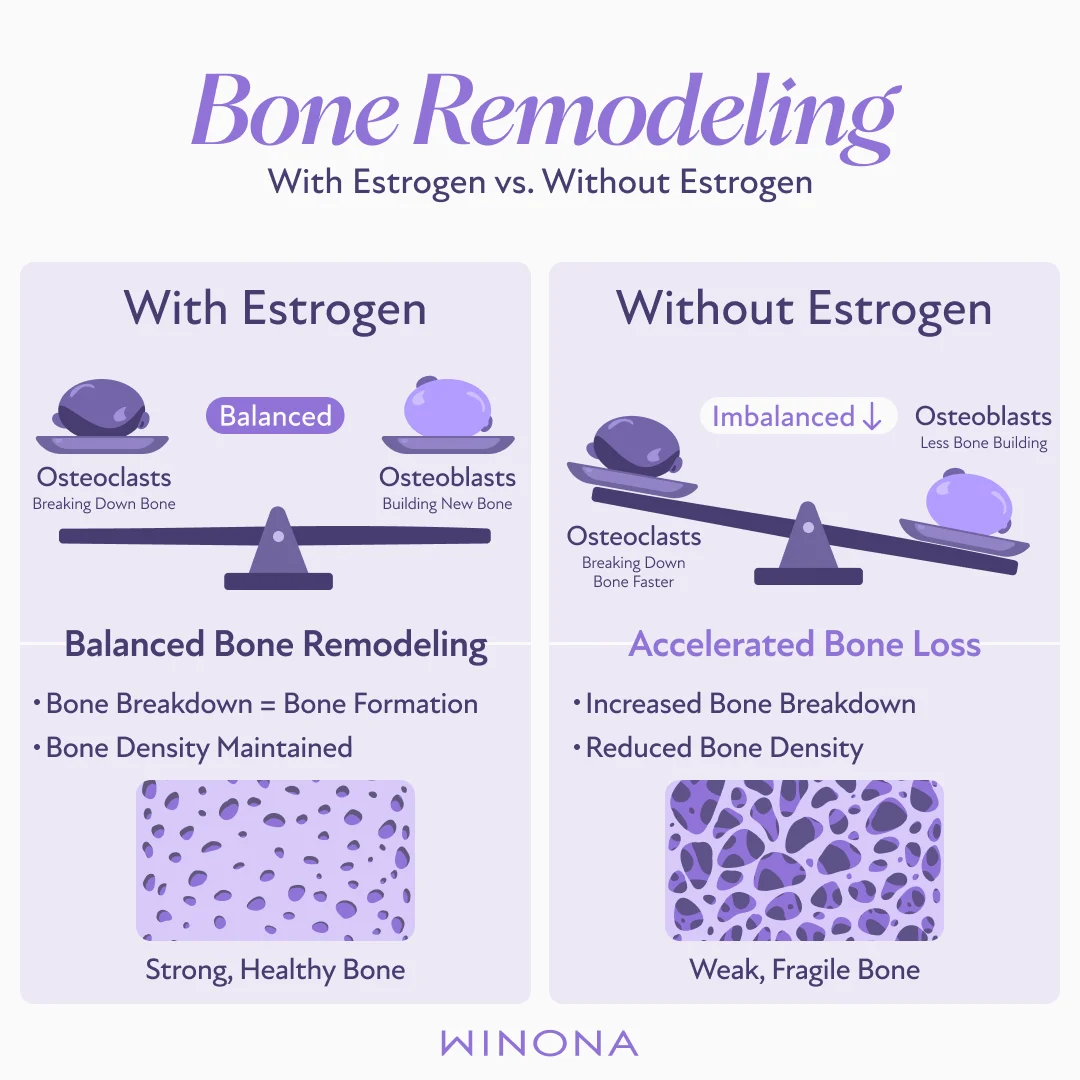
Bone is living tissue. It constantly renews itself through a process called bone remodeling. This process depends on two main types of cells:(2)
Osteoclasts, which break down old bone
Osteoblasts, which build new bone
In healthy bone, these two processes stay in balance, with estrogen playing a key role in maintaining that balance.(2)
Estrogen as a Regulator of Bone Remodeling
Estrogen produced by the body acts as a natural regulator — sometimes described as a “brake” — on osteoclast activity. It limits how quickly bone is broken down and supports osteoblast survival and function. Estrogen receptors are present throughout bone tissue, especially in the spine and hip, areas most vulnerable to fractures.(2)
When estrogen levels are high enough, the following happens:
Bone mineral density remains stable
Old bone breakdown and new bone formation are balanced
What Changes After Menopause
During menopause transition, estrogen levels fluctuate and then drop sharply. When this happens, the regulatory brake on osteoclasts is released. Osteoclasts become more active and break down bone faster than osteoblasts can rebuild it.(1)
This imbalance leads to the following:(1)(3)
Increased bone resorption
Thinning of bone structure
Reduced bone strength
Net bone loss each year
The most rapid bone loss occurs in the first five to seven years after menopause. During this window, women may lose up to 20% of their bone mass, particularly from the spine and hip.(1)
Why This Matters Clinically
Bone loss after menopause is not caused by aging alone. It’s a hormonally driven process. This distinction matters because it means that bone loss can be treated. Addressing estrogen deficiency directly can slow or stop the accelerated phase of bone loss.(3)(4)(5)
Hormone replacement therapy restores estrogen signaling in bone tissue. By doing so, it:
Reduces osteoclast activity
Supports osteoblast function
Stabilizes bone resorption/remodeling
Preserves bone mineral density
Simply put, menopause lowers estrogen levels. Lower estrogen removes the natural control on bone breakdown, allowing bone loss to outpace bone formation.

Estrogen helps keep bone remodeling in balance. When estrogen declines, bone breakdown accelerates and outpaces bone formation, leading to a gradual loss of bone strength.

Hormone Therapy’s Proven Impact on Bone Density and Fracture Risk
The role of HRT in bone health is supported by decades of clinical research. Unlike supplements or lifestyle measures alone, estrogen therapy directly targets the hormonal cause of postmenopausal bone loss.(2)(4)
Improvements in Bone Mineral Density
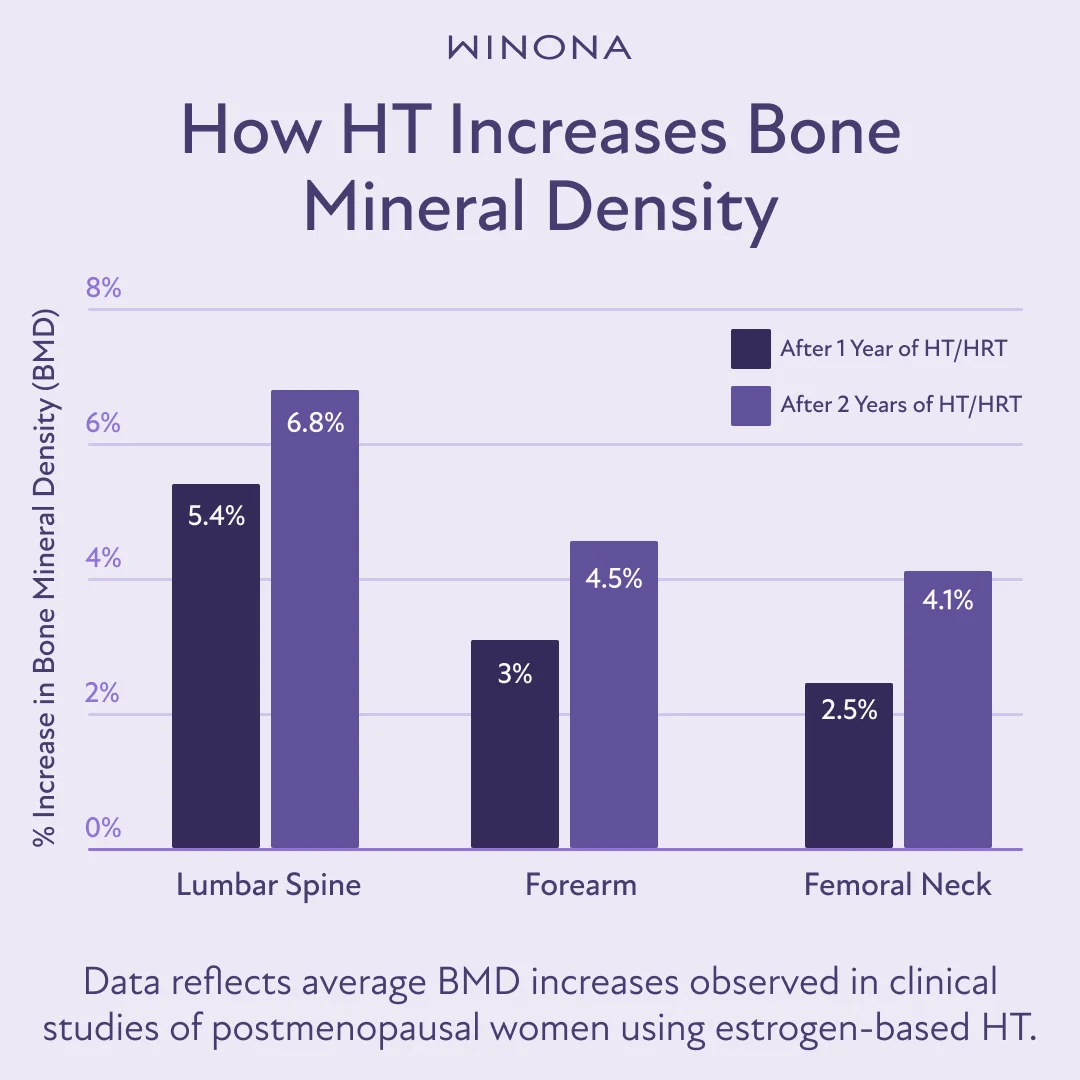
Clinical studies consistently show that estrogen-based HRT increases bone mineral density at key fracture-prone sites.
Lumbar spine BMD increases by approximately 5.4%
Forearm BMD increases by 3.0%
Femoral neck BMD increases by 2.5%
With continued therapy over two years:(5)(6)
Spine BMD increases by up to 6.8%
Forearm BMD increases by up to 4.5%
Femoral neck BMD increases by up to 4.1%
These gains reflect real improvements in bone strength, not just slowed loss.
Fracture Risk Reduction
Bone density matters because it predicts fracture risk. Stronger bones fracture less often.
Large clinical trials show that HRT reduces the following:(6)(7)
Non-vertebral fractures by approximately 27%
Hip fractures
Wrist fractures
Vertebral fractures
Evidence from the Women’s Health Initiative (WHI)
The Women’s Health Initiative (WHI) is one of the largest and most influential studies in women’s health. It provided clear evidence that hormone therapy reduces fracture risk in postmenopausal women.(3)(4)(8)
Key Evidence: HRT & Bone Health (WHI Study)
Notable reduction in hip fractures in women using HRT
Reduction in vertebral fractures
Improvement in and preservation of bone mineral density
Benefits observed regardless of baseline fracture risk
Strongest benefit when therapy starts near menopause onset
These results form the basis for the FDA’s approval of HRT for the prevention of postmenopausal osteoporosis.(9)
Timing Matters
HRT works best as a preventive strategy to treat osteoporosis. Starting treatment closer to menopause onset helps with the following:(9)
Targets the period of fastest bone loss
Preserves existing bone structure
Reduces long-term fracture risk
For women already experiencing menopause symptoms, HRT can address multiple concerns at once while supporting bone health.

HRT in Context: Understanding All Treatment Options
Osteoporosis prevention and treatment require individualized care. Hormone therapy plays a specific and valuable role, but it’s not the only option.
First-Line Treatment for Diagnosed Osteoporosis
For women with established osteoporosis or prior fragility fractures, medications like bisphosphonates are often considered first-line therapy. These drugs slow bone breakdown and reduce fracture risk.(7)(10)
Clinical guidelines from major medical organizations support this approach. However, some patients have reported that bisphosphonates are harder to tolerate and prefer not to use them long term.(10)
Other Options Part of the Conversation
Selective estrogen receptor modulators (SERMs) and similar therapies work on estrogen pathways in specific tissues. They can help protect the spine but are less effective for hip fractures and do not ease menopause symptoms. The right option depends on fracture risk, overall health, and long-term treatment preferences.(4)
Where Hormone Replacement Therapy Fits Best
HRT for osteoporosis is especially well suited for the following people:
Those in early postmenopause
Those at risk for bone loss but without advanced osteoporosis
Those with menopause symptoms who also want bone protection
HRT addresses both menopause symptom relief and osteoporosis prevention, which distinguishes it from other bone-only medications.
Clinical Guideline Alignment
Professional medical organizations like The Menopause Society and ACOG emphasize the following when deciding on hormone treatment:(11)(12)
Individual risk assessment
Shared decision-making
Matching therapy to life stage and goals
This approach supports using HRT as a preventive option when benefits align with personal health needs.
Pros and Cons of HRT vs. Bisphosphonates for Osteoporosis Prevention
Category | Hormone Replacement Therapy (HRT) | Bisphosphonates |
Primary role | Clinical prevention of postmenopausal bone loss | Clinical treatment of diagnosed osteoporosis |
Mechanism | Replaces estrogen, restoring normal bone remodeling balance | Slows bone breakdown by inhibiting osteoclast activity |
Effect on bone density | Increases BMD at spine, hip, and forearm | Increases BMD, especially at spine and hip |
Fracture risk reduction | Reduces likelihood of vertebral, hip, and non-vertebral fractures | Strong fracture risk reduction, including hip fractures |
Best suited for | Recently menopausal women, especially with menopausal symptoms | Women with established osteoporosis or prior fractures |
Effect on menopause symptoms | Improves vasomotor and other menopause symptoms | No effect on menopause symptoms |
Duration considerations | Typically used during early postmenopause | Often used long-term, with periodic reassessment |
Tolerability considerations | Requires individualized risk assessment | Some users experience gastrointestinal or musculoskeletal side effects. |
Guideline positioning | Preventive option when benefits align with individual risk | Common first-line therapy for osteoporosis |
A Personalized Approach to Bone Health
Osteoporosis prevention offers an opportunity to maintain strength, movement, and independence well into later life. Bone loss after menopause is not an unavoidable outcome of aging — it’s closely tied to estrogen decline, which means it can be addressed with the right medical approach. Hormone replacement therapy targets this biological change directly, helping preserve bone density during a critical window when prevention is most effective.
Choosing the right strategy depends on the following points:
Age and time since menopause
Bone density measurements
Personal fracture risk factors
Presence of menopause-related symptoms
Overall health history
A consultation with a menopause-trained physician provides clarity and direction. With expert guidance, it becomes possible to assess risk accurately, explore evidence-based options, and build a prevention strategy that supports long-term bone health and confidence in future mobility.
Start Your Next Step
A medical consultation is the most reliable way to understand personal bone health risk and prevention options.
Start your visit to talk with a menopause specialist about menopause symptoms and bone health concerns.
Frequently Asked Questions (FAQ) about HRT and Osteoporosis
Hormone replacement therapy cannot fully reverse osteoporosis or restore bone to premenopausal levels. No current treatment can do that. However, hormone therapy is proven to slow bone loss, increase bone mineral density, and reduce fracture risk, especially when started early after menopause. By replacing estrogen, HT helps rebalance bone remodeling so bone breakdown no longer outpaces bone formation. This allows existing bone to be preserved and strengthened over time.
There is no single standard dose. The goal is always the lowest effective dose that protects bone while supporting overall health. The appropriate dose depends on age, time since menopause, baseline bone density, fracture risk, and medical history. Lower doses can still provide meaningful bone protection, particularly when therapy begins closer to menopause. A clinical consultation is essential to determine the right dose and adjust it as needed.
Bone density improvements can be measured within the first year of therapy. Studies show that after one year of estrogen-based hormone therapy, bone mineral density increases at the spine, hip, and forearm. With continued use, bone density continues to improve over two years and beyond, leading to stronger bones and lower fracture risk.
Yes. Hormone therapy is highly effective for osteopenia, which is the stage of low bone mass that comes before osteoporosis.
Starting HRT during osteopenia can:
Slow or stop further bone loss
Preserve bone structure
Significantly reduce the risk of progression to osteoporosis
Lower long-term fracture risk
Because bone loss accelerates soon after menopause, early intervention with estrogen therapy can help maintain bone strength and support long-term skeletal health.
This article is for informational purposes only and does not constitute medical advice. The information contained herein is not a substitute for professional medical advice. Always talk to your doctor about the risks and benefits of any treatment.