Menopausal weight gain is characterized by a shift in fat distribution from the hips to the abdominal area.
It occurs because hormonal shifts cause significant changes to women’s metabolism and where the body stores fat.
Hormonal fluctuations also affect insulin sensitivity, appetite regulation, and muscle mass, all of which can contribute to weight changes during the menopause transition.
Weight management can be particularly difficult during this phase of life, but a combination of menopause-specific lifestyle strategies can help women effectively manage hormonal weight gain.
Potential treatment options include prescription weight management medications or complementary treatments like hormone replacement therapy (HRT). Although it doesn’t promote weight loss, HRT may help limit the amount of weight gained during the menopause transition, empowering women to feel confident in their changing bodies.
The Clinical Reality of Menopausal Weight Gain: Causes and Treatment
 Erin Marie McCluskey
 Dr. Cathleen M. Brown, DO
Article Content
The Bottom Line:
Many women in their 40s and 50s feel frustrated by unexplained weight gain during the menopause transition, particularly around their midsection. For some, weight gain can take a toll on self-esteem. Women often come to their physicians feeling confused and distressed by these changes that won’t improve, despite their consistent healthy eating patterns and regular exercise.
These body changes are not a reflection of effort or discipline. They’re predominantly driven by hormonal fluctuations that naturally occur during this phase of life. Approximately 70% of women gain up to 1.5 lbs. per year during the menopause transition, which can last up to a decade.(1)
However, menopausal weight gain can be effectively managed with a shift in approach that works with women’s changing physiology, instead of against it. The first step is gaining a clinical understanding of why this hormonal weight gain occurs.
This article will delve into the science behind these physiological changes. It will also explore effective medical treatments like hormone replacement therapy (HRT) as well as targeted lifestyle strategies for managing menopausal weight gain, helping women to embrace their changing bodies and reduce long-term health risks.
Why Menopause Triggers a Shift in Body Weight and Fat Distribution
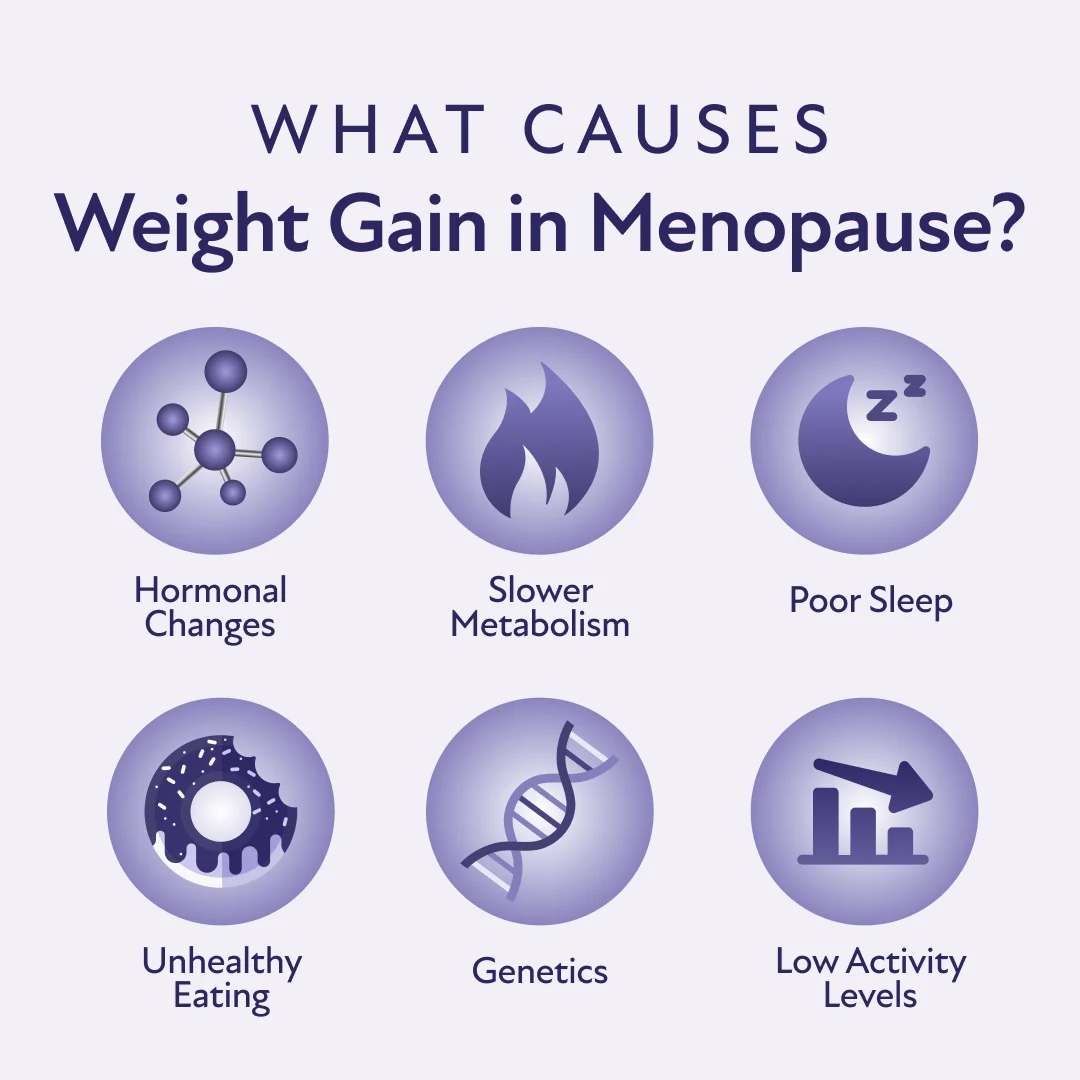
The body experiences shifts in weight and fat distribution during perimenopause and menopause because of a complex physiological process that gets triggered when estrogen levels change.

These hormonal changes create what can be thought of as a domino effect, impacting everything from metabolism and fat storage to blood sugar levels, muscle mass, and body composition. All of these factors can contribute to menopausal weight gain.

The Central Role of Estrogen in Metabolism
Estrogen influences nearly every part of metabolism and energy balance — scientifically referred to as energy homeostasis. Metabolism is the body’s process of breaking down food into energy. Energy homeostasis refers to the way in which the body regulates the amount of energy being consumed, used, and stored to make sure the organs have enough fuel to function properly.(2)
The following are different components of metabolic health that estrogen plays a role in.
Energy Expenditure
Estrogen is vital for maintaining energy homeostasis. Researchers from a 2022 scientific review published in Biomedicine and Pharmacotherapy describe how the body expends less energy when estrogen levels are lower.(2)
When the body uses less energy but caloric intake remains the same, it creates an energy imbalance. As a result, body mass progressively increases, with body fat accounting for approximately 60%–80% of this increase.(3)
Insulin Sensitivity
Studies have shown a link between estrogen deficiency and the accumulation of body fat.(2) Estrogen promotes insulin sensitivity, but excess body fat is associated with decreases in insulin sensitivity. Insulin is a hormone that helps keep blood sugar levels stable. Reduced insulin sensitivity from weight gain, as well as hormonal fluctuations during the menopause transition, can increase the risk of metabolic disorders like Type 2 diabetes.(4)
Appetite Regulation
Both insulin and estrogen play a role in appetite regulation by communicating to the body when it’s hungry and when it’s full. Estrogen helps suppress hunger signals, while insulin signals fullness after eating. Together, they help the body maintain a healthy calorie intake.
However, fluctuating estrogen levels and reduced insulin sensitivity during the menopause transition disrupt this signaling system. Hunger signals may feel more intense for menopausal women, encouraging increased food intake and potential weight gain.(5)
Changes in Body Composition: The Loss of Muscle Mass
As women age, their body composition naturally changes. According to a research article published in Current Opinion in Clinical Nutrition and Metabolic Care, women lose about 3%–8% of their muscle mass every decade beginning in their 30s.(6)
Estrogen helps maintain body composition. In addition to aging-related changes, declining hormone levels during the menopause transition can cause a decrease in lean body mass. The combination of muscle loss and increased fat mass that occurs during this phase of life can contribute to noticeable changes in body shape.
The Shift to Visceral Fat
Estrogen influences where the body stores fat, referred to as body fat distribution. As estrogen levels decrease, the accumulation of visceral fat (belly fat) increases. This type of fat surrounds the abdominal organs, leaving many women frustrated when the belly area doesn’t respond to traditional weight management strategies.
As hormone levels shift, an imbalance occurs between levels of estrogens and androgens, including testosterone. As a result, fat moves from the hips and thighs to the midsection. Before the menopause transition, visceral fat makes up about 5%–8% of women’s total body fat; during the transition, this number rises to 15%–20%.(1)
The Truth About HRT and Weight Gain
A common question many physicians hear from prospective patients is, “Does HRT cause weight gain?” It’s an understandable concern, as women who are already experiencing menopausal weight changes may be hesitant to try HRT for fear that treatment may add to these changes. However, studies show this isn’t typically the case.
Decades of research shows that HRT for menopausal symptoms is not generally considered a direct cause of significant weight gain. Rather, it may help reduce the increase in fat accumulation that occurs during the menopause transition.
Researchers from a 2020 study published in BioResearch Open Access found that postmenopausal women who received six months of HRT maintained their total body fat measures. In comparison, total body fat mass increased among the control group.(7)
Treatment was also found to prevent the shift in abdominal fat gain that’s common among postmenopausal women. While these findings did not translate to weight loss, the research suggests that hormone therapy may help limit increases in abdominal fat and changes in fat distribution.(7)
This is reinforced by the Menopause Society. As noted in their 2022 position statement, while hormone therapy does not promote weight loss, it may reduce the amount of weight gain often experienced during this phase of life — or at least has no additive effect.(8)
Some women may experience mild fluid retention or bloating as the body adjusts to the increase in hormones. However, these effects usually go away within a few weeks and are not the same as weight gain. According to the National Health Service (NHS), weight gain that occurs while using HRT is more likely due to aging-related changes rather than the treatment.(9)
Strategies to Manage Menopausal Weight Changes
Guidelines for menopausal weight management are often oversimplified to two familiar strategies: reduce caloric intake and increase physical activity. However, these traditional approaches fail to incorporate how hormones have changed the game, often working against women’s evolving physiology.
Consuming fewer calories and spending more time exercising typically don’t have the same effect on body weight as they may have in their 20s. This can leave some women in menopause feeling exhausted and discouraged when they don’t see their desired results.
Managing menopausal weight changes requires a more nuanced approach that aligns with women’s changing physiology. This includes clinically proven lifestyle strategies as well as potential medical treatments when appropriate.
Nutrition as a Metabolic Tool
Menopausal weight management shouldn’t focus on food restriction. Instead, it’s about prioritizing foods rich in key nutrients that support metabolic health and protect against menopause-related health risks — specifically, protein, fiber, and healthy fats.
Protein
Protein is essential for mitigating age-related muscle loss (sarcopenia). Research shows a link between more protein intake and increased lean muscle mass, strength, and vitality in older adults.(10)
In the U.S., the recommended daily protein intake is 0.8 g per 1 kg of body weight. However, this recommendation remains the same for both men and women across the lifespan.(10) Because older adults, particularly postmenopausal women, are at an increased risk for sarcopenia, some experts believe this amount may not be sufficient to maintain muscle health in older adulthood.
Researchers from a study published in the Journal of Nutrition, Health & Aging involving over 300 healthy postmenopausal women examined how measurements of body composition and physical performance differed between women who consumed less than the recommended daily intake of protein and those who met or exceeded the recommended amount.(10)
The findings showed that women who consumed lower amounts of protein had more body fat and a higher fat-to-lean mass ratio than women who ate greater amounts of protein. They also scored lower on tests of physical performance and muscle function in the upper and lower body.(10)
When coupled with regular strength-training exercise, high-quality evidence suggests that between 1.0 and 1.3 g of daily dietary protein per 1 kg of body weight may be a more optimal range for supporting muscle health in older adults.(11)
The type of protein also matters. Dietary sources of protein that are rich in leucine, a muscle-building amino acid, may be particularly beneficial. Higher amounts of leucine can be found in beef, ham, and chicken breast, as well as dairy products like asiago cheese, cow’s milk, and Greek yogurt. Fish, beans, and lentils are also great protein sources of leucine.(11)(12)It’s important that women talk with their doctor before making any big changes to their daily protein intake. How much protein a person needs is influenced by many factors, including age, height, health conditions, and activity levels.
Consuming excessive amounts of protein can potentially raise levels of LDL “bad” cholesterol and increase the risk of heart disease. A knowledgeable physician can make appropriate protein intake recommendations based on each patient’s individual health needs.
Fiber
The recommended intake for women ages 51 and older is 21 g of fiber daily.(13) However, adults in the U.S. are only getting an average of about 15 g each day, with older women known to eat particularly low amounts of fiber.(14)
Maintaining an adequate fiber intake may help with menopausal weight management. This is because the nutrient promotes feelings of fullness. It also improves the gut microbiome, which in turn enhances metabolism, insulin sensitivity, and insulin release. As a result, greater fiber intake may lower the risk of obesity and metabolic syndrome.(15)
There are two types of fiber: soluble and insoluble fiber. Sources of soluble fiber may be particularly beneficial for menopausal weight management as they have a direct, positive effect on blood sugar levels. Fruit, oats, barley, broccoli, and legumes are all rich sources of soluble fiber.(13)
Healthy Fats
Fats are categorized as saturated fats, trans fats, or unsaturated fats. It’s recommended to keep intake of saturated fats, such as those from fatty meats, to a minimum. The same is true for trans fats, which are commonly found in fried foods.
According to guidelines from the World Health Organization (WHO), it’s recommended that total fat intake make up no more than 30% of total energy intake, the majority of which is best obtained from unsaturated fats, or healthy fats.(16)Focusing on unsaturated fats is important for women navigating the menopause transition. This category includes omega-3 fatty acids, which are found in many types of fish, such as salmon, tuna, and trout. Omega-3s are also found in avocados, walnuts, and olive oil.
All of these foods are included in the Mediterranean diet, which is primarily made up of fiber-rich complex carbohydrates and unsaturated fats. Numerous studies have looked at the effects of the diet on menopausal women’s health.
Researchers from a 2024 systematic review found that maintaining a Mediterranean diet may modestly reduce body weight in postmenopausal women. While it does not appear to affect body mass index (BMI) and has mixed effects on body composition, these findings indicate that the largely plant-based diet may support menopausal weight management.(17)
Strategic Exercise to Rebuild Metabolism
Staying active is just as important for weight management as eating a healthy diet. While exercise supports women’s health overall, certain exercises are more effective at meeting the specific health needs of menopausal women.
The following are different types of exercise to focus on during the menopause transition.
Resistance Training
Resistance training, also known as weight training or strength training, is critical for metabolic health and is the most effective form of exercise for maintaining muscle mass. This is particularly important during the menopause transition when women experience an accelerated loss of lean muscle.
The body’s basal metabolic rate (BMR) — the amount of calories the body burns at rest — is primarily influenced by muscle mass. Having greater muscle mass means that the body burns more calories during inactivity. Research findings are mixed, but some studies suggest that consistent, long-term resistance training may boost BMR in postmenopausal women as a result of increases in lean muscle tissue.(18)The Physical Activity Guidelines for Americans state that two days of resistance training a week is needed to maintain optimal health for adults.(19) For women who may be new to weight training, simple exercises like mini-squats and calf-raises (while holding on to the back of a chair for support) can be a great place to start. It’s best to begin slowly when it comes to lifting weights. Water bottles or canned goods can be effective substitutes before moving on to handheld weights.(20)
Aerobic Exercise
It’s recommended that adults get 150 minutes of moderate-intensity aerobic exercise each week. However, it doesn't have to be done in just one day. Splitting up physical activity over the course of several days throughout the week can help exercise feel more manageable.(19)
Brisk walking, dancing, swimming, and cycling are all aerobic exercises that can help with weight management by significantly increasing energy output and strengthening large muscle groups in areas like the legs, arms, and back.(21)
Balance Exercises
Balance exercises can also support weight management efforts when paired with resistance training and aerobic exercise.
A 2017 study published in Clinical Interventions in Aging found that a combined exercise program involving resistance training and balance training resulted in increased strength in the arms and legs of older women with osteoporosis, a condition that postmenopausal women become more prone to as bone mineral density (BMD) progressively decreases.(22)
Activities such as yoga or Tai Chi can enhance balance as well as muscle strength.
How Stress and Poor Sleep Might Affect Body Weight
Poor-quality sleep and high stress levels can both have an effect on body weight. Career changes, children leaving home, or caring for aging parents are all stressful life events that can occur around the time of the menopause transition. Stress has been linked with increased cortisol levels, also known as the “stress hormone.” Cortisol can promote insulin resistance as well as visceral fat gain around the midsection.(23)
Menopausal symptoms such as night sweats or heightened anxiety can cause significant sleep disruptions. When the body doesn’t get enough sleep, it causes spikes and subsequent dips in blood sugar levels.(24) These fluctuations can increase food cravings the next day, potentially contributing to menopausal weight gain.
Medical Treatments to Support Weight Management Efforts
Body weight is complex and influenced by many factors. What’s considered a healthy weight varies for each individual. Therefore, the type of medical treatment most appropriate for weight management will depend on the cause.
Hormone Replacement Therapy (HRT)
HRT, more accurately termed menopause hormone therapy (MHT), may help reduce fat gain related to hormonal changes. The treatment involves estrogen therapy for menopausal symptom relief and progesterone treatment for uterine protection.
Because estrogen plays a pivotal role in maintaining metabolic health, replenishing declining hormone levels may support weight maintenance and weight management efforts by helping reduce abdominal fat gain and increase insulin sensitivity.(25) Although MHT may offer complementary benefits to support lifestyle interventions, it’s important to note that it’s not a weight loss medication.
The effectiveness of MHT may vary based on the dose, duration of therapy, when treatment is started, and the route of administration. A physician will consider all of these factors when developing a personalized treatment plan unique to each patient.
Prescription Weight Management Medications
Individuals diagnosed with overweight or obesity who develop related health issues may be prescribed weight management medication. Some drugs work by suppressing appetite, while others reduce fat absorption from foods.
The following medications are currently approved by the U.S. Food and Drug Administration (FDA) for long-term use in treating overweight and obesity:(26)
Semaglutide
Orlistat
Phentermine-topiramate
Naltrexone-bupropion
Liraglutide
Tirzepatide
Setmelanotide (prescribed only for those with specific genetic disorders)
These medications are prescribed only after careful evaluation of the potential benefits and risks of treatment.
Discover how HRT can support your health goals.
Having a deep clinical understanding of what drives weight changes during the menopause transition can help women confidently take control of their health.
While weight management can be challenging during this phase of life, taking a holistic approach that incorporates intentional dietary changes, targeted exercise, and other menopause-specific lifestyle modifications is often more effective than traditional weight management strategies.
If you’ve implemented lifestyle changes but are still struggling with menopausal weight management, you may benefit from complementary support with MHT to address the hormonal root cause. Interested in learning more about how hormone therapy can support your personal health goals? Explore treatment options or start your consultation with a Winona doctor today.
Frequently Asked Questions (FAQs) About Menopausal Weight Gain
Menopausal weight gain can start as early as 10 years before menopause, a period known as perimenopause. Most women enter perimenopause in their mid-40s. During this time, hormonal and other physiological changes start to take effect, which can lead to weight gain.
Menopausal weight gain can be managed with dietary changes, targeted exercise, stress-reduction strategies, and healthy sleep habits. Hormone replacement therapy (HRT) can support weight management efforts by addressing hormonal imbalances that contribute to menopausal weight gain.
Weight management can be particularly challenging during menopause due to physiological changes that cause a loss of muscle mass, reduced insulin sensitivity, increased body fat, and shifts in fat distribution to the belly area.
There are no supplements that have been definitively proven to help with weight management. Certain supplements, like green tea extract, are often claimed to help with managing weight gain during menopause.
However, scientific evidence is inconclusive. It’s best to consult with a physician before trying any new supplements, which can come with potential side effects and health risks.
Resistance training is one of the most important types of exercise to focus on during the menopause transition. The loss of muscle mass that occurs as a result of aging and menopausal hormone fluctuations can lead to changes in body composition, slower metabolism, and potential weight gain. Strength-building exercises help maintain lean muscle mass, a key component of women’s metabolic health.
Because weight gain during the menopause transition can have different underlying causes, the best medication varies for each patient. HRT can help treat hormonal imbalances that contribute to menopausal weight gain, while prescription weight management drugs are more appropriate for people experiencing health issues related to overweight or obesity.
How long menopausal weight gain lasts depends on many factors, including lifestyle, genetics, and medication use. A 2019 study found that rates of fat gain and muscle loss began to stabilize about two years after the final menstrual period. This means that for some women, weight gain may start to level off during their postmenopausal years. However, aging-related changes can contribute to weight gain that persists later in life.
This article is for informational purposes only and does not constitute medical advice. The information contained herein is not a substitute for professional medical advice. Always talk to your doctor about the risks and benefits of any treatment.
References
Estrogen as a key regulator of energy homeostasis and metabolic health
Energy Metabolism Changes and Dysregulated Lipid Metabolism in Postmenopausal Women
Roles of estrogens, estrogen-like compounds, and endocrine disruptors in adipocytes
Influence of Menopausal Hormone Therapy on Body Composition and Metabolic Parameters
The 2022 hormone therapy position statement of The North American Menopause Society
Protein Requirements and Recommendations for Older People: A Review
The Importance of Nutrition in Menopause and Perimenopause—A Review
Systematic review of mediterranean diet interventions in menopausal women
Resistance Training Predicts Six-Year Body Composition Change in Postmenopausal Women
Effects of sleep intervention on glucose control: A narrative review of clinical evidence
Weight Management Module for Perimenopausal Women: A Practical Guide for Gynecologists