Hormone therapy (HT) is used when headaches, including migraines, are linked to fluctuating estrogen levels. Physicians use HT to stabilize estrogen and modulate brain pain pathways.
Transdermal options (patches, gels, creams) maintain steadier hormone levels and reduce liver metabolism fluctuations compared with oral therapy.
Doctors assess headache type, frequency, menopause stage, migraine history, comorbidities, and risk factors before selecting therapy.
Individual response varies; onset and side effects guide adjustments.
Clinical monitoring tracks hormone levels and symptom changes and helps distinguish menopause-related headaches from other conditions.
The Connection Between Menopause Headaches and Migraines
Written by: Hailey Kean
Hailey KeanMedically Reviewed by: Dr. Saranne Perman, MD
Dr. Saranne Perman, MD Last Updated: May 16, 2026 Approx. 5 Min Read |Published on: August 14, 2024
Article Content
The Hormonal Trigger: Why Perimenopause Can Worsen Headaches
How Headaches Evolve Through the Menopausal Transition
Managing Menopausal Headaches the Correct Way
The Bottom Line:
Many women describe this stage of life as a time when headaches seem to “come out of nowhere,” feel different than before, or appear almost daily. In a study of more than 3,600 women, those in perimenopause and menopause were 50%–60% more likely to report frequent headaches, defined as 10 or more days each month. Some wake up with a headache, while others find their migraines are worse than ever. These symptoms can be distressing, especially when they interfere with work, sleep, and daily routines.(1)
This article goes over why hormonal changes during perimenopause and menopause can trigger headaches, what different types look like, and how symptoms shift throughout the transition. It also outlines the most effective strategies for relief, with a focus on stabilizing hormones — a foundational approach supported by current research.
The Hormonal Trigger: Why Perimenopause Can Worsen Headaches
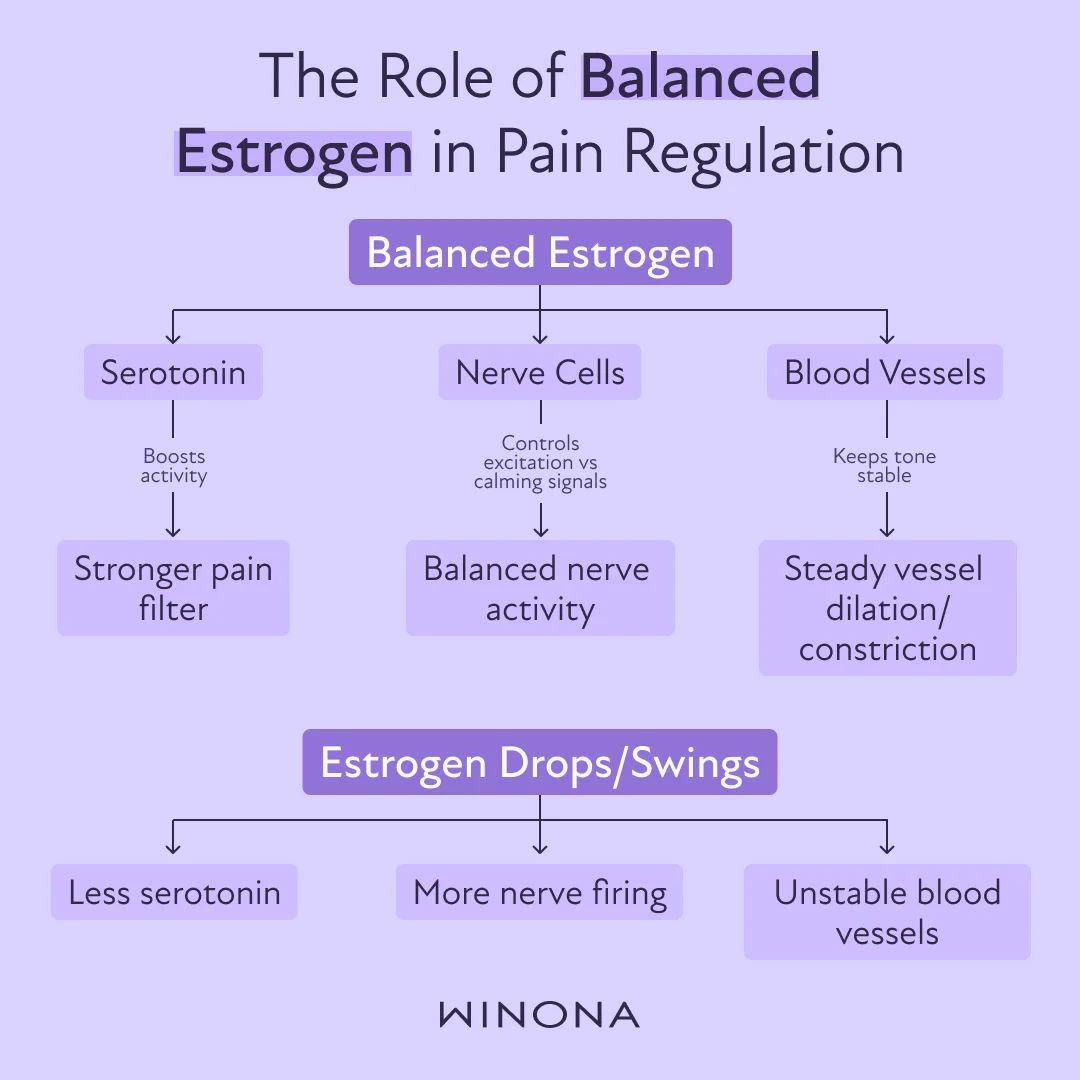
The Role of Estrogen in Pain Regulation
Estrogen plays a central role in how the brain manages pain by affecting several major neurotransmitter networks. First, it boosts serotonin activity, which helps control pain signals and keeps blood vessel tone stable — two important factors in preventing headaches and migraines.(2)(3)(4)
Estrogen also modulates norepinephrine and dopamine, both of which influence how strongly the brain responds to discomfort. It even regulates glutamate and GABA — the brain’s main “exciting and calming” chemical systems — which helps control nerve sensitivity.(2)(3)(4)
When a person enters perimenopause, estrogen levels begin to fluctuate — sometimes falling sharply, sometimes rising — and often become unpredictable.(3)(5)
These fluctuations disturb the balance in several ways:
Serotonin activity can drop, reducing the brain’s ability to dampen pain signals and regulate blood vessel tone.
The balance between excitatory and inhibitory neurotransmitter systems (glutamate vs. GABA) can shift, increasing nerve sensitivity.
Blood vessels may react more unpredictably — dilating or constricting in sporadic ways — which can provoke migraine processes.
The combination of these effects — weaker pain suppression, more reactive nerves, and unstable blood vessel tone — makes the brain more prone to intense headaches or migraines. Because these changes stem from hormonal shifts, nothing neurologically “new” has to occur in the brain; the existing pain-regulating systems just stop working as smoothly.
Migraine vs. Tension Headache: Identifying the Symptoms
Migraines
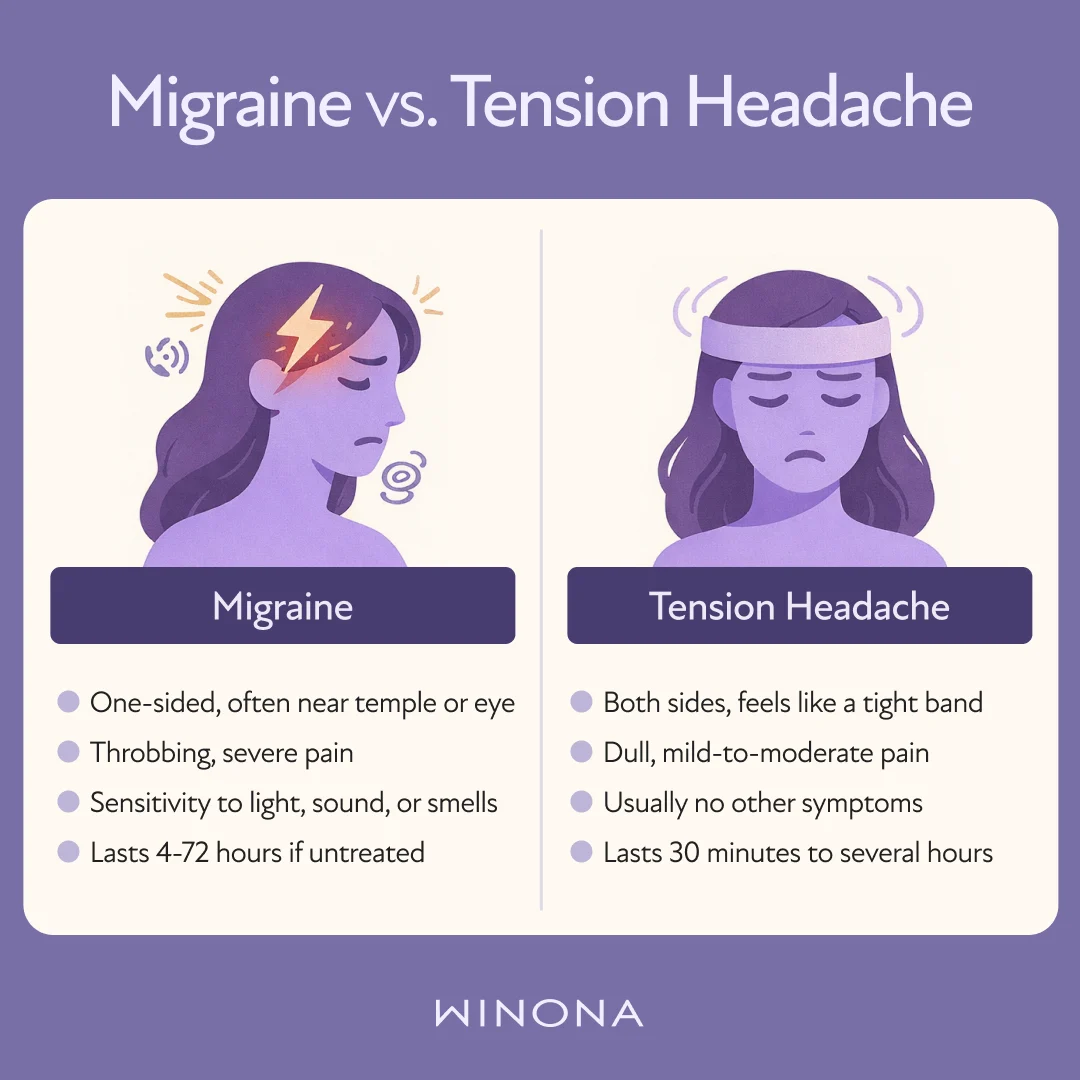
Migraines commonly cause throbbing or pulsing pain, often focused on one side of the head, though both sides can be involved. The pain can build gradually and often becomes moderate to severe. It’s frequently worsened by routine movement, like climbing stairs or bending forward.(6)
Nausea, sensitivity to light or sound, and visual changes like flashing lights, zigzags, or blurry spots may accompany the pain. Many individuals also notice early warning signs hours beforehand, including yawning, neck discomfort, fatigue, or irritability. These features reflect how migraines involve shifts in brain excitability, sensory processing, and blood vessel function, which together amplify the experience of pain.(6)(7)
Tension Headaches
Tension headaches create a steady, tight, band-like pressure that typically spreads across both sides of the head. The discomfort is usually mild to moderate and tends to stay constant rather than pulsing. Movement does not usually make tension headaches worse, and nausea or strong sensitivity to light and sound is uncommon.(6)
These headaches are closely linked with muscle tension in the neck and scalp and with changes in how the nervous system processes pain. This combination often leads to a “tightening” or “squeezing” quality rather than the sharper, pounding sensation seen in migraines. Tension headaches are also shorter in duration, often lasting from 30 minutes to 24 hours, compared with the longer course of a migraine.(6)
How Headaches Evolve Through the Menopausal Transition
Perimenopause: The Period of Peak Disruption
Perimenopause is when headaches most often worsen. This stage can begin in the mid-30s or late 30s to early 40s and continue for several years. During this time, estrogen can shift dramatically from high to low, sometimes within days. These unpredictable patterns increase the likelihood of headaches, including hormonal migraines.(3)
Women with a history of menstrual migraines often notice the most significant changes. Some experience headaches every day or describe a new type of discomfort that feels different from anything before.(3)
Postmenopause: A Potential for Lasting Relief
The Menopause Society notes that after menopause, estrogen reaches a new stable baseline. For many women, this steadiness leads to significant improvement in migraine frequency and severity. However, studies show that some may experience lingering tension-type headaches or occasional hormonal headaches, but the overall pattern often becomes more predictable and less intense.(3)(7)
Managing Menopausal Headaches the Correct Way
Stabilizing Hormones with Hormone Therapy (HT)
Hormone therapy (HT), also known as hormone replacement therapy (HRT), is an effective way to treat menopause-related headaches, especially for women with migraines linked to fluctuating estrogen levels. Stabilizing estrogen reduces shifts in the brain’s pain pathways and can lead to fewer and less intense attacks.(3)
Transdermal estrogen — delivered through patches, gels, or creams — is recommended for many migraine patients because it bypasses processing by the liver and keeps estrogen levels steadier than oral options. This form of delivery helps prevent the rapid hormonal fluctuations that can trigger headaches.
Medical Treatments for Acute and Preventive Care
Standard medical therapies can also support headache management in the short term. NSAIDs can relieve milder headaches, while triptans treat acute migraine attacks by targeting pain pathways. In some cases, preventive medications may help reduce the number of headache days, but these medications do not target the underlying hormonal issue.(3)
Lifestyle and Home Strategies for Added Support
Several everyday practices and habits can also support headache relief. They include the following:(8)(9)
Maintaining regular sleep patterns
Tracking personal triggers
Drinking enough water
Eating well-balanced and consistent meals
Limiting alcohol or caffeine if they worsen symptoms
Engaging in daily exercise and maintaining a healthy weight
Using stress-reduction practices like meditation and yoga
Trying out alternative therapies like massage therapy or acupuncture
When to See a Doctor About Headaches
Immediate medical care is recommended if the following symptoms or issues are present:(10)
Sudden, severe headaches
A headache with fever, stiff neck, confusion, or rash
Headaches that get worse despite treatment
A significant change in usual headache pattern
A first-time severe headache in midlife
Neurological symptoms like facial or body numbness, weakness, or difficulty speaking
Any new or changing headache pattern should be evaluated promptly by a specialized physician to rule out other causes and guide treatment. Even if a sudden or severe headache ends up being “just a headache,” it’s best to have it professionally evaluated.
Taking Control of Menopause Headaches
Managing headaches during the menopausal transition often requires a combination of hormone stabilization, medical treatments, and daily strategies. Relief is possible with the right plan. A comprehensive evaluation can help identify the type of headache, possible triggers, and the most effective options for relief.
Experiencing menopausal headaches or migraines? Discover if HRT is right for you.
If the menopause transition has brought new or worsening headaches, there’s a path forward. Take Winona’s brief menopause quiz to learn whether hormone replacement therapy could be the right treatment. A personalized plan can help restore stability and reduce symptoms at the source. Start now and take the first step toward feeling better.
Frequently Asked Questions (FAQs) About Menopause Headaches and Migraines
Menopause headaches can take different forms depending on the type. Migraines often present as throbbing pain on one side of the head, along with nausea and sensitivity to light or sound. Tension headaches tend to feel like a steady, tight pressure across both sides of the head, with a band-like sensation around the forehead.
A hormonal pattern becomes more likely when headaches follow a predictable cycle. Many women notice headaches that start in the mid-30s or late 30s to early 40s as hormones begin to shift. When headaches appear around the same time each month or begin for the first time during the perimenopause years, fluctuating estrogen is often involved.
Hormone therapy (HT or HRT) can help many women by bringing greater stability to estrogen levels. Because rapid changes in estrogen are a common trigger for migraines, smoothing out these fluctuations can reduce both frequency and intensity.
The duration varies from person to person. Some experience short episodes linked to monthly hormonal fluctuations, while others notice longer migraine cycles during perimenopause. For many, these headaches ease after menopause, when estrogen levels remain consistently low.
Certain foods are known triggers, although sensitivity differs widely. Alcohol, caffeine, and aged cheeses are common examples. Keeping a simple headache diary can help identify patterns between meals and symptoms, which supports more personalized management.
This article is for informational purposes only and does not constitute medical advice. The information contained herein is not a substitute for professional medical advice. Always talk to your doctor about the risks and benefits of any treatment.
References
Women with migraines experience more headaches during the menopausal transition
Migraine in women: the role of hormones and their impact on vascular diseases
Acute and Preventive Management of Migraine during Menstruation and Menopause
An Association of Serotonin with Pain Disorders and Its Modulation by Estrogens
The complex relationship between estrogen and migraines: a scoping review
Debate: differences and similarities between tension-type headache and migraine
Migraine management: Non-pharmacological points for patients and health care professionals