Anxiety is a common mental health symptom of perimenopause and menopause, driven by fluctuating estrogen and progesterone levels.
These hormonal changes can disrupt the body’s stress-response system, raising cortisol levels and triggering feelings of panic, dread, or constant tension.
Relief is possible through lifestyle strategies and treatments, like HRT, that help restore hormonal balance and calm the nervous system.
Menopause & Anxiety: Understanding the Shift in Mood and Finding Relief
Written by: Hailey Kean
Hailey KeanMedically Reviewed by: Dr. Saranne Perman, MD
Dr. Saranne Perman, MD Last Updated: May 05, 2026 Approx. 7 Min Read |Published on: August 16, 2024
Article Content
The Hormonal Link: Why Menopause Can Trigger AnxietyEstrogen’s Role in Mood RegulationProgesterone’s Calming Effect
The Bottom Line:
Many women describe menopause anxiety as a “constant sense of dread, heart racing out of nowhere” or “feeling on edge without explanation.” For some, panic attacks appear suddenly — even in calm situations. These feelings can be unsettling and confusing, especially when they seem to come out of nowhere.
Anxiety during menopause is common, affecting as many as one in four women during the transition. It’s not a reflection of personal weakness or emotional instability. Rather, it’s a physical response to hormonal changes that directly influence the brain and body’s stress systems.(1)
The following article explains why menopause can trigger anxiety and outlines practical, evidence-based ways to find calm again.

The Hormonal Link: Why Menopause Can Trigger Anxiety
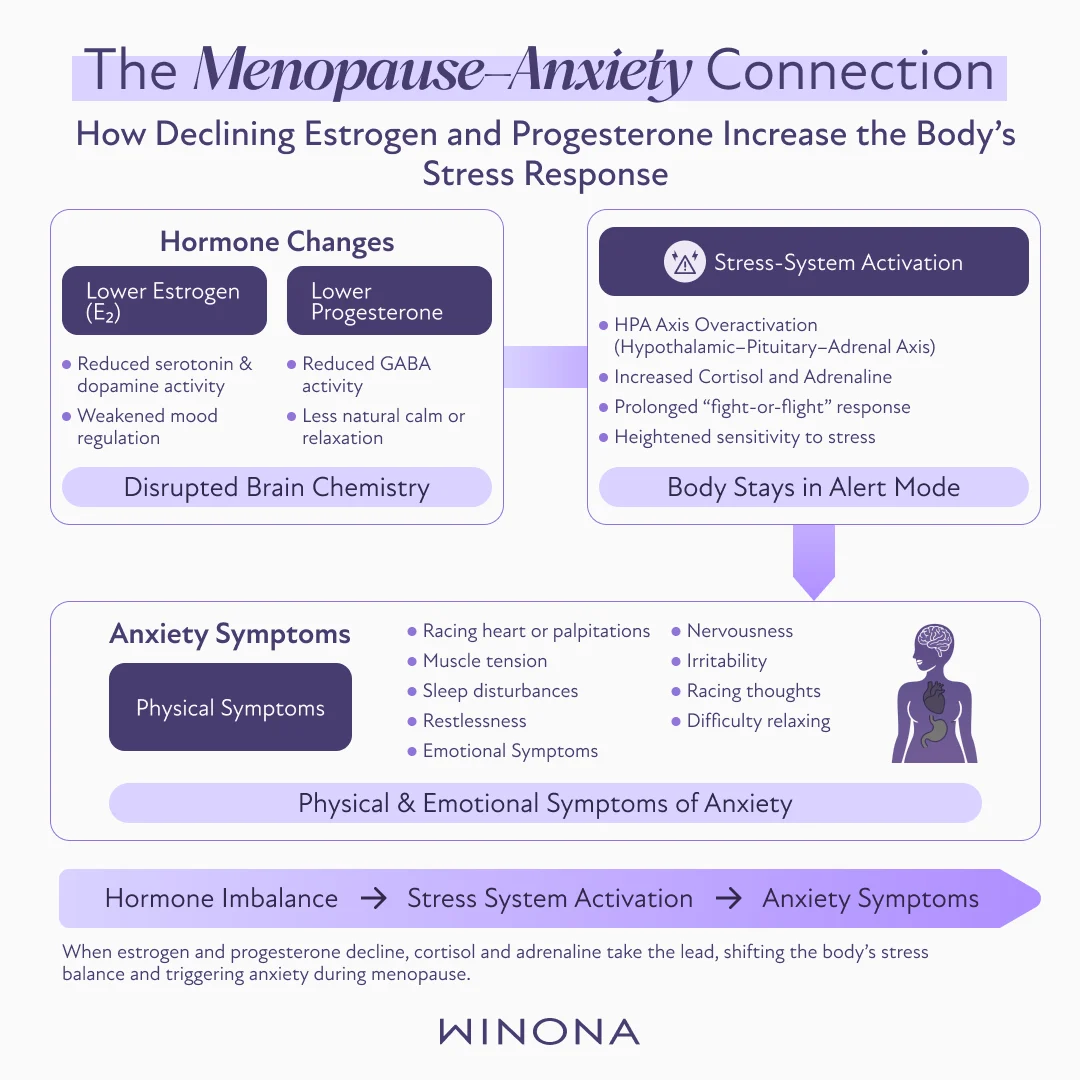
Anxiety during menopause isn’t “just stress.” It has biological roots tied to the hormones that help regulate mood, energy, and the body’s stress response. When estrogen and progesterone fluctuate or decline, they affect how the brain processes signals linked to calm and alertness.(1)(2)
Estrogen’s Role in Mood Regulation
Estrogen supports key neurotransmitters that stabilize mood — especially serotonin and dopamine. These chemicals help regulate emotional balance, motivation, and a general sense of well-being.(2)(3)
During perimenopause, estrogen levels rise and fall unpredictably. Each drop can reduce serotonin production and receptor activity, leaving the brain more vulnerable to anxiety and irritability. Studies show that declining estradiol (the most active form of estrogen) affects the hypothalamic-pituitary-adrenal (HPA) axis, also known as the body’s main stress-response system.(2)(3)
When this axis becomes overactive, the body releases higher levels of cortisol and adrenaline, the “fight or flight” hormones. Even small stressors can suddenly feel intense, causing that jittery, on-edge feeling.(2)
Progesterone’s Calming Effect
Progesterone works alongside estrogen to maintain emotional balance. It supports the activity of gamma-aminobutyric acid (GABA), a neurotransmitter that regulates overactive brain signals and promotes relaxation.(2)(4)
When progesterone levels drop during the onset of menopause, this calming influence weakens. Women may notice more restlessness, difficulty sleeping, or anxious thoughts that surface at night. Low progesterone can make it harder to “wind down,” contributing to that wired-but-tired feeling that many experience.(4)
The Cortisol Connection
Because the body’s stress system depends on balanced hormones, declining estrogen and progesterone shift this balance, giving cortisol a stronger influence.(2)(5)
That means the body may stay in “alert” mode longer, even when there’s no immediate threat. Over time, this constant activation can cause:
Palpitations and racing thoughts
Difficulty relaxing after stressful events
Sleep disturbances
Heightened sensitivity to caffeine or stimulants
In short, hormonal changes can leave the nervous system in a prolonged state of vigilance. This link helps explain why anxiety can appear so suddenly and feel so physical.
A Full Spectrum of Solutions for Menopause Anxiety
While menopause anxiety can feel unsettling, it’s also manageable. Evidence-based treatments — from hormone therapy to mind-body strategies — can help restore calm and balance.
Hormone Replacement Therapy (HRT): Addressing the Root Cause
Since hormonal shifts are a key factor of menopause anxiety, stabilizing hormone levels often brings relief. Research from the Department of Psychology at the University of Southern California found that estrogen therapy can positively affect mood and stress responses by balancing out cortisol activity through the HPA axis.(6)
Many women find that HRT not only reduces physical symptoms like hot flashes and night sweats but also supports emotional steadiness, sleep quality, and overall mental health. These improvements often lessen anxiety indirectly by calming the body’s stress response.
Depending on individual needs, therapy may include the following:
Systemic estrogen therapy (oral, transdermal patch, or cream) for overall symptom relief
Combination therapy (estrogen plus progesterone) for those with an intact uterus
Localized vaginal estrogen for urogenital symptoms that can contribute to emotional stress
It’s important to work with a menopause-trained physician to personalize treatment and monitor results.
Lifestyle Strategies for Daily Calm
Small daily changes can strengthen the body’s resilience against stress. These strategies help balance hormones naturally and support overall emotional well-being.
Balanced Nutrition
A well-balanced diet can support both physical and emotional well-being. Getting an adequate amount of the following nutrients can be beneficial:(7)(8)
Leafy greens and folate-rich foods support serotonin production.
Omega-3s from salmon, flaxseed, and walnuts have mild but proven anti-anxiety effects.
Complex carbohydrates and fiber help stabilize blood sugar — important for mood regulation.
Eating regularly can also help keep energy and mood stable. Focusing on simple, whole foods and balanced snacks like yogurt or nuts can support steady energy throughout the day.
Consistent Movement
Exercise triggers endorphin release and helps regulate cortisol. Aiming for the following is recommended:(9)
150 minutes of moderate activity (e.g., brisk walking, cycling) per week
Two strength-training sessions for muscle and metabolic support
Where that movement happens may also matter. Time spent in natural settings — like parks, trails, or green spaces — has been shown to reduce anxiety more effectively than similar activity in urban environments. The combination of physical movement and reduced sensory stimulation can help quiet the body’s stress response and promote a greater sense of calm.(17)
Sleep Hygiene
Quality rest is crucial for emotional stability. Poor sleep can make anxiety worse. Ongoing fatigue can also feel similar to anxiety, which can make symptoms harder to recognize. Turning the following into a routine can help improve sleep:
Keeping a consistent bedtime and sleep schedule
Limiting screen exposure before bed
Maintaining a cool, dark, and quiet environment
Using relaxation techniques such as progressive muscle relaxation or gentle stretching
Limiting Stimulants
Caffeine, alcohol, and nicotine can all affect the body’s stress response and worsen vasomotor symptoms like hot flashes. They may make the body feel good at first, but over time they make anxiety worse by disrupting the brain chemicals that support mood and sleep. As their effects wear off, the body reacts with restlessness, poor sleep, and increased sensitivity to stress. Avoiding them or cutting back can help support a more stable mood and a calmer baseline.(5)
Mind-Body Techniques to Soothe the Nervous System
The mind and body communicate constantly through hormones, neurotransmitters, and nerve pathways. Calming the nervous system can directly ease anxiety.
Mindfulness and Meditation
Research shows that mindfulness-based stress reduction (MBSR) can reduce anxiety and improve emotional regulation in midlife women. Setting aside even 10 minutes a day for guided breathing or meditation can help re-train the brain’s stress response.(1)
Yoga
Yoga combines movement with deep breathing, triggering the parasympathetic nervous system. This lowers cortisol levels and promotes GABA activity. Regular practice has been shown to reduce anxiety and improve sleep quality during menopause.(10)(11)
Breathing Techniques
Simple rhythmic breathing can help reset the body’s stress response by activating the parasympathetic nervous system — the system responsible for relaxation. Different techniques can be used depending on what feels most natural:(1)(11)(12)
4-7-8 breathing: Inhale for 4 seconds, hold for 7, exhale for 8
Box breathing: Inhale, hold, exhale, and hold again — each for 4 counts
Abdominal breathing: Focus on the belly rising with each inhale and falling with each exhale
Alternate nostril breathing: Inhale through one nostril and exhale through the other in a slow, alternating pattern
Even a few minutes of controlled breathing can help lower heart rate, reduce tension, and signal to the body that it is safe to relax.(11)(12)
The Role of Therapy and Social Support
Emotional support and professional therapy are valuable components of menopause anxiety treatment.
Cognitive Behavioral Therapy (CBT)
CBT helps identify anxious thought patterns and reframe them into more balanced perspectives. Studies show CBT reduces both emotional and physical symptoms of menopause-related anxiety.(4)

Working with a therapist who understands both anxiety and menopause can support changes in thought patterns and stress responses. Finding a therapist you feel comfortable with can play a meaningful role in reducing menopause-related anxiety by addressing how the brain processes stress.

Dr. Saranne Perman
MD
Social Connection
Regular contact with friends, family, or support groups boosts oxytocin, a hormone linked to bonding and stress reduction. Simple actions like hugging, holding hands, or spending time with others can naturally elevate oxytocin levels and promote calm — this can be as simple as meeting up with a friend regularly, joining a group activity, or volunteering.(5)(13)
Tracking and Self-Awareness
Keeping a symptom diary can help identify triggers (such as poor sleep or caffeine intake) and patterns linked to anxiety episodes. Being aware of these triggers allows women to make adjustments and discuss patterns with their healthcare providers.
Supportive Supplements
Some women find gentle relief from certain natural supplements, though evidence varies and quality control matters. Always consult a physician before starting new supplements, especially if taking other medications or treatments.
Commonly studied options include the following:(14)(15)(16)
Ashwagandha: This adaptogenic herb helps reduce cortisol levels and improve stress resilience.
L-theanine: This amino acid found in green tea helps promote calm without drowsiness.
Magnesium: It’s an essential mineral involved in nerve function and stress regulation.
Chamomile Extract: Its mildly sedative and anti-inflammatory properties make it beneficial for relaxation. However, research is lacking.
Black Cohosh: It’s sometimes used to relieve hot flashes and related anxiety symptoms. However, research is lacking.
It’s crucial to remember that supplements work best when combined with lifestyle changes and medical support rather than as stand-alone solutions.
When to Seek Professional Help
Some anxiety is a natural part of life, but persistent or worsening symptoms deserve medical attention.
It may be time to speak with a specialist if anxiety does the following:
Interferes with work, relationships, or sleep
Triggers panic attacks or physical symptoms like chest tightness or dizziness
Persists for months without relief from self-care measures
Coincides with symptoms of low mood or depression
A menopause-trained doctor can help determine whether symptoms are primarily hormonal, psychological, or both — and guide appropriate treatment options.
Finding Calm and Confidence Again
Anxiety during menopause can be disorienting, but it’s not permanent, and it’s not a sign of weakness. These changes are rooted in real, measurable shifts in hormone activity and brain chemistry.
The good news is that once the cause is understood, effective relief is possible. Hormone therapy, lifestyle adjustments, and mind-body practices can all work together to restore emotional balance.
Reclaiming calm during menopause starts with understanding what’s happening inside the body and knowing that there are proven ways to feel steady again.
Experiencing menopausal anxiety? Discover if HRT is right for you.
Hormone changes can affect more than just mood — they influence sleep, focus, and energy, too. If you’ve entered the menopause transition and are struggling with anxiety, you don’t have to suffer in silence. Take Winona’s short menopause quiz to see if HRT could help restore hormonal balance and ease anxiety.
Menopause & Anxiety: Frequently Asked Questions (FAQs)
Yes. Studies show that many women experience increased anxiety during perimenopause and menopause. This happens because fluctuating estrogen and progesterone levels affect neurotransmitters that regulate mood, like serotonin and GABA. These hormonal changes can heighten the body’s stress response, leading to tension, worry, or panic that seems to appear out of nowhere. It’s a very common and recognized part of the menopause transition.
Menopause-related anxiety often begins or intensifies during perimenopause and tends to fluctuate alongside other symptoms like hot flashes, night sweats, and sleep problems. In contrast, generalized anxiety disorder (GAD) is a longer-term condition characterized by persistent, excessive worry not directly linked to hormonal changes. If anxiety feels constant, severe, or interferes with daily life, a doctor can help distinguish between the two and recommend appropriate care.
Yes. HRT can be an effective treatment for menopause-related anxiety because it targets the underlying hormonal imbalance. Restoring estrogen and progesterone levels helps stabilize neurotransmitters involved in mood regulation and reduces cortisol activity in the body’s stress-response system. Many women notice improved emotional balance and fewer anxiety symptoms after starting HRT under medical supervision.
The duration of menopause-related anxiety varies for each woman. It’s often most intense during perimenopause when hormones fluctuate the most. It may then lessen after menopause as hormone levels stabilize. However, anxiety does not have to be endured until it passes on its own. Effective treatments, from lifestyle changes to HRT, can provide relief at any stage of the transition.
This article is for informational purposes only and does not constitute medical advice. The information contained herein is not a substitute for professional medical advice. Always talk to your doctor about the risks and benefits of any treatment.
References
Anxiety disorders and GABA neurotransmission: a disturbance of modulation
Estradiol Therapy After Menopause Mitigates Effects of Stress on Cortisol and Working Memory
Breath of Life: The Respiratory Vagal Stimulation Model of Contemplative Activity
A Systematic Review and Meta-Analysis of Nature Walk as an Intervention for Anxiety and Depression