Menopausal acne may emerge for the first time, persist, or return during perimenopause or postmenopause. It may show up as pimples, nodules, or cysts on the face, chest, or back.
Menopausal acne is considered a subtype of adult female acne, but breakouts during this phase of life aren’t always caused by menopause alone.
Hormonal fluctuations can affect oil production, skin hydration, inflammation, and skin sensitivity, all of which may increase the likelihood of breakouts during menopause.
Increased stress levels or excessive sweating from vasomotor symptoms can also contribute to the development or recurrence of menopausal acne.
HRT is not a first-line treatment for adult female acne, but it may be considered if women are experiencing breakouts alongside other bothersome menopausal symptoms.
Acne that becomes severe or does not improve with over-the-counter treatments should be evaluated by a doctor, particularly if accompanied by hormone-related symptoms such as irregular periods or excess body or facial hair growth.
Menopausal Acne: Why It Happens and When to Seek Care
 Erin Marie McCluskey
 Dr. Cathleen M. Brown, DO
Article Content
The Bottom Line:
Most people associate acne with the hormonal changes of puberty, but natural shifts in estrogen and androgen levels that take place during menopause can also make women more prone to breakouts during this phase of life.
Menopausal acne can lead to increased skin sensitivity, scarring, or changes in skin pigmentation, which may cause some women to feel self-conscious about their appearance. Understanding why menopausal acne occurs and knowing when to seek a doctor’s guidance can help women achieve clear, healthy skin and enhance their quality of life.
What is menopausal acne?
Menopausal acne refers to acne that develops, persists, or recurs during the menopause transition. The appearance of breakouts may range from small pimples to deeper cystic acne in some women. Breakouts commonly appear on the chin, jawline, around the mouth, or on the chest or back.
Menopausal acne is a subtype of adult female acne (AFA). While AFA is defined as acne that occurs any time after the age of 25, menopausal acne is acne that develops during perimenopause or around the time of menopause.(1)Cases of menopausal acne fall into one of three categories:(1)(2)
New-onset: Also referred to as late-onset or adult-onset acne, these breakouts develop for the first time after age 25.
Persistent: Breakouts occur during adolescence and continue into adulthood.
Recurrent: Breakouts start in adolescence, clear up, and then reappear in adulthood.
How is menopausal acne different from adult acne?
The difference between menopausal acne and adult acne is what drives breakouts. Adult acne is often influenced by the following factors:(1)(3)
Oil production
Genetics
Medication use
Sleep
Diet
Physical activity levels
Health conditions
Irritating skincare products
While many of these factors can also contribute to menopausal acne, the key difference is that menopausal acne is mainly associated with menopause-specific changes in estrogen and androgen levels.(1)
During this phase of life, hormone-driven changes in oil production, skin hydration, inflammation, and bacterial balance cause the skin to become dry, more sensitive, slower to heal, and less tolerant of treatment products that may have been effective earlier in life.(1) It’s these physiological changes that can increase the likelihood of breakouts during the menopause transition.
When does menopausal acne occur?
Menopausal acne is typically seen in women aged 45 and older and often occurs during the perimenopause or postmenopause stage.(1)
This means that some women may notice breakouts in the years leading up to menopause, while others may experience acne in the years after they’ve had their final period. However, timing can vary between women based on skin sensitivity, stress levels, and other lifestyle factors.
What causes menopausal acne?
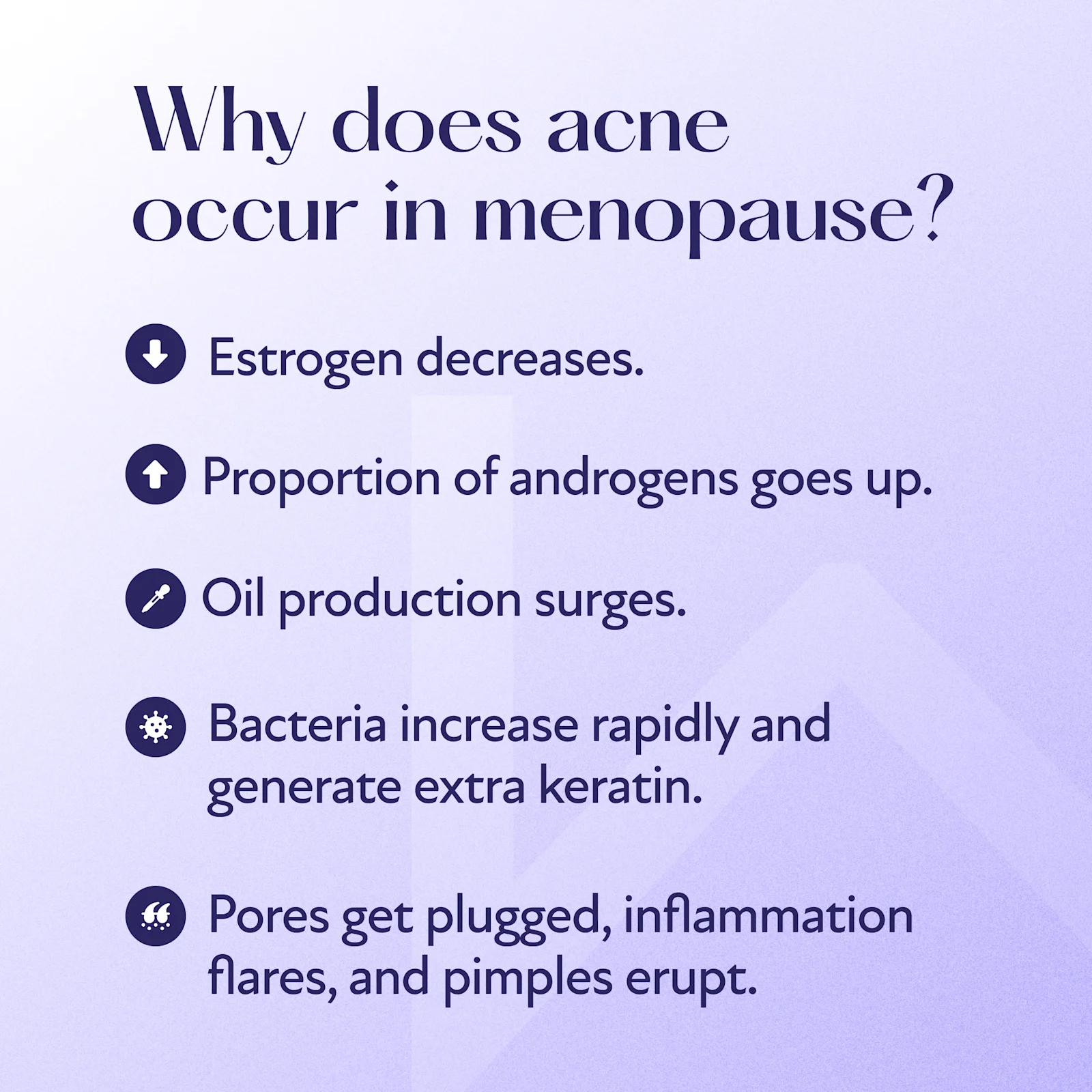
While more research is needed to fully understand the underlying mechanisms of menopausal acne, hormonal changes are believed to be the main contributing factor, specifically fluctuations in estrogen and androgen levels.
Estrogen Decline and Skin Changes
Estrogen plays an important role in maintaining the skin’s strength, hydration, and elasticity. As estrogen levels decline during menopause, collagen levels decrease, and the skin’s elastic fibers (elastin) begin to degrade.(4)
The skin barrier, the outermost layer that protects the skin from water loss and environmental contaminants, also starts to break down. Without this protection, the skin isn’t able to retain water as effectively, which impacts hydration and may trigger acne-related inflammation.(1) Together, all of these hormonal skin changes may contribute to menopausal acne.
Relative Androgen Activity and Oil Production
Both estrogen and androgen levels progressively decline during the menopause transition, but the drop in estrogen occurs much faster than the decrease in androgens. This results in a relative increase in androgen levels compared to estrogen levels.(1)
This difference in hormone levels produces a relative increase in androgen activity, which can increase skin oil (sebum) production and stimulate the growth of sebaceous glands.(1)(4) These effects can contribute to clogged pores, particularly on the face, making some women more prone to breakouts during menopause.
Other Factors That Can Contribute to Menopausal Acne
Genetics, menopausal mood changes, excess sweating from vasomotor symptoms, and certain medical conditions may also contribute to acne that develops during menopause.
Genetics
Genetics may have a significant influence on menopausal acne, including the size and quantity of oil-producing glands. Results of two studies referenced in a research article published in the International Journal of Women's Health showed that approximately 38% to 57% of cases of adult female acne, which includes menopausal acne, were linked to a family history of the condition.(1)(5)
Stress, Sleep Disruption, and Sweating
Stress, sleep disturbances, and excess sweating from hot flashes and night sweats can create favorable conditions for menopausal acne to develop, persist, or recur.
Many women experience increased stress during menopause, which can raise levels of stress hormones that promote androgen activity in the body, including increased oil production.(1)
Lack of sleep can also raise levels of acne-related stress hormones. At the same time, increased sweating from vasomotor symptoms can leave sweat in contact with the skin, potentially all night long in cases of night sweats. When sweat remains on the skin, it creates an environment for bacteria to thrive, which can contribute to menopausal acne.(1)(6)
Diet
Diet can also play a role in menopausal breakouts in women who are prone to acne. Eating foods with a high glycemic index (GI), like sugary or processed foods, can cause blood sugar levels to rise, which promotes inflammation and skin oil production.(7)
Skincare Products and Medications
Certain skincare products may trigger or worsen menopausal acne, adding another layer of difficulty for women navigating breakouts during the menopause transition.
Most acne treatments contain ingredients to address oily skin that is characteristic of adolescence, but there aren’t as many products for dry, sensitive menopausal skin. As a result, mature skin may be less tolerant of standard treatments, making it more prone to irritation and breakouts.(1)
Additionally, some medications can cause what’s known as drug-induced acne (DIA), including corticosteroids, anabolic steroids, vitamin B12, and certain progestins. DIA typically comes on suddenly and involves inflammatory pimples.(8)
Some women begin taking more medications as they age, which is why it’s important to consult with a doctor if acne develops after starting or changing a medication. In these cases, the acne may not be solely related to menopause.
Underlying Hormonal or Medical Conditions
Sometimes, acne that develops during menopause may be related to a health condition rather than menopause alone. This may include an endocrine condition, like a thyroid disorder or polyendocrine metabolic ovarian syndrome (PMOS), formerly called polycystic ovary syndrome (PCOS).(1)Women should consult their physician to rule out any underlying medical conditions if menopausal acne is sudden, severe, or accompanied by other hormonal symptoms like irregular periods or excess hair growth (hirsutism).
Depending on the cause of acne, treatment options may differ and often require careful medical evaluation and ongoing monitoring. When making treatment decisions, a doctor will factor in a patient’s medication use, risk factors, and health history.
Symptoms and Patterns of Menopausal Acne
The appearance of menopausal acne, including the size and location of breakouts, can vary, although symptoms often follow specific patterns.
The following symptoms of menopausal acne may appear on or under the skin:(1)(8
Comedones: Small, non-inflammatory pimples, often referred to as whiteheads or blackheads, that develop from clogged pores
Papules: Red, inflamed pimples on the skin’s surface
Pustules: Inflamed, pus-filled bumps that resemble blisters
Nodules: Firm, inflammatory lumps under the skin
Cysts: Deep, inflammatory lumps beneath the skin that may contain fluid or other trapped material
Menopausal acne often follows one of two patterns:(1)
The U-Zone Pattern: This is the most common pattern involving breakouts that develop on the face, specifically on the chin, around the mouth, and along the jawline.
Truncal Acne Pattern: These are breakouts that form on the torso or trunk of the body, particularly on the back or chest.
Because menopausal skin can take longer to heal, redness, dark spots (hyperpigmentation), light spots (hypopigmentation), or scars can sometimes remain, particularly in cases of nodulocystic acne.
How Menopausal Acne Is Usually Managed
Managing menopausal acne typically requires a holistic approach that includes healthy skincare practices, treatment products, and lifestyle changes.
While strategies may vary based on a woman’s skin sensitivity and needs, this section will explain the primary treatments and management strategies used for different types of menopausal acne based on the severity and frequency of breakouts.
Mild or Occasional Acne
For mild menopausal breakouts, such as the occasional whitehead or blackhead, the goal is to maintain a healthy skincare routine that effectively unclogs pores but doesn’t further irritate or dry out menopausal skin.
Washing the face twice a day with a gentle cleanser can help prevent breakouts during menopause. However, it’s important to avoid rough facial scrubs or products with harsh ingredients like alcohol, which can irritate sensitive, mature skin.(9)
Pairing a gentle facial cleanser with an oil-free moisturizer can also help reduce menopausal acne. Light moisturizers labeled as “non-comedogenic” are recommended because these products are less likely to clog pores and cause breakouts.(10)
Using other non-comedogenic products is also critical in managing mild menopausal acne. This includes makeup and broad-spectrum sunscreen, which can prevent existing acne scars and dark spots from becoming darker with sun exposure.
Persistent or Inflamed Acne
For some women, persistent or inflamed menopausal acne may respond well to topical over-the-counter (OTC) treatments like benzoyl peroxide, salicylic acid, or retinoids. However, it’s recommended that women use these products cautiously during menopause and at lower concentrations, as they may aggravate dry, sensitive skin.(8)Benzoyl peroxide targets bacteria, while salicylic acid helps unclog pores and minimizes swelling and redness. Retinoids are compounds derived from vitamin A that can reduce acne-related inflammation and promote skin cell turnover. Certain retinoids, such as retinol and lower concentrations of adapalene, can be obtained without a prescription.(8)
Azelaic acid is another topical option for menopausal skin that can help prevent breakouts and reduce inflammation. Similar to retinoids, lower concentrations can be purchased over the counter, while stronger formulations require a prescription.(1)If inflammatory acne does not improve with OTC treatments, a doctor may prescribe antibiotics or topical treatments like tazarotene, tretinoin, or higher concentrations of adapalene or azelaic acid.(1)
Painful, Cystic, or Scarring Acne
Women who experience more severe breakouts during menopause — such as painful nodules, deep cysts, or acne that causes scarring or dark spots — should consult with a doctor for medical evaluation.
These types of acne often require stronger treatments, such as the oral medication isotretinoin. However, isotretinoin can come with potential risks and side effects, including skin irritation, muscle pain, mood changes, cholesterol changes, and liver problems.(11)
Some of these side effects can overlap with certain risks and symptoms of menopause, including changes in the lipid profile, mood shifts, muscle aches, and skin dryness, which may make these symptoms more bothersome for menopausal women. This is why a thorough evaluation and regular blood testing are needed to determine if isotretinoin is an appropriate treatment, particularly during menopause.(11)
Is HRT used to treat menopausal acne?
Hormone replacement therapy (HRT) is not a primary treatment for acne, including menopausal acne. However, because it works by replenishing low estrogen levels, and estrogen is so essential for skin health, treatment may help reduce menopausal acne by minimizing oil secretion, shrinking sebaceous glands, and reducing water loss from the skin.(2)
While HRT may be beneficial for some women struggling with breakouts during menopause, treatment is typically only appropriate if acne occurs alongside other menopausal symptoms, like hot flashes, vaginal dryness, or brain fog, that are affecting daily life. However, treatment decisions will depend on a woman’s medical history and individual risk factors.
When to See a Doctor for Acne During Menopause
Menopausal acne does not always require treatment, and some women may find that mild to moderate cases can be effectively managed with lifestyle changes and healthy skincare habits.
However, it’s important to consult with a doctor if acne becomes severe, painful, does not respond to OTC treatments, occurs alongside other hyperandrogenic symptoms, or develops or worsens after starting a new medication. These may be signs that a broader medical or hormonal evaluation is needed.
Because menopausal acne requires a holistic treatment approach, your care team may consist of a physician, dermatologist, and/or menopause specialist. If breakouts, hot flashes, and night sweats are affecting your physical or emotional well-being during the menopause transition, take our brief menopause quiz to see if HRT may be an appropriate treatment option to support you on your path to confidently reclaiming smooth, clear skin.
Frequently Asked Questions (FAQs) About Menopausal Acne
Acne is more common in some women during perimenopause, menopause, or postmenopause due to hormonal changes. However, not all cases of adult female acne are solely influenced by menopause.
Some women may experience new, persistent, or recurrent acne in their 40s or 50s as the hormonal balance between estrogen and androgens shifts, causing increased oil production that can promote breakouts. Lack of sleep, sweating from vasomotor symptoms, skin sensitivity, stress, and medication use can also contribute to acne that occurs later in life.
Menopausal acne is a specific subtype of adult female acne that commonly develops in the mid-40s or 50s and is primarily driven by menopause-related hormonal changes. In contrast, regular adult acne can occur at any time after the age of 25 and may have many causes.
Women may experience different types of acne during menopause, including whiteheads and blackheads (comedones), papules and pustules (inflammatory acne), and deeper inflammatory nodules or cysts.
Menopausal acne frequently appears on the face, specifically around the mouth, chin, and jawline. It may also appear on the chest or back.
Menopausal acne is influenced by hormonal changes, but if additional symptoms develop, such as excess hair growth or irregular periods, it may indicate a hormonal imbalance related to an endocrine disorder. If this occurs, women should seek medical evaluation.
HRT is not a direct treatment for acne that occurs during menopause. However, it may be considered if a woman is struggling with other common menopausal symptoms in addition to acne, such as hot flashes, night sweats, or vaginal dryness.
Women with sensitive menopausal skin may tolerate acne treatments differently. Generally, a gentle cleanser, non-comedogenic moisturizer, and broad-spectrum sunscreen are recommended. Some women may also respond well to OTC products containing benzoyl peroxide, salicylic acid, azelaic acid, or retinoids when used appropriately.
Women should consult a doctor if they experience breakouts that are sudden, severe, painful, or don’t respond to OTC treatments. Medical evaluation is also recommended in cases of nodular or cystic acne or if breakouts are accompanied by other hyperandrogenic symptoms.
Certain lifestyle changes may help in managing menopausal acne. This includes natural strategies such as keeping stress levels low, getting plenty of sleep, and eating foods with a low glycemic index (GI) to prevent blood sugar spikes. However, it’s important to reach out to a doctor if acne persists or worsens despite making these healthy changes.
This article is for informational purposes only and does not constitute medical advice. The information contained herein is not a substitute for professional medical advice. Always talk to your doctor about the risks and benefits of any treatment.