Hair loss can feel frustrating, but it’s often treatable. Minoxidil is a proven and widely used treatment option that boosts blood flow to the scalp, reactivates weakened hair follicles, and supports healthy regrowth.
This article explains how minoxidil works, how to choose the right formulation and strength, and what to expect when starting treatment. It also covers common side effects and early signs that it's working, like initial shedding and the appearance of fine new hairs.
For women, especially during menopause, hormone shifts can affect hair growth. Minoxidil can help support hair follicles without adding hormones, making it a great complement to hormone replacement therapy (HRT).
Minoxidil is available over the counter or by prescription. While OTC options are more affordable, prescription treatments offer personalized care, gentler ingredients, and ongoing support, making them a worthwhile choice for many. Winona provides a 7% prescription formula designed specifically for women.
What is Minoxidil, and how does it work?
Minoxidil was initially developed in the 1970s as a treatment for high blood pressure due to its ability to dilate blood vessels. During its use, researchers observed an interesting side effect: increased hair growth. This discovery led to the development of topical minoxidil formulations for treating hair loss.(1)(2)
When applied to the scalp, minoxidil widens blood vessels, improving blood flow to hair follicles. This enhanced circulation delivers more oxygen and nutrients to the follicles, stimulating hair growth, especially in areas affected by pattern hair loss.(1)(3)
Minoxidil is FDA approved for treating androgenetic alopecia, commonly known as male or female pattern baldness. It works by extending the growth phase of the hair cycle and reviving follicles that have been miniaturized due to hormones like DHT (dihydrotestosterone). It's available in various formulations and strengths, making it accessible to those seeking to address hair thinning.(1)(2)(3)
Hair Loss and DHT
Dihydrotestosterone (DHT) is a byproduct of testosterone. It appears at higher levels in men, but women also produce it in smaller amounts. Unbalanced or too much DHT can shrink hair follicles over time. And while this process, known as follicle miniaturization, is not as well documented in females, it can lead to thinner hair and slower growth. In women, excess DHT may be linked to hormonal shifts, like those that happen during menopause. By helping revive and protect the follicles, minoxidil can support healthier hair growth despite hormone-related changes.(4)(5)
Preparing to Start Minoxidil
Before beginning minoxidil treatment, it's important to understand the available options and how to choose the right one for individual needs.
Minoxidil comes in several topical forms:(1)(2)(3)
Serum: This liquid formulation is typically applied with a dropper, allowing for precise and consistent coverage of thinning areas. Serums are easy to incorporate into a daily routine and are often preferred for their simplicity and effectiveness.
Foam: This lightweight option dries quickly and is easy to apply.
Spray: This type offers targeted application but may be less commonly available.
Choosing the Right Strength
Topical minoxidil is available in different concentrations:
2%: Typically recommended for those with mild thinning, this lower concentration helps reduce the risk of side effects while still promoting hair growth.(2)
5%: Approved for both men and women, the 5% concentration offers more noticeable results but carries a higher risk of side effects.(2)(6)
7% (Winona Custom Formula): The 7% formulation may work more quickly and produce more visible results, especially in women experiencing hormonally driven hair thinning. Many commercial 2% and 5% products also include finasteride, an ingredient that some studies suggest causes hormonal side effects in women. Winona’s custom formula uses minoxidil alone to support hair growth without hormonal interaction. This higher-concentration topical is carefully formulated to meet the specific needs of women in menopause.(7)
When it comes to formulation and strength, it’s important to consider scalp sensitivity, hair loss severity, and personal preferences. Consulting with a healthcare provider can also help determine the best option.
What to Expect When Starting Minoxidil
Understanding the typical progression of minoxidil can help set realistic expectations and ease concerns, especially during the early stages. While over-the-counter versions are affordable, prescription formulas tend to be more effective. Here’s a general timeline of what many users experience:
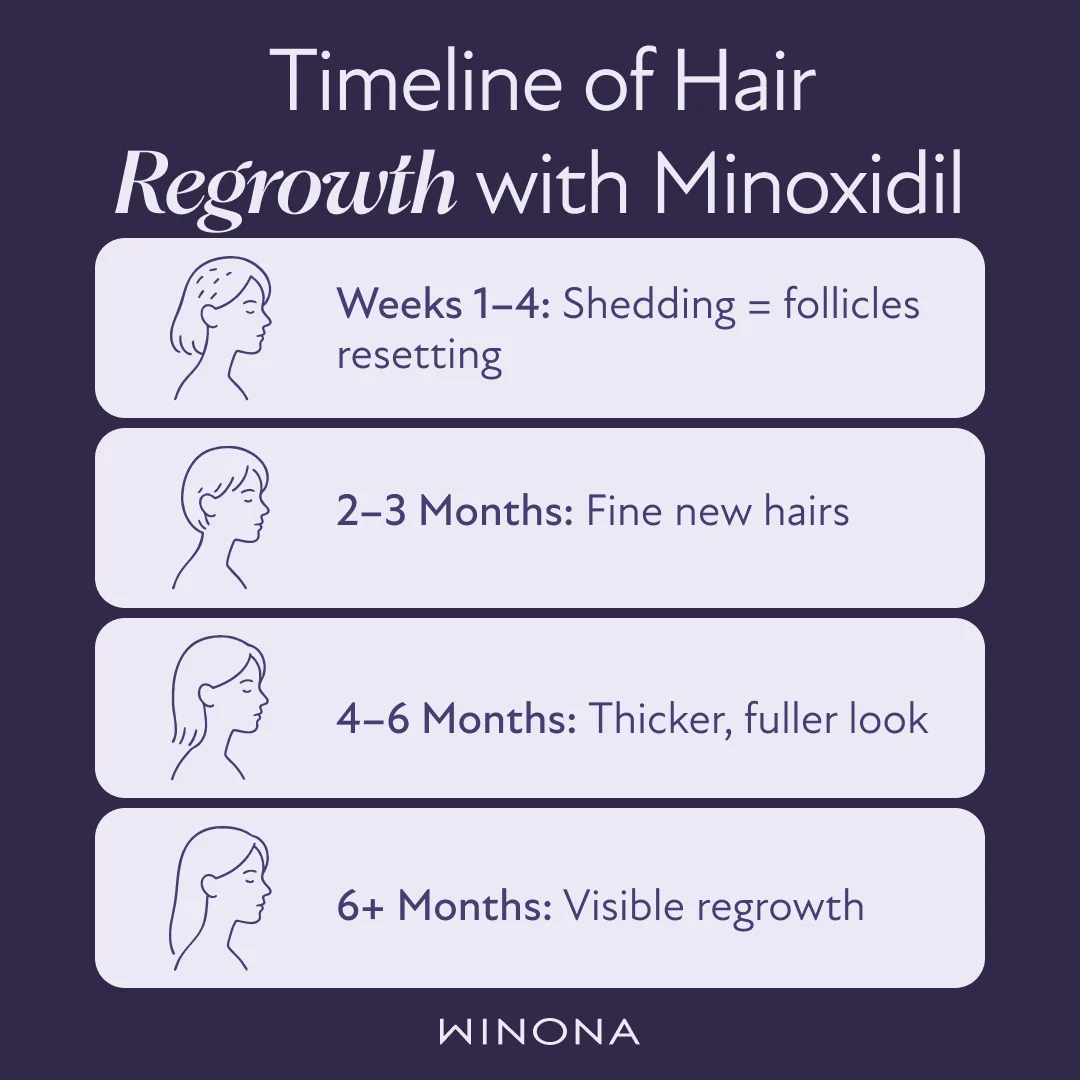
Weeks 1–4: The Shedding Phase
Some hair shedding is common during the first few weeks of minoxidil use. This can feel alarming, but it’s a normal response and actually a sign that the treatment is starting to work. Older hairs are being pushed out to make way for new growth as follicles shift into the active (anagen) phase.(3)(8)
Tip: Stay consistent — even if shedding continues for several weeks.
Months 2–3: Early Regrowth
Fine, soft hairs, often referred to as “peach fuzz,” may start to appear in areas of previous thinning. These hairs are an encouraging sign that follicles are waking up. While the change may not be dramatic, it indicates the treatment is beginning to take effect.
Months 4–6: Visible Improvements
Hair may appear thicker and fuller as new strands continue to grow and existing ones gain volume. Bald patches may start to fill in, and overall density tends to improve. Continued daily use is essential during this phase to maintain momentum.
Month 6 and Beyond: Ongoing Growth & Maintenance
By this point, many users see noticeable changes. Hairs often become darker, longer, and more like the original texture. To sustain progress, daily application must continue. If treatment is stopped, regrown hair is likely to fall out within several months.
Importance of Consistency
One of the main challenges with minoxidil is that it needs to be used consistently to maintain results. For optimal results, it’s important to apply minoxidil as directed without missing doses. Inconsistent use can hinder progress and reduce the effectiveness of the treatment.
How long does it take to adjust to Minoxidil?
The adjustment period for minoxidil varies among individuals. Some users may experience side effects like scalp irritation or dizziness, especially when starting the treatment or increasing the dosage. These effects often go away as the body adapts. If side effects persist or worsen, it's best to consult a healthcare professional.(2)
Early Signs That Minoxidil Is Working
Here are some early indicators that minoxidil is working:
Initial Shedding: This is a temporary sign that hair follicles are transitioning into the growth phase.
New Peach Fuzz Hairs: Soft, fine, and colorless hairs begin to appear in thinning areas.
Increased Hair Density: Over time, existing and new hairs gradually thicken, leading to improved hair density.
Side Effects and Safety Considerations
Minoxidil is generally well tolerated, but it isn’t right for everyone. Some people may experience mild scalp irritation, dryness, or itching — especially when first starting treatment. While these early side effects usually resolve within a few weeks, anyone experiencing worsening scalp irritation or other symptoms should talk to their prescribing physician or consult a dermatologist trained in scalp and hair conditions.(2)(6)(8)(9)
Common Side Effects
Scalp irritation or dryness
Unwanted facial hair growth
Lightheadedness or dizziness
Headache
Rare Side Effects
Rapid heartbeat or palpitations
Allergic contact dermatitis
Swelling of hands or feet
Low blood pressure
Blood Pressure Interactions
While topical minoxidil has minimal systemic absorption, individuals with heart conditions or those taking blood pressure medications should consult their healthcare provider before use.(3)
Special Considerations for Women
Women may be more susceptible to certain side effects, like unwanted facial hair growth. Using the recommended concentration and applying the product carefully can help minimize these risks.
What to Avoid When Using Minoxidil
Don’t apply minoxidil to broken or irritated skin. This is important as it can increase discomfort and interfere with absorption.
Don’t use more than the recommended does. Using more won't speed up hair growth and may increase the risk of side effects like itching or dryness.
Don’t wash the scalp or apply other products too soon after use. It's best to give the medication time to absorb fully before adding anything else.
Don’t skip a dose. Missing doses or stopping abruptly can slow progress or lead to renewed shedding.
Consistency, proper care, and patience are essential for seeing meaningful results over time.
How much does Minoxidil treatment cost?
Over-the-Counter (OTC)
Generic minoxidil products are widely available and typically cost between $15 and $30 per treatment. While convenient and affordable, OTC options often include standard formulas with more alcohol-based ingredients, which can be drying or irritating for sensitive scalps. These versions also lack the personalization that can make treatment more effective.
Prescription (Winona)
Prescription minoxidil formulations have a higher cost but tend to be more effective. At Winona, treatments are personalized by board-certified physicians based on health history, scalp sensitivity, and treatment goals. These prescription options may include low-alcohol bases and can be combined with other active ingredients to improve results and reduce irritation. Ongoing support and treatment adjustments are included as part of this personalized care.
3-Month Supply Options
Purchasing a 3-month supply can provide cost savings. Winona’s physician-formulated minoxidil serum is priced at $150 for a 3-month supply, reflecting the added value of customization, medical oversight, and a premium formulation.
While minoxidil requires ongoing use to maintain results, many users find the investment worthwhile due to the improvements in hair density and confidence. Evaluating the cost against the benefits can help determine if it's the right choice for individual hair restoration goals.
Embracing the Hair Growth Journey
Starting minoxidil treatment is a proactive step toward addressing hair thinning and loss. Understanding what to expect and maintaining consistent use can lead to noticeable improvements over time. Remember, patience and persistence are key, and consulting with a healthcare provider can provide personalized guidance.
The journey to fuller hair is unique, and for many, choosing minoxidil for hair regrowth can be a simple and effective solution for achieving hair restoration goals.