Many women are surprised to see their cholesterol levels start to climb in their mid-40s. While aging and lifestyle factors play a role, there’s also a hormonal component driving these changes. This is why shifts in cholesterol often occur around the time of the menopause transition, making this phase of life a critical period for long-term heart health management.
Estrogen helps regulate cholesterol, but as hormone levels decline, its protective effect weakens, making women more susceptible to cardiovascular disease. This article is designed as a comprehensive clinical resource to explain the science behind these lipid changes. It will also explore treatment options and lifestyle strategies to support holistic cholesterol management during menopause and ease concerns about future heart health.
The Science: How Estrogen Decline Affects Cholesterol Levels
Cholesterol is transported through the blood by lipoproteins. This includes low-density lipoprotein (LDL), or “bad” cholesterol, and high-density lipoprotein (HDL), or “good” cholesterol. Estrogen influences both types of cholesterol, and hormonal changes during the menopause transition can disrupt the healthy balance of “good” and “bad” cholesterol.
The Impact on LDL ("Bad") Cholesterol
Key Statistics: Large population studies suggest that LDL cholesterol increases by roughly 15%–25% as women approach menopause.(1)
The decline in estrogen during the menopause transition is associated with an increase in LDL cholesterol levels. This shift doesn’t happen all at once. It occurs gradually over several years, with the most significant increases often seen during the late perimenopause and early postmenopause stages.(2)
Experts are still working to understand all the ways estrogen impacts LDL cholesterol, but changes in LDL particles are thought to be one piece of the puzzle. Estrogen regulates the activity of hepatic lipase, an enzyme produced by the liver that acts on lipoprotein particles in the blood. These particles transport cholesterol, and the job of hepatic lipase is to alter the size and density of these particles to help maintain a healthy balance of cholesterol.(3)As estrogen levels progressively drop during the menopause transition, hepatic lipase activity increases. When this happens, large LDL particles are converted into smaller, denser particles. These smaller particles are able to enter the artery walls more easily, which can contribute to plaque buildup and increase the risk of cardiovascular disease.(3)
Declining estrogen levels are also associated with changes in lipid metabolism. Normally, estrogen helps LDL receptors bind to LDL particles to clear them from the bloodstream. When estrogen levels fall, these receptors may become less efficient, leading to a slowdown in cholesterol clearance. This means that “bad” cholesterol remains in the blood longer.(4) Together, these changes in LDL cholesterol and lipid metabolism may increase women's risk of cardiovascular disease later in life.
The Impact on HDL ("Good") Cholesterol
Hormonal changes don’t just impact LDL cholesterol. They can also affect “good” HDL cholesterol, which helps protect against heart disease.
Research on the connection between menopause and HDL cholesterol is mixed. Many studies have found that HDL levels tend to decrease, while others have shown increases or no changes between premenopausal and postmenopausal women.(2)
Just as menopause is associated with changes in LDL particles, it’s also linked with changes in HDL particles. The most protective form of HDL is HDL2. As estrogen levels decrease and hepatic lipase activity increases, HDL2 particles may become smaller and denser, and their levels may drop, weakening their protective effect.(3)
However, HDL2 is not included in a standard lipid panel. This means that even if the test shows a woman’s total HDL levels haven’t changed or even increased, changes in HDL2 particles may still contribute to a higher risk of cardiovascular disease.(2)
Declining estrogen levels may also affect how well HDL particles clear excess cholesterol from the artery walls, a process known as cholesterol efflux capacity. In the 2020 Study of Women’s Health Across the Nation (SWAN) HDL ancillary study, researchers found that while overall cholesterol efflux capacity among menopausal women increased, the efflux capacity of individual HDL particles was reduced, making each particle potentially less effective at cholesterol clearance.(2)(5)
The Impact on Triglycerides
A standard lipid panel also measures triglycerides, a common type of fat in the body that comes from the diet and extra calories that get stored for future use. While triglycerides are important for meeting the body’s energy needs, having high triglyceride levels can raise the risk of heart disease.(6)
Similar to LDL cholesterol, studies have shown that triglyceride levels tend to increase during the menopause transition. This pattern was observed in a large 2023 study published in Frontiers in Nutrition, which examined differences in triglyceride concentrations among thousands of adults, including comparisons between premenopausal and postmenopausal women.(7)The study found that non-fasting triglyceride concentrations were 17% higher in postmenopausal women with a normal weight, 16% higher in postmenopausal women with overweight, and 5% higher in postmenopausal women with obesity, compared to premenopausal women in the same weight groups. These findings suggest that changes in women’s triglyceride levels may be influenced by body weight and whether or not they are still getting periods.(7)

The Role of HRT in Managing Menopausal Cholesterol
Hormone replacement therapy (HRT), or menopause hormone therapy (MHT), helps replenish low estrogen levels to relieve menopausal symptoms. Because estrogen plays an important role in regulating cholesterol, treatment has been shown to have beneficial effects on postmenopausal women’s cholesterol levels.(4)
HRT may also offer cardiovascular benefits. Evidence suggests that women who begin using HRT before the age of 60 or within 10 years of reaching menopause have a lower risk of cardiovascular disease. Although the Menopause Society does not currently recommend it as a preventive treatment, HRT may still play a supportive role in heart health by helping manage cholesterol.(8)
Does HRT lower cholesterol?
Decades of research have shown that HRT can help lower LDL cholesterol levels. One of the first studies on this topic was published in 1991 in The New England Journal of Medicine, in which postmenopausal women were given different formulations, doses, and delivery methods of HRT.(9)
Synthetic Versus Bioidentical Hormone Formulations
In the study, a standard daily dose of synthetic oral conjugated estrogens (0.625 mg) lowered women’s LDL cholesterol by an average of 15%, while HDL cholesterol increased by an average of 16%. When the dose was doubled to 1.25 mg, LDL cholesterol dropped by an average of 19%, and HDL levels increased by 18%.(9)Similar improvements in cholesterol levels were seen with bioidentical hormones, which are molecularly identical to the estrogen naturally produced in the body. A daily 2 mg dose of oral estradiol treatment lowered women’s LDL cholesterol levels by an average of 14% and increased HDL cholesterol by approximately 15%.(9)
Combined Estrogen and Progestogen Therapy
For women with an intact uterus, a progestogen is added to estrogen therapy to protect the uterus. Studies indicate that while combined estrogen and progestogen treatment still has beneficial effects on lipid levels, the improvements are generally smaller compared to estrogen-alone therapy.(10)
However, the type of progestogen matters. Synthetic progestins appear to minimize estrogen’s positive effects on cholesterol more than bioidentical progesterone. This means that bioidentical hormones tend to have a smaller blunting effect. For this reason, adding bioidentical progesterone to estrogen therapy may have more beneficial effects on cholesterol than a synthetic progestin.(10)
Oral vs. Transdermal HRT: Effects on Cholesterol
Key Statistics: Studies show that oral or transdermal HRT can reduce LDL cholesterol levels by 3%–22%.(11)
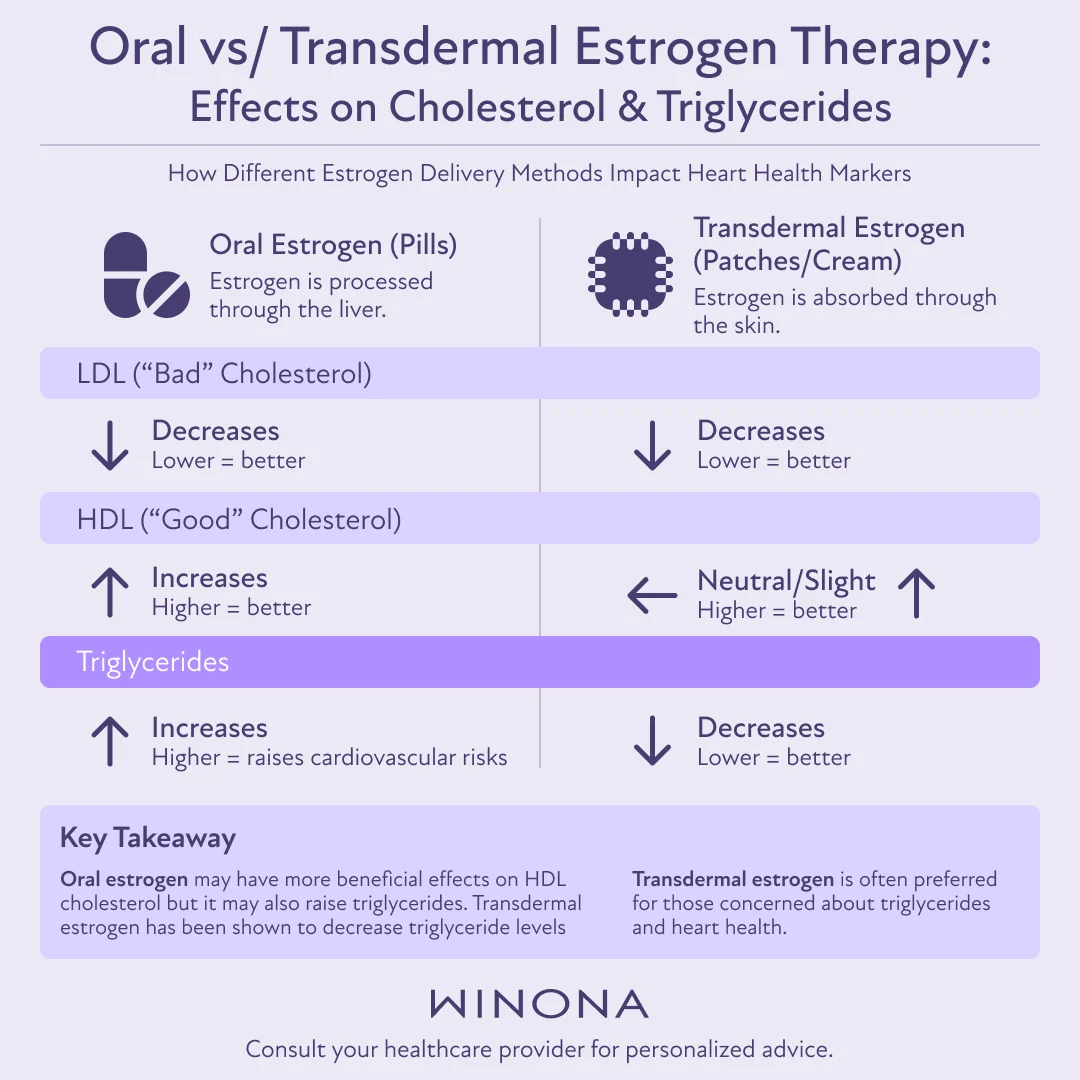
The effects of HRT on cholesterol levels may vary depending on whether treatment is administered orally or transdermally, as these forms of HRT are processed differently by the body. When medications are taken by mouth, they are metabolized by the liver. When medication is absorbed through the skin directly into the bloodstream, it bypasses liver metabolism.
In a 2022 systematic review published in Archives of Gynecology and Obstetrics, research showed that both oral and transdermal HRT can significantly lower LDL cholesterol in postmenopausal women. However, the two treatments differed in how they affected HDL cholesterol and triglycerides.(11)
Across multiple studies, oral HRT tended to have a positive effect on HDL cholesterol, increasing levels by about 2% to 16%. However, it was also linked to a rise in triglyceride levels. In contrast, transdermal patches did not appear to have a significant effect on HDL cholesterol but were shown to effectively reduce triglycerides.(2)(11)
Although rare, HRT is associated with a slightly increased risk of blood clots in high-risk patients.(8) However, the risk is lower with transdermal HRT compared to oral treatment. While HRT may not be appropriate for women with certain cardiovascular health risks or blood-clotting disorders, a doctor will carefully weigh each patient’s individual benefit-to-risk ratio, factoring in age, medical history, and the type of HRT used.
HRT and Statins
Many menopausal women with high cholesterol (hypercholesterolemia) want to know if it’s safe to take statins with HRT. Research shows they are generally well-tolerated together, and using both medications may improve cholesterol levels more than either treatment alone.
In a study conducted by the International Menopause Society, postmenopausal women who took a statin along with combined estrogen and progesterone therapy for eight weeks experienced an average 28% decrease in total cholesterol levels. In comparison, women who only used statins saw a 26% decrease, while those who used HRT alone experienced a 12% reduction.(12)
Treatment with both medications also produced the greatest reductions in LDL cholesterol. Levels dropped by 21% in women who received HRT only and 37% in women taking only statins, but combined treatment lowered LDL cholesterol by an average of 46%. HDL cholesterol also increased in all treatment groups.(12)
Triglyceride levels rose with HRT, while statins appeared to lower levels. However, triglycerides stayed roughly the same in women who took both medications.(12)It’s important for women to tell their doctor about any medications or supplements they are taking, as statins and HRT should only be used together under medical supervision.
A Comprehensive Plan for Heart Health in Menopause
Cardiovascular disease is the leading cause of death among women in the United States (U.S.).(13) This makes it essential to have a holistic plan that includes lifestyle changes and appropriate medical treatment to support cardiovascular health during menopause.
On average, a healthy LDL cholesterol level for women aged 20 and older is less than 100 milligrams per deciliter (mg/dL), and a healthy HDL cholesterol reading is 60 mg/dL or higher.(14) The following strategies can help women manage cholesterol during these transitional years and support overall heart health.
Making Heart-Healthy Nutrition Choices
Eating a well-rounded diet with a variety of heart-healthy foods is one of the best ways to support cardiovascular health during menopause.
Although more research is needed, specific to menopause, two well-studied eating patterns have been shown to reduce cardiovascular risk factors among postmenopausal women, including lowering cholesterol levels. These two patterns are the Dietary Approaches to Stop Hypertension (DASH) diet and the Mediterranean (MED) diet.
The DASH diet prioritizes the following foods for cardiovascular health:(15)
The diet also encourages limiting sodium, saturated fats, and sugary drinks. Because it’s been shown to reduce total cholesterol and LDL cholesterol levels in adults, the DASH diet is considered a practical approach for supporting heart health during menopause.(15)The MED diet has a lot in common with the DASH diet, focusing primarily on plant-based foods, such as the following:(16)
Fruits
Vegetables
Whole grains
Beans
Legumes
Nuts
Olive oil
It also recommends a moderate intake of seafood, poultry, and dairy, while keeping red meat and added sugars to a minimum. The diet’s heart-healthy effects were supported by a 2024 systematic review, which found that following a MED diet can help lower total cholesterol, LDL cholesterol, and triglyceride levels in menopausal women.(16)
Did You Know? The Mediterranean (MED) diet is widely considered one of the healthiest dietary patterns in the world.(16)
The MED diet is believed to promote heart health by improving endothelial function, which refers to the healthy widening and narrowing of blood vessels. Endothelial function tends to decline during menopause, which can increase women’s risk of atherosclerosis, or the hardening of arteries from plaque buildup.
Oxidative stress and systemic inflammation are two factors linked to endothelial dysfunction. Studies suggest that the MED diet can help reduce these factors, enhance endothelial function, and lower the risk of cardiovascular events in older adults, including heart attack.(15)
Staying Active for Cardiovascular Wellness
Staying active is another key strategy for protecting heart health later in life. In fact, the American Heart Association (AHA) recommends exercise as a primary preventive measure against cardiovascular disease.(17)
To maintain optimal health, adults are encouraged to get 150 minutes (2.5 hours) of moderate-intensity aerobic exercise per week, plus two days of strength-training exercise.(18)
In a study published in the Journal of Exercise Rehabilitation, researchers looked at the effects of exercise on postmenopausal women diagnosed with overweight and hypertension who were being treated with blood pressure medication.(19)
Women who exercised on a treadmill three times a week in the afternoon for 12 weeks showed the greatest improvements in blood pressure and cholesterol levels. Women who exercised in the morning or only took medication didn’t see as much benefit.(19)
Managing Cholesterol with Medications
Lifestyle changes are typically the first step in managing heart health risk factors like high cholesterol. However, some women may need additional support with medication if lifestyle changes aren’t enough.
Statins are the first-line treatment method for patients with moderately high or very high LDL cholesterol. Depending on the dose and type, some statins have the potential to lower LDL cholesterol by up to 60%.(17)(20)
Other cholesterol management medications that may be recommended include the following:(21)
Cholesterol absorption inhibitors
PCSK9 inhibitors
Adenosine triphosphate-citrate lyase (ACL) Inhibitors
Bile acid sequestrants
Fibrates
Niacin
Omega-3 fatty acid ethyl esters
Cholesterol-lowering combination medicines
High blood pressure and cholesterol-lowering combination medicines
Taking a Holistic Approach to Cholesterol Management During Menopause
Although hormonal changes during menopause can be a risk factor for high cholesterol and cardiovascular disease, taking steps to keep cholesterol levels in a healthy range can help women maintain their long-term heart health during and after menopause.
Along with regular exercise and heart-healthy food choices, medical treatment may be recommended if needed. A Winona physician can help determine whether HRT may support your holistic cholesterol management plan. Consider setting up a consultation today.